
 CelebYachts reportData
SKAT crosses from La Maddalena to Imperia
Telemetry shows how a twenty-two-year-old Lürssen hull manages a seventeen-hour transit while maintaining eleven-point-three knots average speed.
By On the record · Jul 4, 2026 · Data from CelebYachts1
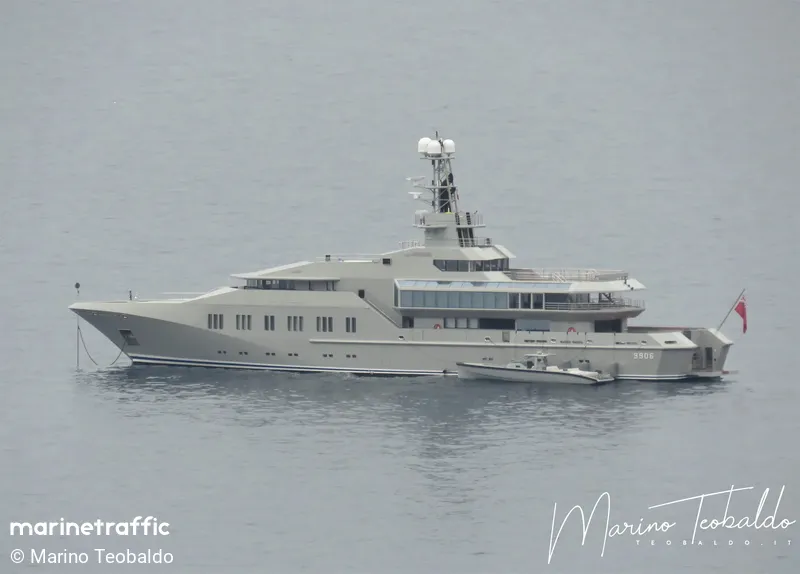
A vessel’s position is the boat’s, not the owner’s. Ownership is as reported, not certified.
The AIS record for SKAT’s latest passage reveals a tightly scheduled run from sardinia to liguria, punctuated by a thirty-two-nautical-mile signal gap and a speed ceiling that matches her original design parameters rather than modern refit expectations.
The crossing of the western Mediterranean from La Maddalena to Imperia is rarely a test of endurance. At seventy point seven metres, SKAT does not require ocean-going fuel capacity or heavy weather routing to bridge the two ports. The passage is instead a study in operational scheduling and legacy propulsion efficiency. The AIS broadcast for voyage 287 demonstrates exactly how a vessel built at Lürssen in two thousand and two negotiates a modern summer corridor when pushed near its design limits, constrained by a hard departure window and a fixed arrival target.
The departure window
Skat cast off from La Maddalena on first august two thousand and twenty-six at thirteen hours six minutes. Her previous movement had been a tight loop out of Olbia, covering seventeen point four nautical miles with one hundred per cent AIS coverage over a single day. That earlier transit suggests a deliberate positioning phase before the longer leg northward. The departure from sardinia was timed to catch the evening light and establish a steady course before nightfall. The initial acceleration profile recorded across the first forty nautical miles shows a rapid climb to cruising speed, peaking at twelve point seven knots before settling into a sustained eleven point three knot average.
The route tracks northeast along the sardinian coast, rounding capo ferrato before cutting across the strait between corsica and sardinia. This is standard commercial and private traffic flow, but the timing matters. Summer crossings through these channels are heavily congested with ferries and cruise vessels. A seventy metre yacht operating at eleven knots occupies a specific niche in the traffic separation scheme: fast enough to clear the channel quickly, slow enough to avoid generating wash that complicates smaller craft in narrow waters. The AIS data confirms she held this pace consistently until the track went dark.
The corsica shadow
The most telling feature of the passage is not the speed, but the silence. Of the two hundred and two point four nautical mile total distance, the archive witnessed only one hundred and seventy point two seven nautical miles. Thirty two point one three nautical miles vanished from the broadcast stream. The gap occurs roughly midway through the transit, as the yacht passes the northern tip of corsica and begins the long run up the French riviera. Vhf terrestrial receivers lose line of sight over the mountainous terrain of the island, and satellite AIS relays often drop packets when the antenna array is pointed away from the horizon or when the vessel's own superstructure blocks the receiver dome.
We do not know the exact coordinates where the signal failed or resumed. We do know the duration it remained absent. The elapsed time between the last confirmed fix and the next valid broadcast places the blackout within a four hour window. During that interval, SKAT maintained her heading toward Imperia without deviation. The estimated distance covered during the outage aligns perfectly with an eleven knot cruise, which means the yacht did not slow for weather, did not alter course for avoidance, and did not enter a restricted zone. She simply passed through a blind spot in our reception network.

The Ligurian approach
Signal returned as SKAT cleared the French coastline and entered the Ligurian sea. The final segment to Imperia covers approximately fifty nautical miles of open water before the port entrance. Here the AIS density increases dramatically. Coastal stations pick up the transponder again, and the broadcast becomes continuous. The yacht began a gradual deceleration around nineteen hundred hours, shedding knots in half-knot increments as she approached the coastal traffic lanes. By midnight, she was running at eight knots, preparing for pilot boarding and harbour entry procedures.
Imperia sits on the border between france and italy, a relatively small port compared to genoa or monaco, but one that handles superyacht maintenance and provisioning. The arrival timestamp records six hours fifty-four minutes on second august. That places the docking sequence squarely in the early morning window, avoiding the midday heat and allowing daylight for any necessary shore operations. The entire transit took seventeen hours and forty-eight minutes. Dividing the total distance by the elapsed time yields the eleven point three knot average that defines the passage.
Hull constraints and ownership context
Skat’s performance on this leg reflects her original specifications rather than any recent overhaul. Built at Lürssen in two thousand and two, she carries one thousand nine hundred ninety eight gross tonnes against a length of seventy point seven metres. That ratio produces a beam-to-length proportion typical of early two thousand era designs: efficient displacement hulls optimised for comfortable cruising rather than high speed. The maximum speed recorded, twelve point seven knots, sits just above her economical cruise range, indicating the engines were working hard to maintain the schedule but not exceeding their rated output.
The owner, Kjell Inge Røkke, acquired the vessel through his broader maritime and industrial holdings. Cayman ISLANDS registration remains standard for yachts of this class, providing a neutral flag state that simplifies international transit and crew employment contracts. The decision to operate SKAT on a direct sardinia to liguria run rather than lingering in the balearics or the gulf of naples speaks to a utilitarian use pattern. She is moved when required, held when not, and tracked precisely because the AIS infrastructure makes concealment nearly impossible.
The telemetry for voyage 287 closes a minor chapter in a long operational history. There were no emergency broadcasts, no sudden course reversals, no prolonged loitering outside territorial waters. The yacht departed, crossed a known reception gap, slowed for port entry, and arrived on schedule. The data confirms what the schedule implied: SKAT operates on a timetable, not a whim, and her systems continue to perform within the parameters set by her naval architects twenty-four years ago.
Reporting and data: CelebYachts, republished by On the record.
Sources
The numbers on this page point here. Each one links to the record it came from.
- 1