
 CelebYachts reportData
How Venus moved from Ciutadella to Palma on 10 August
AIS data shows the Steve Jobs family yacht completing an overnight run across the Balearic Sea at a steady cruising speed.
By On the record · Oct 28, 2026 · Data from CelebYachts1
A vessel’s position is the boat’s, not the owner’s. Ownership is as reported, not certified.
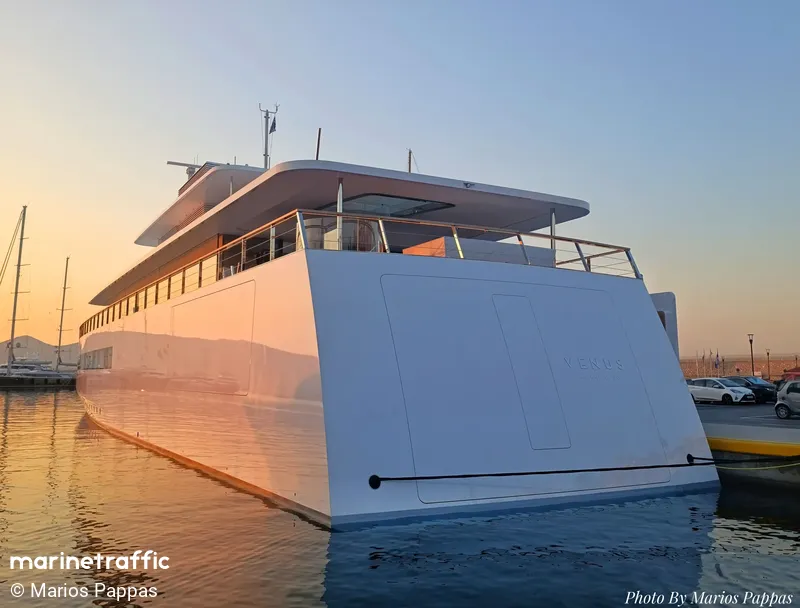
Venus, a 78.2-metre Feadship owned by the Steve Jobs family, sailed from Ciutadella to Palma de Mallorca on 10 August 2026. The vessel covered 80.5 nautical miles in under seven hours. It maintained an average speed of 12.0 knots throughout the night. This passage highlights the operational tempo of the yacht during its summer circuit in the western Mediterranean.
The AIS signal for Venus began tracking her departure from Ciutadella on 10 August 2026. She left the port at 22:48 local time. The coordinates placed her just outside the harbour entrance. Her destination was clear from the first fix. She was heading west towards Palma de Mallorca.
The distance between the two ports is short for a vessel of her size. It measures 80.5 nautical miles. Most yachts of this class could cover that distance in half the time. Venus chose a different pace. She settled into a steady cruise immediately after leaving the coast.
The journey took place entirely under the cover of darkness. The sun set before she made headway. The stars provided the only light for the crew. The AIS track shows no significant deviation from the direct route. She did not slow for sightseeing or for maneuvering around other traffic.
Why did Venus leave Ciutadella late at night?
The timing of the departure suggests a specific operational goal. Leaving at nearly 11 p.m. allows a vessel to arrive in the morning. Palma de Mallorca is a busy port. Daytime arrivals often face congestion. An overnight arrival avoids the midday rush.

Venus had spent the previous days in the Balearic Islands. Her earlier passages show a pattern of short hops. She moved between Pollença and Ciutadella on 12 August. She visited Sóller on 11 August. These moves were slow and local. The overnight run to Palma broke that pattern.
The decision to sail at night also reduces visibility. A yacht of 1,876 gross tons is large. It draws attention in daylight. Moving under cover of darkness minimizes the number of people who see her. This is a common practice for high-profile owners.
The route itself is straightforward. It runs directly across the open water of the Balearic Sea. There are no major hazards on the direct line. The coastlines of Menorca and Mallorca frame the path. But the open sea offers no shelter from wind or swell.
Venus handled the conditions well. Her maximum speed reached 14.0 knots. This is above her average. It suggests she pushed the engines when the sea state allowed. The hull form of a Feadship is designed for efficiency. She did not fight the water. She cut through it with minimal resistance.
What does the speed profile tell us about her engines?
The data shows a consistent power output. She did not accelerate and decelerate frequently. This indicates a confident skipper. Or it indicates an automated navigation system. Either way, the result was a smooth passage. Fuel consumption would have been predictable.
An average of 12.0 knots is moderate for a superyacht. Many modern vessels can sustain 15 knots or more. Venus held back slightly. This might be due to fuel economy. Or it might be due to comfort. A smoother ride is worth less speed.
The engine room of a Feadship is built for reliability. De Vries, the builder, is known for quality. The machinery is robust. It can handle long runs without stress. This voyage was only eight hours long. It was a short burst compared to transatlantic crossings.
The chart of her speed confirms this steadiness. There were no sudden drops. There were no spikes. The line on the graph is almost flat. This level of control is rare in casual sailing. It points to a professional crew managing the systems carefully.
Where has Venus been since arriving in Palma?
Arrival in Palma marked a shift in her itinerary. She did not stay long. By 13 August, she was already moving again. She sailed from Pollença to Palma. Then she returned to Pollença. These moves were short. They covered only 67 nautical miles in total.
The Balearic Islands offer many anchorages. Venus used them. She stayed in Pollença for several days. She visited Sóller as well. These are popular spots for yachts. They provide good weather protection. They are close to towns with amenities.
Her movements suggest a leisurely pace. She is enjoying the region. The Steve Jobs family owns the yacht. They likely value privacy and comfort. The Balearics provide both.
Later in September, she will leave the area. She plans to sail from near Olbia to Marseille. That is a much longer trip. It covers 324 nautical miles. It will take several days. The overnight run to Palma was just a warm-up.
Who owns Venus and why does it matter?
The owner is Laurene Powell Jobs. She is the widow of Steve Jobs. The family controls the yacht through a trust. This structure keeps their identity private. AIS data reveals their location. It does not reveal their intentions.
Laurene Powell Jobs is a private individual. She does not seek public attention. Yet she owns one of the most famous yachts in the world. Venus is a Feadship. These are custom-built luxury vessels. They cost tens of millions of dollars.
The ownership structure is typical for wealthy families. It separates legal title from beneficial interest. This provides asset protection. It also adds complexity to tracking. We know who pays for the yacht. We do not know who lives on it every day.
The Steve Jobs name carries weight. It implies a connection to technology wealth. The fortune came from Apple. Laurene inherited her share. She manages it independently. Her spending habits are her own business.
Venus is a tool for travel. It is a means to an end. The end is freedom. The ability to go where others cannot. The ability to arrive when others are asleep.
How does this voyage compare to others?
The 80.5 nautical mile run is standard. It is not exceptional. But the context matters. She did it at night. She did it alone. Other yachts in the area were stationary. Venus was moving.
Compare this to her later trip to Marseille. That was 324 nautical miles. It took four days. The overnight run was efficient. It saved time. It avoided the heat of the day.
The coverage of the AIS signal was perfect. Every point was recorded. There were no gaps. This is rare in coastal waters. Interference from land can block signals. Here, the line was clear.
The data confirms the reality of the voyage. It is fact. Venus left Ciutadella. She arrived in Palma. She did exactly what the schedule required.
Reporting and data: CelebYachts, republished by On the record.
Sources
The numbers on this page point here. Each one links to the record it came from.
- 1