
 CelebYachts reportProfiles
Why Graceful became Kosatka after US sanctions
The yacht changed its name and hull shape after being sanctioned. It now operates with anti-drone nets in the Arctic.
By On the record · Oct 8, 2026 · Data from CelebYachts1
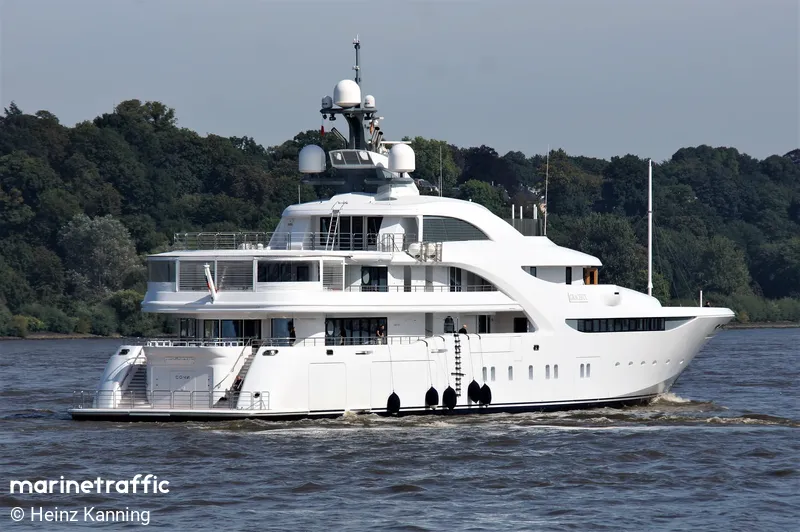
A vessel’s position is the boat’s, not the owner’s. Ownership is as reported, not certified.
Graceful was a superyacht linked to Vladimir Putin. The US Treasury sanctioned it in June 2022. The owner renamed it Kosatka and added military protection. This marks a shift from luxury to security.
Graceful is no longer her name. She is now Kosatka, which means Killer Whale in Russian. The United States Treasury Department sanctioned the vessel in June 2022. The owner did not just repaint the transom. They altered the hull’s operational profile entirely.
The vessel was built as a steel-hulled pleasure craft. It has been converted into a drone-resistant escort ship. It now operates out of the Arctic. This move signals a major shift in how the asset is used. It is no longer just for diplomatic leisure.
The new name appears on the Russian register. The old name remains in the records as a historical fact. The physical changes to the boat are visible in AIS data. Anti-drone nets now cover her superstructure. This makes her look very different from a standard yacht.
How did a storm change the hull's size?
The story of her size begins far before the sanctions. Construction started in Russia at Sevmash in Severodvinsk. The project began in 2005. However, the work stalled for many years. To speed things up, the unfinished hull was moved in 2010.
It was transported to Blohm+Voss in Hamburg, Germany. The journey went wrong off the coast of Norway. A severe storm hit the area. The weather dislodged the heavy hull from its transport vessel. It fell into the sea.
Workers recovered the damaged structure later. They brought it to the Blohm+Voss yard for repairs. The damage required significant structural work. During these repairs, the builders decided to enlarge the vessel. They lengthened the hull. They also widened it.
These changes were made to fix the storm damage but they permanently altered the design. The final length reached 82 metres. The beam expanded to 11 metres. The original draft was 3.5 metres. These dimensions are larger than the initial plan.
The enclosed volume grew to 2,685 GT. This gross tonnage measures the inside space. It is a key indicator of the yacht's size. The vessel was finally delivered on April 29, 2014. It had been commissioned much earlier, in 2005.
What happened during the February tow?
The timeline of events accelerates in 2021. President Putin reportedly held a meeting with President Lukashenko on board. This took place in the Black Sea. The yacht was still flying the flag of the British Virgin Islands under the name Graceful.
Later that year, the vessel arrived back at Blohm+Voss. It needed refitting work. The owners ordered an engine overhaul. They also requested the addition of two balconies. These upgrades were meant to improve comfort and performance.
The political situation changed rapidly in early 2022. On February 9, 2022, tensions rose before the invasion of Ukraine. The yacht was still undergoing repairs at the German yard. The owners made a sudden decision to move it.
They arranged for the vessel to be towed away. It left Hamburg on February 9. The destination was Kaliningrad, Russia. The work there was completed quickly. This exit marked the end of its time in the BVI registry.
The move was strategic. It placed the asset closer to Russian control. It also removed it from European jurisdiction temporarily. The vessel disappeared from public view for a while. Its Automatic Identification System (AIS) was shut off.
Why was the name changed to Kosatka?
The sanctions came in June 2022. The US Treasury Department targeted the vessel. The reasons cited links to President Putin. The official list says the Russian Government owns it. Most reports believe it belongs to the President personally.
The estimated value is about US$100 million. Sanctions usually freeze assets. They make selling or using the yacht difficult. Changing the name is a common tactic to obscure ownership. It breaks the link to the sanctioned entity.
The new name is Kosatka. It fits the theme of strength and predation. The vessel is registered in Russia now. It ranks 154th in the list of motor yachts by length. This ranking reflects its substantial size.
The design was created by H2 Yacht Design. AGAT Design Bureau handled the naval architecture. AGAT is known for building icebreakers and patrol vessels. Their involvement suggests a focus on durability. The superstructure is aluminum. The hull is steel.
Where does Kosatka operate today?
In October 2022, the yacht was seen near St Petersburg. The AIS was still off. Then it reappeared in June 2026. This time, the transponder was on. It passed the Skagerrak north of Denmark. It was traveling with a Russian destroyer named Severomorsk.
A special patrol vessel called Voevoda was also present. The convoy appeared to be heading for Istanbul. This showed a long-range capability. The ship has a range of 6,000 nm. It can cruise at 12 knots.
By early July 2026, the route changed. The transponder was turned off again. The vessel was located off the Norwegian coast. It was carrying anti-drone nets. These nets protect against small unmanned aerial vehicles.
The convoy was heading towards the Kola Peninsula. This is in the Arctic region. The Severomorsk was anchored outside Severomarsk. This is the base of the Northern Fleet. The move suggests a need for safety.
Reports suggest the relocation is due to Ukrainian drone reach. The Arctic offers distance from potential threats. It places the asset in a secure zone. The use of anti-drone nets confirms this defensive posture.
What are the technical specs of the conversion?
The propulsion system is diesel-electric hybrid. Each of the two diesel engines produces 2,300 kW. The total power is 7,300 kW. This equals 3,154 hp per engine. The vessel uses twin screw propellers.
The maximum speed is 17.6 knots. This is modest for a yacht of this size. It prioritizes range over speed. The four decks provide ample space. There is one helipad for an EC135 helicopter.
Inside, there is an indoor pool. It doubles as a dance floor. This feature highlights its original purpose. There are six cabins for twelve guests. Additional cabins hold fourteen or twenty-five crew members.
The beam is 11 metres. This width supports stability. The draft is 3.5 metres. This allows access to many ports. The anti-drone nets add weight and drag. They affect the hydrodynamic profile slightly.
The IMO number is 1011551. The MMSI is 273294110. These identifiers track the vessel globally. The flag is Russia. The home port is not listed in open records. The last known position was in the Skagerrak.
Reporting and data: CelebYachts, republished by On the record.
Sources
The numbers on this page point here. Each one links to the record it came from.
- 1