
 CelebYachts reportYards & Design
Why Archimedes and Drizzle look different
Two Feadships built sixteen years apart show how yard capacity and new rules reshaped superyacht size and power.
By On the record · Sep 25, 2026 · Data from CelebYachts1
A vessel’s position is the boat’s, not the owner’s. Ownership is as reported, not certified.
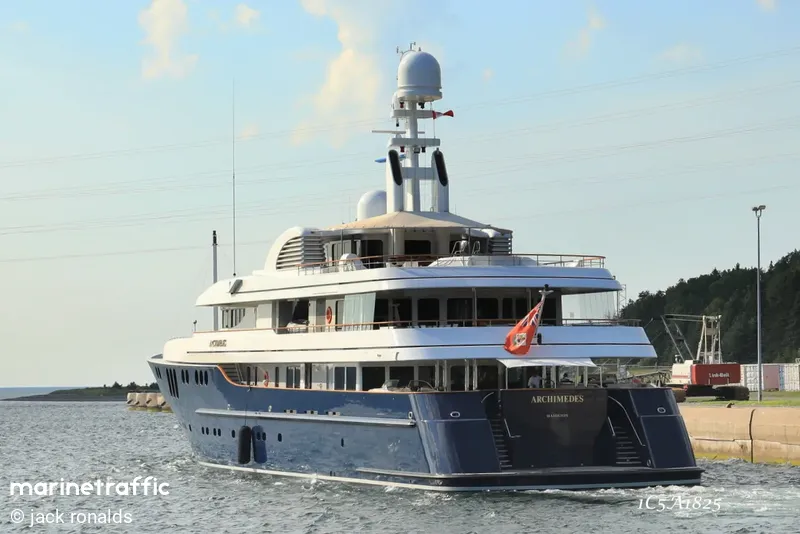
Archimedes and Drizzle share a builder but differ in length, beam, and propulsion. The gap reflects Feadship’s expansion and stricter environmental rules over time.
Where are Archimedes and Drizzle now?
Archimedes and Drizzle are both Feadship yachts. They share the same brand name. They also share the same design centre. Yet they look very different on paper.
AIS data shows where these yachts spend their time. Archimedes stays near Hamilton, Bermuda. Her flag is Bermuda. Her home port is Hamilton. She rarely leaves the US East Coast area.
The first boat launched in 2008. The second arrives in 2024. That sixteen-year gap covers major changes at the shipyard. It also covers new rules for engines.
Drizzle patrols the Ionian Sea. Her flag is Malta. Her home port is Valletta. She stays closer to European waters. The AIS track shows neither vessel has moved significantly since the register update.
This geographic split reflects ownership habits. Simons’ Estate keeps Archimedes in familiar waters. Ortega prefers Mediterranean cruising. Both locations suit their respective lifestyles.
Archimedes belongs to the Estate of James Simons. Drizzle belongs to Amancio Ortega. Both owners bought custom vessels. Their choices reveal how the industry shifted.
How much do these yachts cost?
Why is Archimedes wider than Drizzle?
Archimedes has an estimated value of $100 million. This figure reflects her age and condition. She launched in 2008. Maintenance costs rise with time. The market price accounts for depreciation.
Beam measures the widest part of a yacht. It matters for interior space. A wider hull allows more room below deck. It also affects stability.
Drizzle has no published estimate. She launched in 2024. New superyachts often exceed their initial estimates. The base price likely exceeds $100 million. Complex hybrid systems add significant cost.
Archimedes has a beam of 13.3 metres. Her length is 70.6 metres. This ratio gives her a broad, stable profile. She sits low in the water.
The price gap highlights technological inflation. Drizzle’s hybrid drive requires expensive batteries. It needs specialized engineering. Archimedes relies on simpler diesel mechanics. Simplicity keeps costs lower.
Drizzle is longer at 90.5 metres. Her beam is 14.0 metres. She is slimmer relative to her length. This shape reduces drag at high speeds.
What does the yard history tell us?
The difference comes from yard limits. Royal Van Lent had specific dry docks in 2008. Those docks set a maximum width for new builds. Archimedes fits that limit.
Feadship traces its roots to 1849. The Akerboom family bought a small yard. They joined with the Van Lent family in 1927. They founded Feadship in 1949 with the De Vries yard.
By 2024, Feadship used newer facilities. The Amsterdam dock opened in early 2019. It can handle yachts up to 160 metres long. This allowed larger beams for bigger hulls.
The cooperative structure defines their output. Two Dutch shipyards share design resources. Royal Van Lent and Koninklijke De Vries operate separately. They coordinate through De Voogt Naval Architects.
Gross tonnage shows inside volume. Archimedes holds 1,462 tons. Drizzle holds 2,965 tons. She has double the internal space. This reflects the shift toward larger designs.
LVMH acquired Royal Van Lent in 2008. This investment changed their trajectory. They opened a new dock in Amsterdam in 2019. This dock supports yachts up to 160 metres.
How did propulsion rules change?
Drizzle benefited from this expansion. Hull number 1012 confirms her Royal Van Lent origin. The yard could now accommodate larger beams. Archimedes fit within older constraints.
Propulsion means how the yacht moves. Archimedes uses traditional diesel engines. These are powerful but produce emissions. They meet the standards of 2008.
The Makkum yard handles even larger vessels. It opens in 2005. Its deep water access supports yachts over 120 metres. It did not build either Archimedes or Drizzle. But it shows Feadship’s growing scale.
Drizzle is a hybrid vessel. She combines diesel with electric motors. This system cuts fuel use. It also lowers noise and vibration. Newer regulations pushed this change.
Environmental rules tightened between 2008 and 2024. The EU and global bodies set stricter limits. Yacht builders had to adapt or lose clients.
Hybrid systems add weight and complexity. They require extra batteries. They take up space usually reserved for cabins or decks. Drizzle’s owner accepted this trade-off.
The switch also reflects cost. Fuel prices rose. Owners sought efficiency. Hybrid drives save money over time. They also appeal to eco-conscious buyers.
Archimedes remains a pure diesel yacht. Her owner prioritized simplicity. He valued proven technology over new systems. This choice was valid in 2008.
Feadship is a cooperative of two Dutch yards. Royal Van Lent and Koninklijke De Vries work together. They share design tools. But they have separate construction sites.
Archimedes was built by Royal Van Lent. Her hull number matches their 2008 output. The yard was smaller then. It focused on yachts under 100 metres.
Drizzle carries hull number 1012. This identifies her as a Royal Van Lent build. The yard expanded significantly after 2019. It now handles much larger projects.
Koninklijke De Vries operates in Aalsmeer and Makkum. Their Makkum yard can hold yachts over 120 metres. They did not build either of these two.
Royal Van Lent acquired by LVMH in 2008. This gave them more capital. They invested in new docks. The Amsterdam facility opened in 2019.
The split in yards explains some differences. Royal Van Lent handled both builds. But their capabilities grew. Drizzle benefits from modern infrastructure.
Archimedes is owned by the Estate of James Simons. Simons was a famous mathematician and fund manager. His wealth came from quantitative trading.
Drizzle is owned by Amancio Ortega. He founded Inditex, the group behind Zara. His wealth comes from retail fashion sales.
Ortega is one of the richest people in Europe. His net worth reached $147 billion in 2026. He bought Drizzle as a personal vessel.
Simons’ Estate sold Archimedes in recent years. The buyer remains private. The original owner chose a classic Feadship design.
Both owners value discretion. They avoid public attention. Their yachts reflect this. Neither displays flashy logos or excessive branding.
The comparison shows industry evolution. Feadship grew from a niche builder to a major player. They adapted to new rules and bigger orders.
Regulations forced propulsion changes. Hybrids became standard for new luxury builds. Diesel-only yachts are now rare for top-tier clients.
Yard capacity dictated size limits. Older docks constrained beam and length. New facilities allowed larger, more efficient hulls like Drizzle.
Owners responded differently. Simons kept his 2008 design. Ortega embraced 2024 technology. Both choices were rational for their times.
The sixteen-year gap captures a turning point. It marks the end of an era. It begins a new phase for superyacht construction.
Reporting and data: CelebYachts, republished by On the record.
Sources
The numbers on this page point here. Each one links to the record it came from.
- 1