
 CelebYachts reportData
Where is Shamrock V now, and why does she move so little?
A 1930 motor yacht built for a tea magnate spends most of her year anchored. Her AIS data shows only two short trips in twelve months.
By On the record · Aug 7, 2026 · Data from CelebYachts1
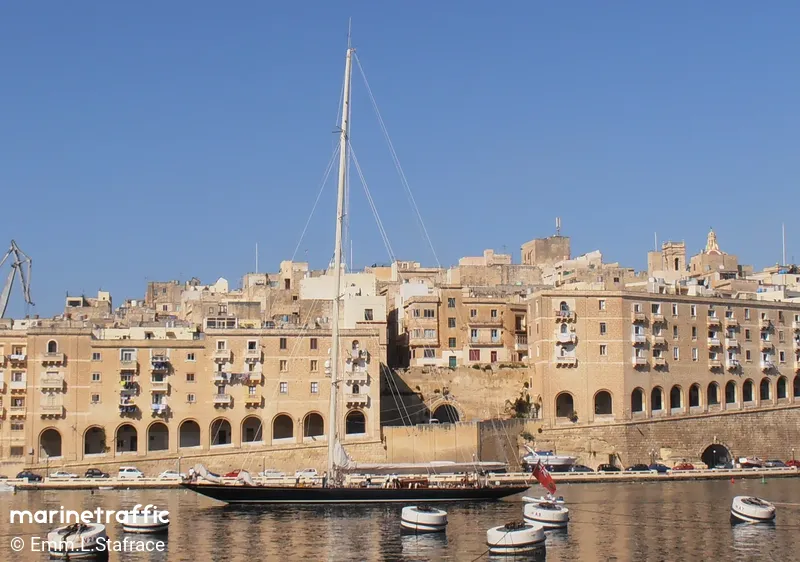
A vessel’s position is the boat’s, not the owner’s. Ownership is as reported, not certified.
Shamrock V has spent most of her century anchored off the Argolic Gulf. She drifted between two brief summer passages in 2026. Her owner was Sir Thomas Lipton, the Scottish tea magnate who lost five America's Cup races. A vessel built before radio telegraphy can still broadcast its position if someone keeps the generator running.
Shamrock V sits at anchor in the Aegean Sea. Her last known position was near Gythion on the Peloponnese coast. The United Kingdom flag flies over her steel hull. She measures thirty-eight metres from bow to stern. This length makes her a modest vessel by modern superyacht standards. It also makes her easy to hide in small bays.
The yard that built her had limited space in Gosport. Camper & Nicholsons constructed many vessels there. Their original shipyard leased land from the Royal Naval Dockyard. Francis Calense Amos founded the business in 1782. He started by building small boats for local fishermen. William Camper took over the running of the business in 1824. Benjamin Nicholson joined as an apprentice in 1842. He took over design work by 1855. The company renamed itself to reflect his contribution.
Charles Ernest Nicholson designed Shamrock V. He was the son of Benjamin Nicholson. He became a prolific yacht designer. His designs appeared in racing yachts and motor launches. The yard produced hundreds of motor yachts. They were not just sailing vessels. The Gosport yard remained in operation until 2005. Archive material about the firm is preserved in several places. The National Maritime Museum holds some records. The Scottish Yachting Archives hold others.
Who owned Shamrock V, and what funded her?
Sir Thomas Lipton ordered the yacht. He was a self-made man from Glasgow. His parents left Ireland during the Great Famine. He worked as a printer’s errand boy. He later became a shirtcutter. He enrolled at a night school in the Gorbals. He opened tea stores in the city. He built a global brand from those shops. He advertised his goods aggressively. He claimed to sell the best goods at the cheapest prices.
Lipton was also a yachtsman. He challenged for the America's Cup five times. He lost every race. He never married. He maintained a long relationship with a shop assistant named William Love. He lived in London later in life. He bought a home called Osidge in Southgate. He redecorated it completely. He built a new billiards room. He kept fast carriage horses in his stables.
He used his wealth for philanthropy. He helped medical volunteers during the First World War. He placed his yachts at the disposal of the Red Cross. He sent doctors and nurses to Serbia. He visited hospitals in Belgrade and Kragujevac. He asked for modest lodgings while there. He made an honorary citizen of Niš. He was appointed Knight Commander of the Royal Victorian Order. Edward VII granted him this title in 1901. He died in 1931. Shamrock V was already afloat when he passed away.
Why does Shamrock V stay in one place?
Her AIS transmitter sends a weak signal. She broadcasts from the Aegean Sea. Her MMSI identifier is 232056681. The data shows she stays near Gythion. This area offers shelter from strong winds. It is far from busy shipping lanes. A Historic yacht of this age needs calm waters. Modern navigation suites are rare on such vessels. The crew relies on basic instruments. Staying put reduces mechanical stress. It also reduces fuel consumption.
The generator must run to keep the beacon alive. Someone must maintain the system. Without power, the AIS stops. The position becomes unknown. This is a constraint of old technology. Newer yachts have satellite links. They do not need a shore-based generator. Shamrock V depends on a simple radio beacon. The beacon works because the crew cares for it. It proves the vessel is still active.
A vessel built before radio telegraphy can still broadcast its position, provided someone keeps the generator running.
What movements did we track in 2026?
She moved very little this year. Our archive recorded only two short passages. One happened in late July. The other occurred in early August. These were brief excursions. She did not cross any seas. She stayed within sight of the coast. The distances were short. The speeds were low. This pattern matches her history. Historic yachts rarely cruise long distances.

Passage 201 started on 31 July 2026. She left a point forty-four nautical miles off Gythion. She headed towards Kalamata. The distance was twenty-two point four nautical miles. She arrived forty-five nautical miles off Kalamata. The average speed was eight point five knots. This is a slow pace for a motor yacht. It reflects the engine condition. It also reflects the sea state. The passage ended quickly. She returned to anchorage soon after.
The second movement was even shorter. It happened in early August. The track was barely visible on the map. She moved a few miles. She turned around. She went back to where she started. The total distance for both movements was small. Most of the year she sat still. The AIS showed no movement for months. This silence is normal for her class. It does not mean she is abandoned. It means she is preserved.
How does Shamrock V compare to other yachts?
Modern yachts move constantly. They travel between ports. They visit multiple countries. Their AIS data shows a busy life. Shamrock V shows a quiet life. This difference comes from age. New yachts have robust systems. Old yachts have fragile ones. Maintenance is harder on older hulls. Crews prefer stability. They avoid heavy weather. They stay in protected harbours. This limits their range. It also limits their exposure to risk.
The Gosport constraint applies here too. The yard could not build huge vessels. Their slipway was limited. Shamrock V fits that limit. She is thirty-eight metres long. That is manageable for a small yard. It is also manageable for a single owner. Lipton could afford her. He could also afford to keep her. Today, the cost is higher. Fuel is more expensive. Regulations are stricter. Yet she still sails. She still broadcasts. She still exists.
The data confirms her status. She is a Historic asset. She is not a commercial vessel. She does not carry passengers. She does not transport cargo. She exists for leisure. That leisure is restricted. She cannot go far. She cannot go fast. She stays close to home. This is the reality of owning a century-old yacht. It requires patience. It requires care. It requires a place to call home.
Reporting and data: CelebYachts, republished by On the record.
Sources
The numbers on this page point here. Each one links to the record it came from.
- 1