
 CelebYachts reportProfiles
How David Geffen flipped Pelorus and kept Rising Sun
Geffen treats superyachts as liquid assets. He buys half-shares, flips hulls for profit, and keeps one large vessel.
By On the record · Oct 15, 2026 · Data from CelebYachts1
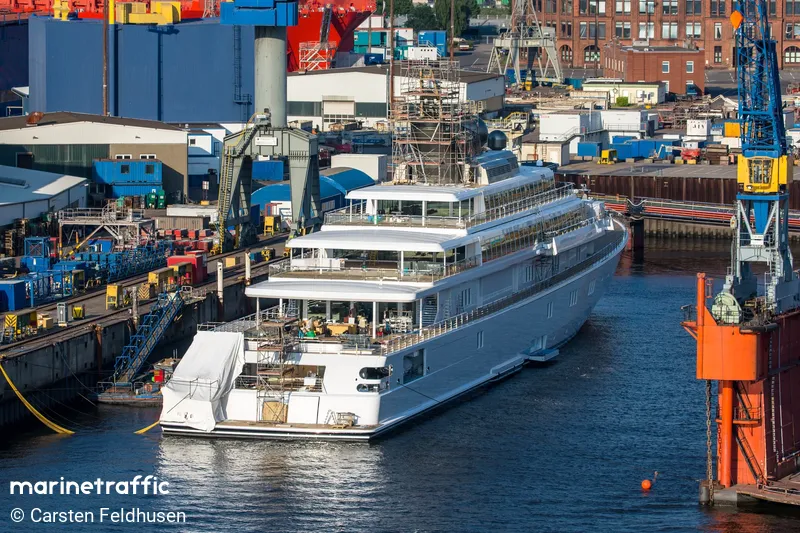
A vessel’s position is the boat’s, not the owner’s. Ownership is as reported, not certified.
David Geffen owns Rising Sun, a 138-metre Lürssen built in 2004. He entered the market by buying half of Larry Ellison’s yacht. He later flipped Pelorus for a loss. His fleet shows a pattern of quick turns.
David Geffen has owned two major superyachts in recent years. Both are 115 metres or longer. Both were built by Germany’s Lürssen shipyard. One is still his. The other was sold within a year.
His approach to these vessels differs from most billionaires. He does not build custom hulls from scratch. He enters existing markets through shared ownership. He then sells when the price suits him.
This strategy treats yachts as financial instruments. It prioritises capital preservation over architectural loyalty. The result is a small but active fleet that moves quickly.
How did Geffen enter the superyacht market?
Geffen did not start with a full purchase. He began by buying a half-share in a larger vessel. This allowed him to test the water without full commitment.
In late 2006, he bought a half-share in Rising Sun. The yacht belonged to Larry Ellison, the CEO of Oracle Corporation. Rising Sun measures 138.6 metres. It was built by Lürssen in 2004.
The arrangement gave Geffen access to a massive vessel. He could use the yacht without paying for its entire construction. This is a common entry point for new owners who want scale.
Ellison later ordered a new, smaller yacht. He needed a more compact vessel for different trips. This created an opportunity for Geffen to buy out the remaining share.
In 2010, Ellison sold his half of Rising Sun to Geffen. Geffen became the sole owner. He kept the yacht for over a decade. It remains his primary vessel today.
Rising Sun has 82 rooms. It includes a gym, a basketball court, a wine cellar, and a movie theater. Guests have included Paul McCartney and Bruce Springsteen.
Geffen used the yacht for personal travel. He also hosted high-profile guests. The vessel served its purpose as a stable asset.
What happened with the sale of Pelorus?
Geffen’s second major acquisition was much shorter. He bought Pelorus in 2011. He sold it later that same year. The transaction lasted only months.
Pelorus measures 115 metres. It was built by Lürssen in 2003. The yacht originally belonged to Sheikh Abdul Mohsen Al-Sheikh. Roman Abramovich bought it during its maiden voyage.
Abramovich went through a divorce settlement in 2009. His wife, Irina, took ownership of Pelorus as part of the deal. She held the yacht for a short time before selling it.
Broker Merle Wood approached Irina on Geffen’s behalf. She agreed to sell the yacht to him. Geffen paid $300 million for Pelorus in 2011.
Geffen did not keep the yacht long. Later in 2011, he sold Pelorus to Sheikh Abdullah bin Zayed bin Sultan Al Nahyan. The sale price was €214 million.
This represented a significant loss. He bought the yacht for $300 million. He sold it for roughly $240 million at the time. The flip resulted in a financial hit.
The quick sale suggests a strategic decision. Geffen may have wanted to exit a volatile asset. Or he may have found a better use for his capital.
Pelorus was later sold again in 2016. Hong Kong billionaire Samuel Tak Lee bought it. The chain of ownership moved quickly through high-net-worth individuals.
Why does Geffen keep Rising Sun?
Rising Sun is Geffen’s only current superyacht. He has not bought another since 2010. This stability contrasts with his earlier flip of Pelorus.
The yacht serves as a long-term residence. Geffen uses it for extended trips. It provides space for his crew and guests.
During the COVID-19 pandemic, Geffen posted about staying on Rising Sun. He and a 45-member crew self-isolated in the Grenadines. This drew public backlash.
Despite the controversy, the yacht remained a key part of his lifestyle. It offers privacy and security. It is also a status symbol in maritime circles.
Geffen’s net worth is around $7.8 billion. The cost of owning Rising Sun is a small fraction of his wealth. He can absorb maintenance costs easily.
The yacht’s flag is the Cayman Islands. This is a common choice for superyachts due to tax benefits. It does not change the operational reality of the vessel.
How does Geffen’s fleet compare to others?
Most billionaires own one or two yachts. They often keep them for decades. Geffen’s pattern is different. He buys, holds briefly, then sells.
His entry via half-share is unusual. Most owners buy full hulls. Sharing ownership reduces risk. It also allows access to larger vessels than one might afford alone.
Geffen’s background in media supports this approach. He understands value and timing. He applies business logic to luxury assets.
His philanthropy is extensive. He has donated billions to UCLA and Yale. His yacht spending is separate from his charitable giving.
The contrast between his charity and his yacht flips is stark. He gives away money freely. But he also cuts losses quickly on assets.
This duality defines his relationship with wealth. He is both a giver and a trader. His yachts reflect the latter side.
What does the AIS data show about his movements?
AIS broadcasts track Rising Sun’s position. The data shows her cruising patterns. She often visits the Mediterranean in summer.
In winter, she heads to warmer waters. Her route follows typical superyacht habits. There are no unusual stops.
She does not visit sanctioned ports. Her movements are consistent with private leisure travel. The AIS data confirms her location.
It does not reveal her cargo or passengers. But it places her in known harbours. Her presence in popular destinations adds to her visibility.
This visibility reinforces her status. It is a marketing tool for the brand. Even without advertising, her presence speaks for itself.
Reporting and data: CelebYachts, republished by On the record.
Sources
The numbers on this page point here. Each one links to the record it came from.
- 1