
 CelebYachts reportInvestigations
The two-tier Red Ensign
The United Kingdom flag holds eleven hulls not through tax arbitrage but via a dual-category registration system that separates sub-150-ton pleasure craft from larger commercial-grade vessels.
By On the record · Oct 8, 2026 · Data from CelebYachts1
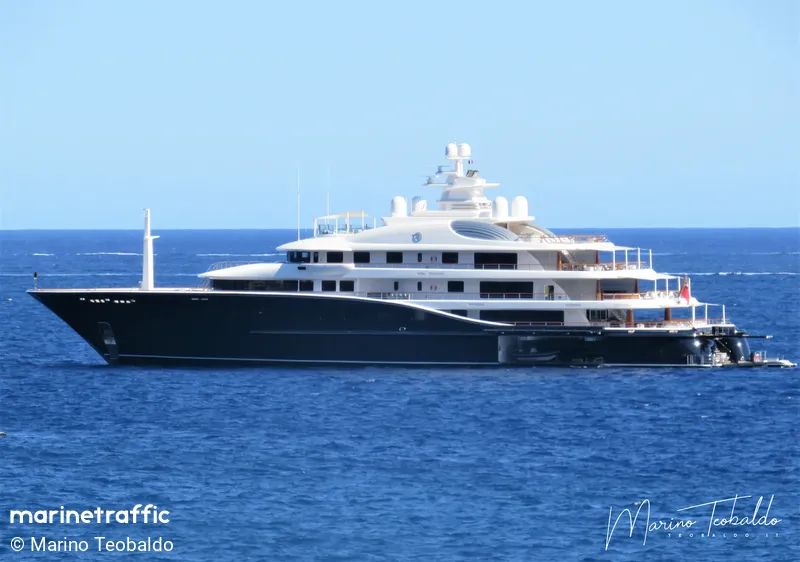
A vessel’s position is the boat’s, not the owner’s. Ownership is as reported, not certified.
While open registries chase volume with minimal oversight, the United Kingdom maintains a five percent share of the tracked fleet by offering a structured alternative to the Isle of Man second register. The mechanics of the Red Ensign’s two categories explain which owners stay, which leave, and why the registry survives the pressure to deregister.
The United Kingdom registry retains eleven tracked hulls because it offers a regulated alternative to the open registers that dominate global merchant shipping. The flag does not compete on tax avoidance or relaxed crewing rules. It competes on administrative clarity and port state credibility. The core mechanism driving this retention is the division of the Civil Red Ensign into two distinct categories. Category 2 restricts registration to commercial ships and yachts up to 150 gross registered tons. Category 1 accepts ships of unlimited tonnage and type. This structural split determines the register’s composition. Owners of larger platforms select the unrestricted stream to align their paperwork with the physical scale of the vessel, avoiding the friction of down-rating a substantial hull to fit a smaller bracket.
The category split
The distinction between the two categories dictates exactly which vessels remain on the register. The Civil Red Ensign falls under the control of the United Kingdom Secretary of State for Transport, which splits the classification into those two streams. Category 2 targets smaller commercial operations and pleasure craft capped at 150 gross registered tons. Category 1 removes that ceiling entirely. The eleven hulls currently tracked on the register cluster above the Category 2 limit, with only three falling beneath it. This distribution is not accidental. It reflects a deliberate routing decision made by owners who recognise that a 92-metre exploration vessel or an 86-metre performance yacht cannot practically operate under a 150-ton administrative framework. The paperwork for a Category 1 registration accommodates the complexity of the machinery, the deck arrangements, and the crew complement required for long-range passages. Smaller vessels, meanwhile, sit comfortably within the Category 2 parameters, utilising the same transport authority oversight without triggering the heavier commercial classification. The registry therefore functions as a graduated system, matching the regulatory burden to the actual dimensions of the steel.
The second register shadow
The existence of the main UK register is best understood in relation to the offshore dependency that shares its name. Traditional maritime nations faced intense competition from open registries such as Liberia and Panama, which offered lower taxes, easier online transfers, and the ability to employ cheaper foreign labour. In response, the United Kingdom established the Isle of Man as a second register in 1984. This offshore jurisdiction adopted open-registry mechanics to retain traffic that would otherwise abandon the parent flag entirely. The creation of this second register clarifies why the direct UK flag remains selective. It operates as a closed or semi-closed tier for owners who prioritise regulatory stability over the cost savings of a pure flag of convenience. The eleven hulls flying the direct UK flag represent that choice. They accept higher survey frequencies and stricter crewing standards in exchange for a jurisdiction that carries no stigma in international inspections. The registry trades the flexibility of cheaper foreign labour for the certainty that a vessel will not be delayed by administrative discrepancies.
Port state reality
International law requires every merchant ship to be registered in a country that exercises effective jurisdiction over it. The United Nations Convention on the Law of the Sea reinforced this principle, demanding a genuine link between the flag state and the vessel. While the 1986 United Nations Convention on Conditions for Registration of Ships attempted to codify economic stakes or mariner provisioning requirements, it never entered into force. The practical enforcement of these standards occurs through regional port state control agreements. The Paris Memorandum of Understanding on port state control subjects visiting vessels to rigorous checks on safety, pollution prevention, and living conditions. In 2015 alone, member states conducted 17,858 inspections, recording 595 detained vessels and banning eleven. Ships flagged in jurisdictions with poor inspection records face disproportionate detention rates. A UK-flagged vessel benefits from a flag state that actively participates in these regional agreements and enforces international conventions. The register’s survival depends on this enforcement credibility. When a vessel enters a Mediterranean or Caribbean port, the documentation presented at the gangway signals compliance rather than evasion. This matters more to the owner than the annual registration fee. The registry provides a paper trail that port state inspectors recognise and respect, reducing the likelihood of costly delays during charter windows or private voyages.
The hull distribution
The register spans from a 16-metre tender to a 92-metre explorer, covering a wide range of operational profiles. The length distribution reveals a clear bifurcation aligned with the regulatory split. Two hulls exceed 80 metres: Nahlin at 92.0 metres and AQUILA at 86.0 metres. These are the anchor assets, requiring Category 1 registration due to their scale. A single vessel, Shemara, measures 64.09 metres, occupying the mid-range segment where the boundary between pleasure and commercial utility often blurs. The remaining eight hulls sit below 50 metres, with Malahne at 50.0 metres, Cyan at 48.7 metres, Velsheda at 39.4 metres, Shamrock V at 38.0 metres, Divina Barbara at 32.0 metres, Blue Bird of 1938 at 31.59 metres, Firebird at 27.0 metres, and Bluebird of Chelsea at 16.0 metres. The presence of multiple vessels under 40 metres indicates that the registry also serves smaller private craft that value the direct UK administrative chain over offshore routing. The total share of five percent across the tracked fleet confirms that the UK flag is a niche product. The exact transfer fees and ongoing maintenance costs for these registrations have never been published. The corporate holding structures behind the larger hulls remain opaque. What is visible is the mechanical outcome of the two-tier system: a register that filters vessels by tonnage, rewards compliance with faster port clearance, and retains a steady stream of owners who calculate that the paperwork burden is outweighed by the operational reliability of the flag state.
Reporting and data: CelebYachts, republished by On the record.
Sources
The numbers on this page point here. Each one links to the record it came from.
- 1CelebYachtsCelebYachts: The two-tier Red Ensign