
 CelebYachts reportInvestigations
The Viareggio constraint
Codecasa sustains a six-generation run by building 30-to-90-metre vessels in a single historic dock, trading volume for bespoke steel and aluminium work.
By On the record · Sep 24, 2026 · Data from CelebYachts1
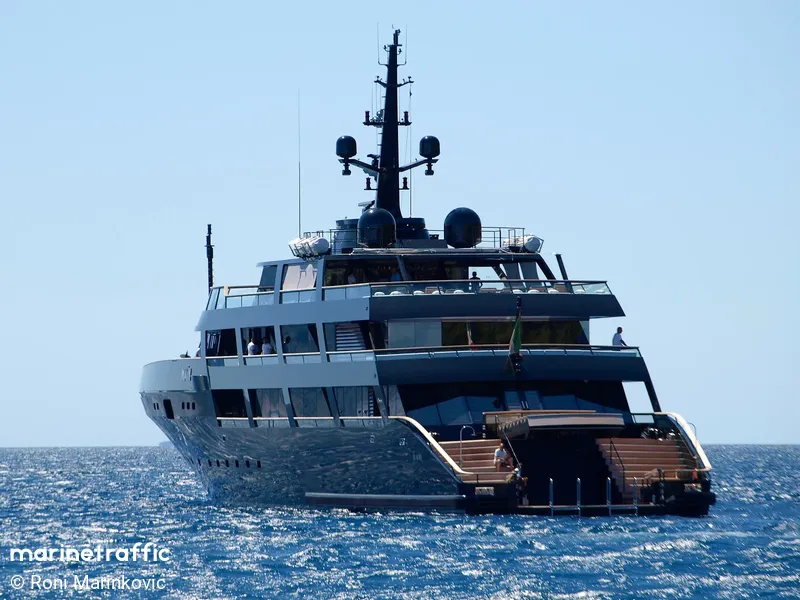
A vessel’s position is the boat’s, not the owner’s. Ownership is as reported, not certified.
While competitors chase 120-metre monsters, this Viareggio yard has maintained a steady output of three hulls on our register by operating inside a 6500-square-metre facility. The thesis is that longevity here comes from geographic and generational lock-in, not capital markets.
Codecasa survives through capacity management rather than market expansion. The shipyard operates inside one of the oldest docks in Viareggio, covering an area in excess of 6500 square metres. That footprint dictates how many hulls can occupy the slipway simultaneously, how wide a beam can be fitted during construction, and how quickly materials move from storage to assembly. While larger yards compete on annual launches and public share prices, Codecasa has sustained a six-generation run by accepting those physical limits and focusing entirely on custom steel and aluminium projects between 30 and 90 metres.
The viareggio constraint
A 6500-square-metre site in a historic port town does not allow for parallel production lines. The yard builds either steel or aluminium vessels, sometimes mixing both in a single hull, but it does so within a fixed spatial envelope. The maximum length of 90 metres sets a hard ceiling on crane reach, berth width, and internal volume allocation. Every project must fit inside that boundary, which forces naval architects to optimise interior layouts rather than simply extending deck space. The yard also maintains repairing and refitting capabilities for motor and sailing yachts, a secondary revenue stream that keeps workshops active during gaps between new builds without expanding the primary construction footprint.
Viareggio itself imposes additional constraints. The town sits on the Ligurian coast with limited inland expansion space, meaning any new shed or dry dock requires complex municipal approvals and significant capital. Codecasa has chosen not to relocate or acquire adjacent land. Instead, it works within the existing infrastructure, adapting workflows to the available square footage. This approach explains why the yard rarely publishes fleet expansions or acquisition announcements. The business model relies on repeat clients who accept longer delivery windows in exchange for a custom policy aimed at meeting specific owner requirements rather than standardising production.
Six generations of steel
Giovanni Battista Codecasa founded the shipyard in 1825. The company remains under the direction of the sixth generation of the family, which maintains direct control over procurement, design approval, and client relations. Family ownership removes the pressure to pursue quarterly growth targets or take on external equity. It also means that expansion decisions require consensus across multiple stakeholders who prioritise continuity over scale. The yard has never floated publicly, nor has it been acquired by a larger maritime conglomerate. That independence allows it to decline orders that exceed its 6500-square-metre capacity or fall outside its material expertise, preserving cash flow during slower market periods.
The financial origin of the wealth that built these hulls traces back to early nineteenth-century marine engineering in Tuscany. Over two centuries, the business accumulated specialised tooling, skilled welders, and supply chain relationships that cannot be replicated quickly. Clients include media mogul Jim Gabbert, who commissioned the Invader, and Darwin Deason, who ordered the Apogee. Mohammed Al-Fayed purchased the Sokar, originally launched as the Jonikal in 1990, in the spring of 1997. The vessel measured 63.5 metres, placing it among the largest yachts globally at the time. Giorgio Armani owns the Main, delivered in 2008 at 65 metres. These commissions demonstrate that the yard attracts high-net-worth buyers who value bespoke construction over rapid delivery.
The three-hull ledger
Our register tracks three Codecasa hulls, with a combined length of 163.6 metres. The longest is Main, measuring 65.0 metres and completed in 2008. Mariu follows at 49.9 metres, delivered in 2003. Cyan rounds out the record at 48.7 metres, launched in 1997. The spacing between completions averages roughly five to six years per vessel. That rhythm reflects the yard's ability to manage only one major build at a time within its historic dock. A second hull would require additional quay space, heavier lifting equipment, and more simultaneous welding stations, none of which exist on the current site.
The progression from Cyan to Main shows a deliberate shift toward larger aluminium structures. Cyan and Mariu sit just under 50 metres, while Main crosses into the mid-60s. The jump suggests that the yard gradually upgraded its cranes and assembly jigs to handle heavier superstructures, possibly transitioning from all-steel to all-aluminium or hybrid builds as market demand shifted. The 90-metre material limit remains untested on our register, but the yard has publicly stated it as a capability threshold. In January 2020, the shipyard announced plans to launch a new project called Jets 2020, a 70-metre yacht designed with aviation-inspired lines. The project was intended to become the new flagship of the Codecasa range, though delivery timelines and final specifications have not been published.
Yachts Magazine awarded Codecasa Best Design in the large motor yacht category for its 164-foot range, a recognition that aligns with the yard's focus on structural innovation rather than sheer displacement. The award covered vessels around 50 metres, confirming that the yard's sweet spot lies in the upper end of its 30-to-90-metre specification band. Builders at this size must balance weight distribution, fuel efficiency, and interior volume without the safety margin that larger hulls provide. Codecasa's repeated success in this bracket indicates a mature understanding of aluminium joinery and steel reinforcement techniques that smaller yards lack.
Gaps in the record
The sale prices for Main, Mariu, and Cyan have never been confirmed. Interior layouts remain unpublished, and the current flags and home ports for each vessel are unknown. Media records contain photographs of all three hulls but no voyage data or live tracking positions. The yard's website lists additional past projects such as the Invader, Apogee, and Sokar, yet none appear on our register, likely because they predate systematic AIS logging or were sold before our tracking thresholds activated. Where the record is silent, I state that once and turn to what the physical constraints reveal: a 6500-square-metre dock, a 90-metre length ceiling, and a sixth-generation family that has chosen stability over expansion.
Reporting and data: CelebYachts, republished by On the record.
Sources
The numbers on this page point here. Each one links to the record it came from.
- 1CelebYachtsCelebYachts: The Viareggio constraint