
 CelebYachts reportProfiles
Why Camper & Nicholsons built warships, not superyachts
The yard survived two centuries by building flying boats and motor gunboats. Its four tracked hulls are the wooden survivors of that wartime pivot.
By On the record · Sep 24, 2026 · Data from CelebYachts1
A vessel’s position is the boat’s, not the owner’s. Ownership is as reported, not certified.
Camper & Nicholsons did not endure through luxury yacht orders alone. It survived because it converted its slips for warship construction during both World Wars. The four hulls on our register are the few remaining examples of this industrial shift from civilian leisure to military necessity.
Francis Calense Amos founded a shipyard in Gosport in 1782. He leased land from the Royal Naval Dockyard. At first, he built small boats for local fishermen.
William Camper took over the business in 1824. Benjamin Nicholson joined as an apprentice in 1842. He became a director and helped design many vessels. The firm renamed itself Camper and Nicholsons to reflect his role.
Our register tracks only four hulls built by this yard. These are all sailing yachts from the early twentieth century. They represent a tiny fraction of the yard’s output. Most of their work was naval or commercial.
How did the yard survive the World Wars?
Civilian yacht orders were not enough to keep the yard alive. The outbreak of war in 1914 changed everything. The yard shifted to building small naval craft for the Admiralty. They also constructed flying boat hulls for the Gosport Aircraft Company. Hull numbers 234 to 238 were F 2 A Flying Boat Hulls.
These projects kept the workforce employed and the slips active. The yard continued to build throughout the First World War. Both the Gosport and Southampton yards faced bombing raids. Despite this damage, they maintained production levels.
The Second World War brought even greater demands. Most large yachts built by the yard were requisitioned by the Admiralty. They served in various roles, often being refitted at the Northam Yard. The yard itself was bombed several times.
In 1941, the yard built Motor Gun Boats for Turkey. These were taken over for British use as MGB 502 to MGB 509. Five of these were later converted into blockade runners. They brought ball bearings out of neutral Sweden.
The yard also designed and built twenty-four SLUG boats. These were used in the Mulberry harbours for the Normandy landings. They deployed anchors to stabilize floating bridges. All twenty-four carried Yard Number 678.
This massive output of military vessels ensured the yard’s financial stability. Without these contracts, the yard might have closed. The transition from luxury to warship construction was vital for survival.
What materials defined the yard's early success?
Charles Ernest Nicholson was a prolific yacht designer. He joined the family business and brought innovation. In 1912, he introduced the 15mR design Istria. This yacht featured lightweight, laminated wood construction.
Nicholson developed expertise in lightweight materials further. He pioneered the use of plywood in deck construction. This technique reduced weight while maintaining strength. It allowed for faster and more efficient sailing yachts.
The yard built hundreds of motor yachts as well. Pioneer, built in 1913, was the first diesel-powered boat at the yard. It had a 250 bhp Polar diesel engine. This marked a shift from sail to power for some clients.
The Gelyce class tenders were another innovation. Designed in the early 1900s, they supported larger racing yachts. Nine of these fifty-foot motor yachts were built between 1912 and 1930. The name came from the wives of the Nicholson brothers.
Wood remained the primary material until the 1960s. The yard resisted the shift to GRP (glass-reinforced plastic) initially. However, market forces eventually compelled change. The first Nicholson 36 with a GRP hull was built in 1961.
The reliance on wood limited the yard’s scale. Large steel or GRP hulls required different facilities. The Gosport yard was adapted for smaller, custom builds. This constraint shaped the types of vessels they could produce after the war.
Why are there only four hulls on the register?
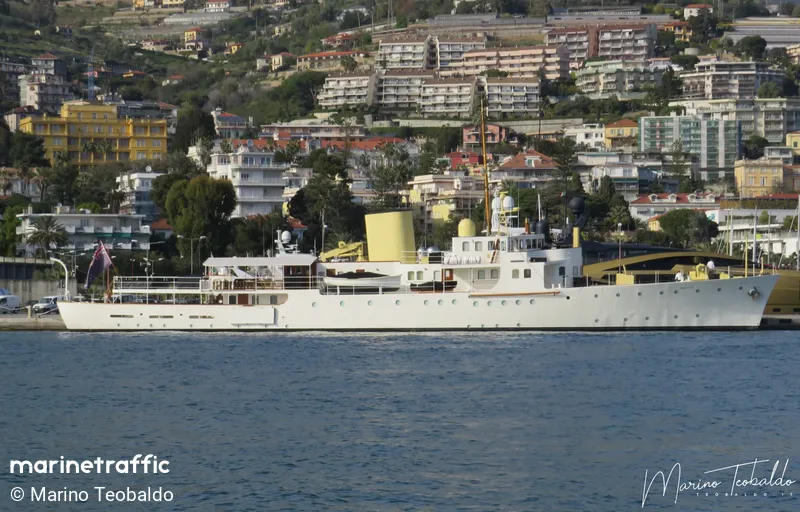
Our register lists only four hulls from Camper & Nicholsons. These are Marala, Malahne, Velsheda, and Shamrock V. Their combined length is 186.3 metres. Marala is the longest at 58.86 metres.
These vessels are all sailing yachts. They belong to the J-class or similar racing designs. Velsheda and Shamrock V were designed by Charles Ernest Nicholson. They competed in major races like The America's Cup trials.
Most other vessels built by the yard are not tracked. Many were warships that were scrapped after the wars. Commercial vessels were retired or destroyed. The yard’s focus on military production meant fewer civilian records survived.
The fire of 1910 destroyed many records. A major blaze at the Gosport Shipyard wiped out offices. Almost all existing records were lost. This makes tracking the full history difficult. We rely on surviving vessels and secondary sources.
The four hulls are rare survivors. They represent a specific era of yacht design. Before the GRP revolution, the yard dominated wooden hull construction. After 1961, the nature of production changed significantly.
How did the yard restructure after the wars?
After the war, the yard resumed civilian boat building. Yacht maintenance became a key activity. The centre of yachting moved to the Mediterranean. In 1961, Camper & Nicholsons International was formed. This subsidiary handled brokerage and charter services.
The Southampton yard closed in 1979. Access was impacted by the Itchen Bridge construction. The yard focused solely on Gosport. Margins on GRP models were tight. The quantity of boats increased, but profits did not follow.
Crest Securities merged with the yard in 1972. They formed Crest Nicholson. The housing business became the priority. In 1981, a management buyout occurred. The company became Camper & Nicholsons Yachts Ltd.
The workforce was cut from 250 to 65. Production shifted to custom yachts. The yard no longer built mass-market GRP boats. Nautor’s Swan bought the Gosport yard in 2001. They closed it in 2005, ending shipbuilding on site.
The legacy lives on in the brokerage arm. Camper & Nicholsons International still operates today. It manages charters and sales globally. The physical yard is gone, but the brand remains.
What does the register tell us about the yard?
The four hulls provide a snapshot of the yard’s peak. They show the quality of Nicholson’s designs. Velsheda and Shamrock V are notable J-class racers. Marala and Malahne demonstrate the yard’s versatility.
The register highlights the impact of war. Without military contracts, the yard might not have survived. The shift to warship construction was vital. It allowed the yard to maintain operations during turbulent times.
The data also shows the limits of preservation. Hundreds of vessels were built. Only four remain in our tracking system. Most were lost to scrap or war damage. The register is incomplete by necessity.
Understanding the yard requires looking beyond the yachts. The warship output defines its historical importance. The wooden hulls are the visible remnants. The flying boats and motor gunboats are the unseen foundation.
Reporting and data: CelebYachts, republished by On the record.
Sources
The numbers on this page point here. Each one links to the record it came from.
- 1