
 CelebYachts reportInvestigations
Why Phi is rotting in London while Athena sails
Phi and Athena share a builder but not a fate. One yacht corrodes under UK sanctions. The other cruises the world.
By On the record · Oct 2, 2026 · Data from CelebYachts1
A vessel’s position is the boat’s, not the owner’s. Ownership is as reported, not certified.
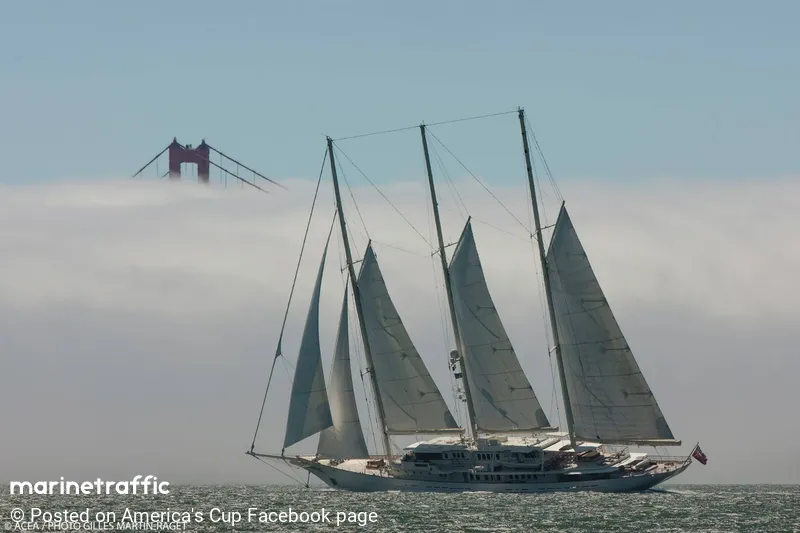
Phi and Athena were both built by Royal Huisman. Phi sits frozen in London. Athena sails with Jim Clark.
Athena and Phi sit side by side in this gallery. They look like cousins. They share a Dutch builder and a similar era of commissioning.
Their fates diverge completely. Athena sails under the Cayman Islands flag. She belongs to Jim Clark, an American computer scientist.
Phi sits docked in London. She belongs to Sergei Naumenko, a Russian property developer. The UK government froze her assets in March 2022.
The contrast shows how capital works. One owner deploys money for performance. The other watches his asset corrode under state seizure.
How did Royal Huisman build two such different boats?
Royal Huisman started in 1884. The shipyard built wooden workboats for the Zuiderzee inland sea. Jan Huisman specialised in steel sailing yachts in 1954.
His son Wolter switched to aluminium hulls in 1964. This move helped the yard tap into the international racing circuit. They won the Whitbread Round the World Race twice.
This history shaped Athena. She is a sailing yacht launched in 2004. Dr. Jim Clark ordered her as a repeat client. He had also ordered Hyperion in 1998.
Athena measures 79.2 metres. Her beam is 12.2 metres. She carries 1,103 gross tons of volume. Her hull is aluminium. This fits the yard's long tradition.
Phi arrived much later. She was delivered in 2021. She is a motor yacht measuring 58.5 metres. Her beam is narrower at 9.0 metres. She carries 499 gross tons.
The design reflects a different goal. Cor D. Rover Design drew Phi's exterior. It was inspired by a cobra. Lawson Robb designed the interior. A seven-metre swimming pool sits on deck.
The yard expanded its services in 2011. They opened Huisfit for refits and repairs. In 2019, they added a second location in Amsterdam. This space handles conversions for the global fleet.
Both boats show the yard's skill. Athena uses extruded aluminium masts. Phi uses modern motor yacht engineering. The yard employs over 350 specialists across five building halls.
Who owns Athena and where does she sail?
Jim Clark founded several Silicon Valley companies. He created Silicon Graphics and Netscape. His research led to systems for rendering 3D computer images.
Clark bought Athena for performance. He wanted a vessel that could race and cruise. The yacht flies the Cayman Islands flag. Her home port is George Town.
AIS data tracks her movements closely. She sails in European waters. Her last reported position was on the Elbe River. She remains active and mobile.
Her value is estimated at $70 million. This figure reflects her age and condition. Sailing yachts hold value differently than motor yachts. Maintenance keeps her seaworthy.
Clark has used the yacht for decades. He ordered it as a return customer. The vessel represents a personal passion for sailing mechanics. It is not a static asset.
Why is Phi frozen in London?
Phi arrived in London in December 2021. She came for a winter stopover. She docked at Canary Wharf. She planned to leave for Malta in March 2022.
UK authorities froze her on March 28, 2022. This was before she could depart. The sanctioning was ordered by Transport Secretary Grant Shapps. It was the first time the UK used sanctions on a ship.
Shapps filmed a video on TikTok. He called Phi a yacht belonging to a Russian oligarch. He said the owner was a friend of Putin. He stated the detention was indefinite.
The UK Department for Transport worked with the National Crime Agency. They identified the owner as Sergei Naumenko. He is a Russian property developer. He was not personally sanctioned by the UK.
Naumenko appealed the decision in court. His lawyers argued the confiscation was unlawful. They said he was not a friend of Putin. Sir Ross Cranston dismissed the appeal in July 2023.
The Court of Appeal heard the case in January 2024. Lord Justice Singh criticised Shapps' statements. He said calling Naumenko a friend of Putin was incorrect. However, the judges upheld the detention.
The Supreme Court dismissed the final appeal in July 2025. They ruled the detention was lawful. The court said Phi was an emblem of conspicuous consumption.
What damage has Phi suffered in detention?
Phi remains docked at Canary Wharf. She has not moved since March 2022. The prolonged detention has caused significant deterioration.
The yacht has lost its classification status. This means she no longer meets safety standards. She has also lost her protection and indemnity insurance coverage.
Critical systems have shut down. Fire detection and suppression systems are offline. Stray electric current has caused galvanic corrosion. This affects the fuel and water tanks in the hull sides.
Phi carries 60,000 litres of diesel fuel. Sanctions prohibit moving the yacht. This prevents the fuel from being pumped out or used. The fuel degrades over time.
Visible signs include hull degradation. Scaffolding surrounds much of the superstructure. Workers erected it to protect the yacht from debris. Some windows are whitewashed to protect the interior.
Captain Guy Booth reports 18 attempted intrusions. These attempts occurred during the detention. The sanctions regime prevents significant maintenance work. Yachts typically need to be taken out of water annually.
Brokers note engines and lubricants must run continuously. Phi cannot undergo these normal procedures. She is part of a broader trend affecting detained Russian-linked yachts.
How much value has been lost?
Phi's original cost was £38 million. This equals roughly $50 million at the time. An estimate places her current value lower due to decay.
Cecil Wright brokerage reports wider losses. Fifteen impounded Russian-linked yachts have lost €580 million collectively. Their total value dropped from €3.5 billion to €2.9 billion.
Proper maintenance preserves value. Lack of maintenance destroys it. Phi cannot access the dry docks needed for annual care. Her hull continues to degrade.
Naumenko pays for maintenance costs. He is not allowed to use the yacht. UK law considers her his property. He cannot sell her or charter her.
The Supreme Court ruled the detention struck a fair balance. They said it impedes Naumenko's ability to advertise wealth. It also stops income from chartering.
Captain Guy Booth plans to approach the European Court of Human Rights. This appeal remains pending as of March 2026. The legal battle continues.
Reporting and data: CelebYachts, republished by On the record.
Sources
The numbers on this page point here. Each one links to the record it came from.
- 1