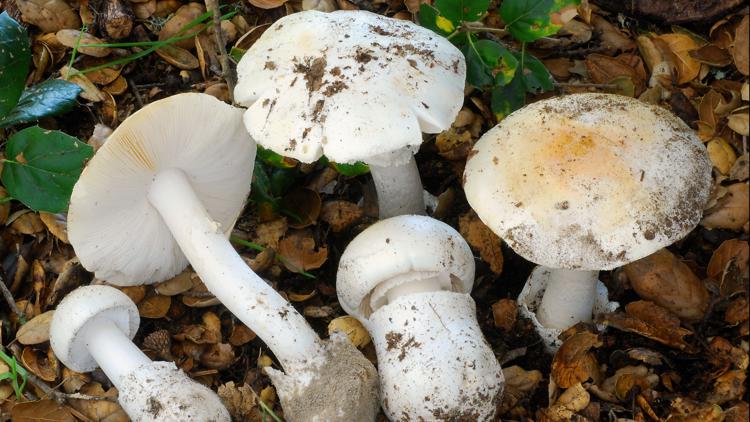
California Health Officials Expand Death Cap Mushroom Warning Statewide


Key facts
California health officials have expanded their warning about deadly wild mushrooms to cover the entire state, urging residents to avoid foraging as El Nino weather patterns increase the risk of toxic mushroom blooms.1
The advisory was issued by the California Department of Public Health on Wednesday.1
The warning covers the Death Cap and the Western Destroying Angel, two deadly mushrooms that can cause serious illness and death.2
What the advisory covers
The advisory cites the potential for heavy rainfall to accelerate the growth and spread of the Death Cap and the Western Destroying Angel.1
The outbreak occurred between November 2025 and May 2026.1
Fifty people were poisoned after accidentally consuming the toxic fungi during the outbreak period.1
Four individuals underwent life-saving liver transplants.1
More than three dozen others fell ill, marking a dramatic spike in toxic exposure compared to historical averages.1
In a typical year, the California Poison Control System receives five or fewer reports of illness linked to poisonous fungi.1
The recent surge of fifty cases represents a massive deviation from the norm.1
Where the outbreak was concentrated
The recent outbreaks were heavily concentrated on the Central Coast and in Northern California.1
Reported illnesses from the most recent outbreak were focused on the Central Coast and Northern California.2
Reported hospitalizations and illnesses occurred in Monterey, San Francisco, Alameda, Humboldt, Contra Costa, Sacramento, San Luis Obispo, San Mateo, Santa Clara, Santa Cruz, Sonoma, and Yuba.2
The new advisory emphasizes that the threat is now statewide.1
The risk extends to parts of the San Francisco Bay Area and the Los Angeles region.1
What the mushrooms look like
The Death Cap is scientifically known as Amanita phalloides.1
The Western Destroying Angel is scientifically known as Amanita ocreata.1
Both mushrooms are whitish and possess a volva, a cup-like structure at the base of the stem.1
The death cap can be confused with the mushroom species Volvariella, which is edible.2
Both the death cap and Volvariella have somewhat similar characteristics including a volva, a cup-like structure at the base of the mushroom’s stem, and are whitish in color.2
Ari Jumpponen, a distinguished professor of biology at Kansas State University, noted that while both types have similar characteristics, death caps lack an annulus, or ring, around their stems.1
Symptoms and treatment
The symptoms associated with consuming these mushrooms are often delayed.1
The death cap can cause gastrointestinal symptoms that may not appear until six to 24 hours after consumption.1
Some early symptoms that can go away within a day include nausea, vomiting, diarrhea, abdominal pain, drop in blood pressure, fatigue and confusion.2
Mild symptoms may be only the beginning of a more severe reaction.2
Severe symptoms can develop within 48 to 96 hours, including progressive liver damage and, in some cases, full liver failure and potentially death.2
A deadly history
During a previous major outbreak in 2016, there were 14 reported cases and no deaths.2
Three people required liver transplants and one child suffered “permanent neurologic impairment,” according to a report published in the U.S. Centers for Disease Control and Prevention’s Morbidity and Mortality Weekly Report.2
What officials are saying
Dr. Erica Pan, the state public health officer and director of the California Department of Public Health, said, “With El Niño expected to bring increased rainfall to parts of California, we are concerned that these poisonous mushrooms could grow in large numbers.”2
Sources
Every number in the story points here. Each links to the original reporting.
Localheadtopics.com, Press Democrat
See a sentence its source doesn’t back up?
Tell us the source number and what’s wrong. We check every report. If we change the story, the fix goes on the corrections page with the old wording.