Colorado researchers use drones to study black-footed ferrets after release

Key facts
- On Nov. 18, 38 black-footed ferrets arrived from the U.S. Fish and Wildlife Service’s National Black-Footed Ferret Conservation Center were.1
- Twenty-two of the ferrets were fitted with special collars carrying VHF transmitters and accelerometers, which record movement 40 times per second and help researchers build a 3D picture of activity.1
- CPW Wildlife Biologist Katie Merewether said in a statement that the goal with partners from Smithsonian’s National Zoo and Conservation.1
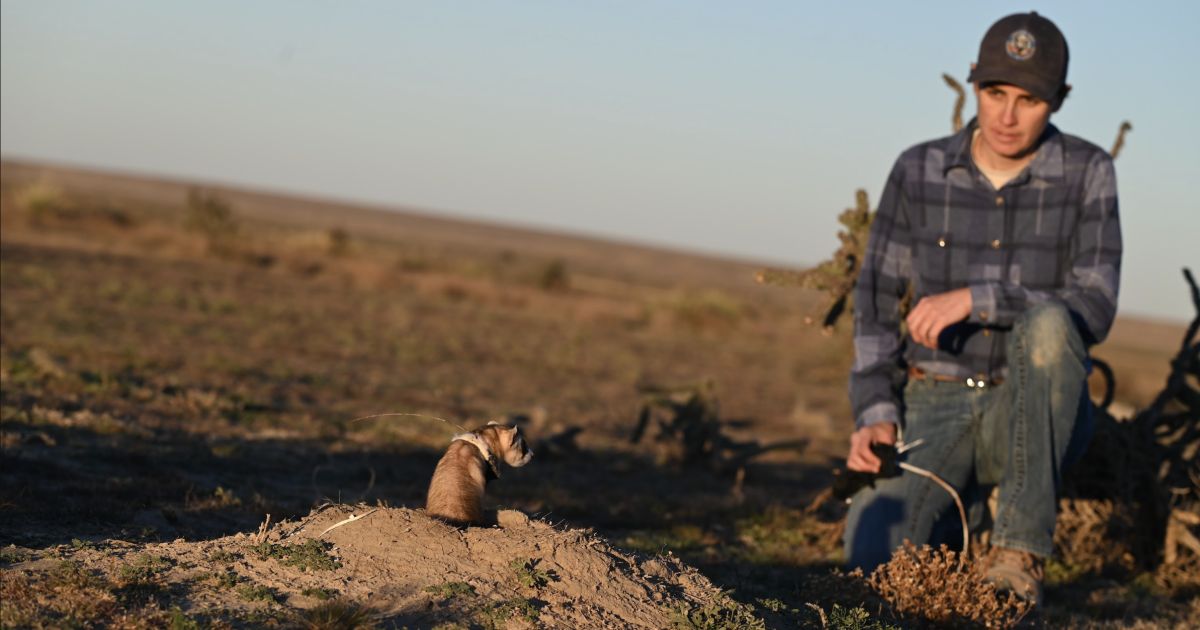
Colorado Parks and Wildlife said drones returned to the skies over Lamar’s Heartland Ranch in Southeastern Colorado as research continues on black-footed ferrets.1
Researchers from the department, along with partners from the Southern Plains Land Trust and researchers from the Smithsonian’s National Zoo and Conservation Biology Institute, are looking to learn what happens to black-footed ferrets after their release.1
On Nov. 18, 38 black-footed ferrets arrived from the U.S. Fish and Wildlife Service’s National Black-Footed Ferret Conservation Center and were transported and released onto the Southern Plains Land Trust-operated Heartland Ranch in Bent County.1
Teams guided each one into a specified prairie-dog burrow across the 43,000-acre property.1
Collars Record Activity
Twenty-two of the ferrets were fitted with special collars carrying VHF transmitters and accelerometers.1
The accelerometers record movement 40 times per second, and data helps researchers build a 3D picture of activity.1
The research also gathers data from collared swift foxes and badgers to help identify predators.1
When a ferret is preyed upon, researchers use the location and timing of its movements alongside collar data to help determine which species was responsible.1
Black-footed ferrets were thought to be extinct until a small population was discovered in Wyoming in 1981.1
CPW Wildlife Biologist Katie Merewether said in a statement that the goal with partners from the Smithsonian’s National Zoo and Conservation Biology Institute is to take this data about how black-footed ferrets are interacting in the wild during their first week and turn it into a useful management strategy.1
“The goal with our partners from Smithsonian’s National Zoo and Conservation Biology Institute is to take this data about how black-footed ferrets are interacting in the wild during their first week and turn it into a useful management strategy,” Merewether said. “The collars can help us understand how ferrets are moving, hunting and resting during their first week in the wild. We want to learn whether they’re encountering predators or having difficulty moving across the landscape, and use that information to make future releases more successful.”
Sources
Every number in the story points here. Each links to the original reporting.
LocalKKTV
See a sentence its source doesn’t back up?
Tell us the source number and what’s wrong. We check every report. If we change the story, the fix goes on the corrections page with the old wording.