Deputies approve Milei’s 2027 budget with more funding for universities

Key facts
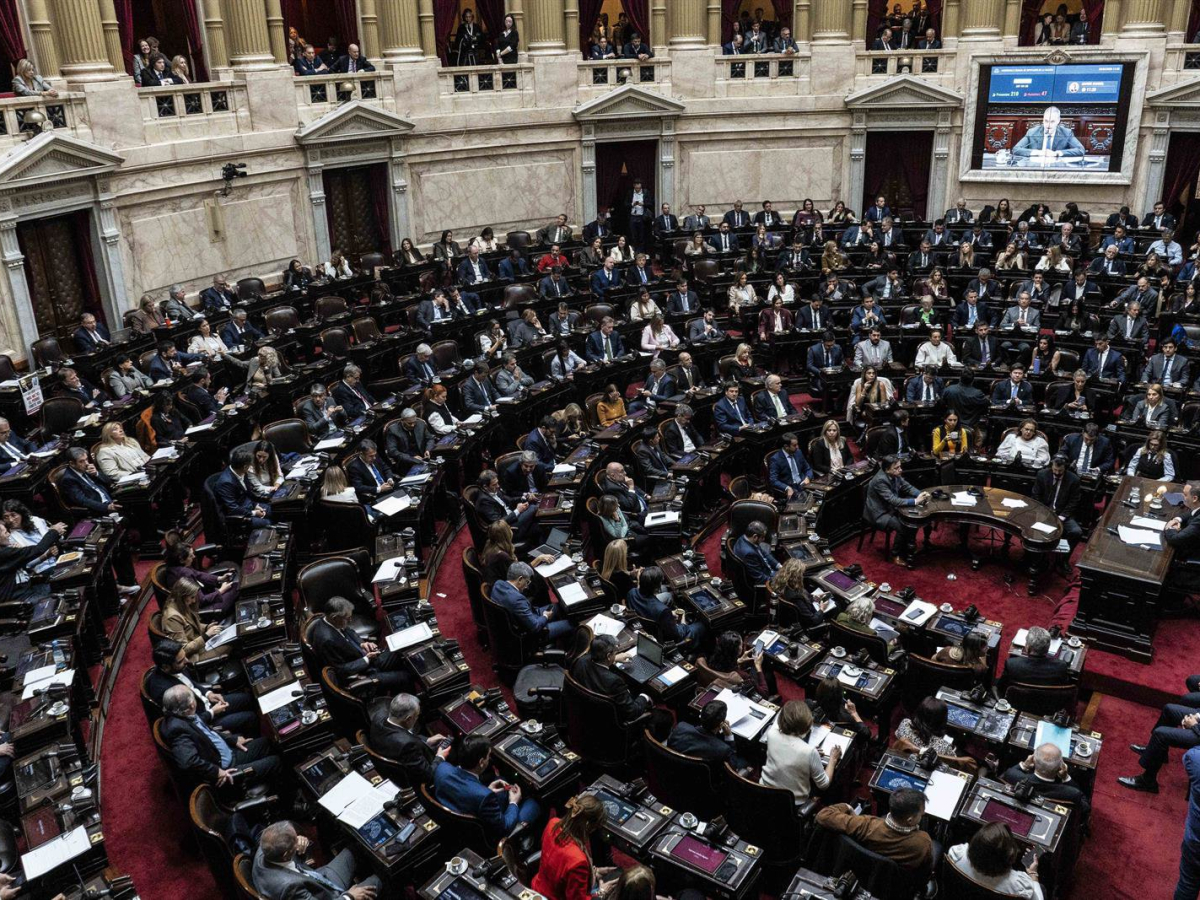
The lower house approved the 2027 budget bill in the early hours of Friday, following a marathon session that began at noon on Thursday.1
The vote was a victory for the government, which had to make several concessions to secure enough support from ruling-party deputies.1
The bill must now pass the Senate before December 31 to take effect, or the government will have to extend the 2026 budget, which included significant funding cuts for public universities and the science sector.1
University Funding
The bill was approved with a chapter granting public universities US$6.8 billion, a figure that matches the requests from the National Inter-University Council.1
The additional funds are intended to help make up for cuts suffered by the sector in recent years, amid the government’s continued refusal to comply with a 2025 law mandating increased funding for public universities.1
La Libertad Avanza deputy Alberto Benegas Lynch said the budget bill has three pillars: zero deficit, a smaller state, and economic predictability.1
Peronist deputy Germán Martínez said the bill needed to provide greater detail on how pensions and disability programs would be funded.1
Nicolás Massot, from the right-wing Encuentro Federal bloc, denied there was a financial surplus, saying it was based on “creative accounting.”1
Other Bills
Deputies also voted to allocate additional funds to the science sector, which has been heavily affected by Javier Milei’s austerity policies.1
Thursday was a particularly busy day in Congress, with proceedings extending into the early hours of Friday in both chambers as lawmakers rushed to debate bills before the ordinary sessions period ends on November 30.1
The government is expected to call extraordinary sessions to secure final approval of the 2027 budget and advance its electoral reform.1
The electoral reform passed the Senate on Thursday, with its main goal being to suspend next year’s primaries.1
Hours before the budget vote, the deputies had approved a reform of the charter of the Central Bank with 141 supports and 99 abstentions, which prevents the entity from financing the Treasury through money issuance.2
The upper house also approved a six-month extension of the Journalists’ Statute, a 1946 law that establishes a special labor framework for media professionals across Argentina, which is scheduled to be repealed on January 1 under Milei’s labor reform, which Congress approved last February.1
The opposition blocs raised the item earmarked for universities from seven to eleven trillion pesos, from about 4,100 to 6,330 million euros.2
The document also projects exports above 130,000 million dollars and a trade surplus higher than 15,000 million.2
Sources
Every number in the story points here. Each links to the original reporting.
LocalBuenos Aires Herald, democrata.es
See a sentence its source doesn’t back up?
Tell us the source number and what’s wrong. We check every report. If we change the story, the fix goes on the corrections page with the old wording.