Klobuchar urges delay in SNAP cost shift

Key facts
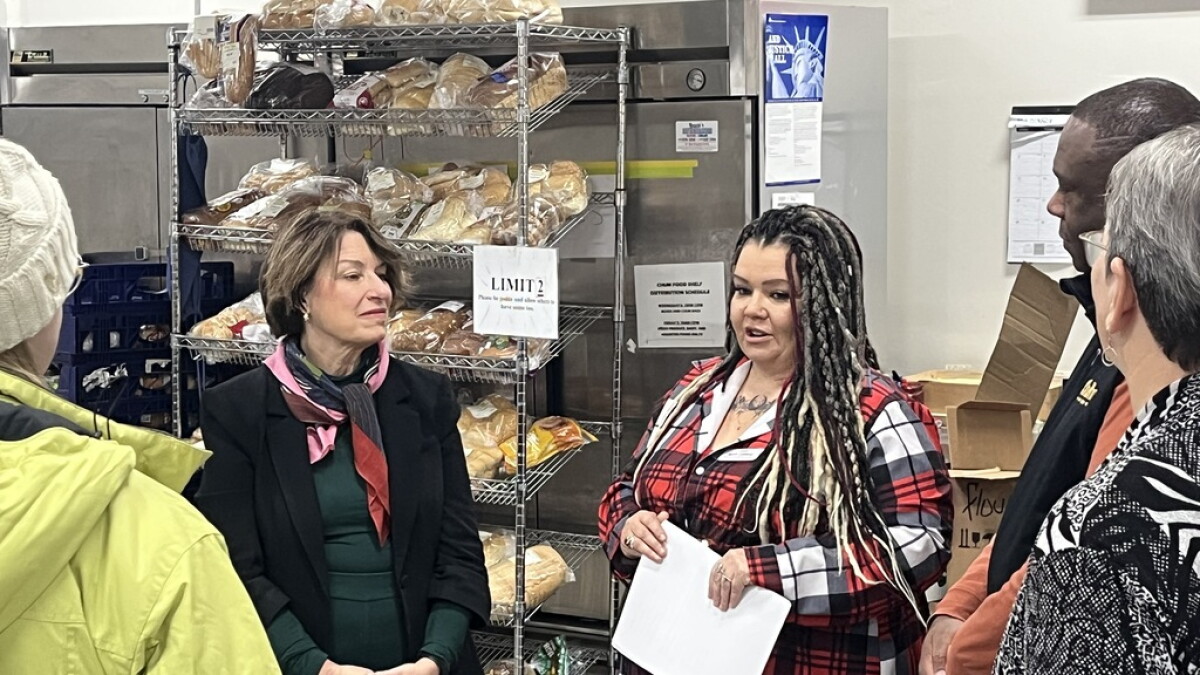
- U.S. Sen. Amy Klobuchar visited a food shelf in Duluth on Sunday.1
- The federal government currently pays the full cost of benefits under the Supplemental Nutrition Assistance Program, and under a law Congress passed in 2025, states could begin paying up to 15% of those costs on Oct. 1, 20271
- If Minnesota pays the maximum share, the state and its counties would face about $250 million in costs over.1
U.S. Sen. Amy Klobuchar visited a food shelf in Duluth on Sunday to urge Congress to push back the date when Minnesota and other states could begin paying a share of federal food assistance benefits, from October 2027 to October 2029.1
Klobuchar, a Minnesota Democrat and the state’s governor-elect, warned that the added costs could strain state and county budgets and said she wants Congress to act before she takes office.1
What the proposed delay concerns
The proposed delay concerns who pays for SNAP benefits.1
The federal government currently pays the full cost of benefits under the Supplemental Nutrition Assistance Program.1
Under a law Congress passed in 2025, states could begin paying up to 15% of those costs on Oct. 1, 2027.1
Each state’s share depends on how accurately it determines who qualifies and how much they should receive.1
The federal measure counts both overpayments and underpayments.1
Some states with the highest error rates qualify for extra time before they have to start paying.1
What the cost shift means for Minnesota
If Minnesota pays the maximum share, the state and its counties would face about $250 million in costs over the 2028 and 2029 state fiscal years, according to the Minnesota Department of Children, Youth, and Families.1
Counties would collectively bear half that cost under state law, the department said.1
St. Louis County said in July 2025 that about 16,000 residents received SNAP benefits each month.1
A separate change took effect Oct. 1, 2026, when the federal government cut its share of SNAP administrative costs from half to a quarter.1
The state and counties now cover more of those expenses.1
What the Senate and House versions say
The Senate Agriculture Committee’s farm bill would delay the start of state cost-sharing by one year, to October 2028.1
The version passed by the House would leave the current schedule in place.1
Klobuchar said she would try to secure a delay until October 2029 through a spending bill ahead of the Dec. 11 federal funding deadline.1
Separate provisions of the 2025 law expanded work requirements and narrowed eligibility for some noncitizens.1
What the food shelf is seeing
Klobuchar said she expects more people to turn to food shelves if they lose benefits or receive less assistance.1
Executive Director John Cole said the number of people seeking food there was up 42% from a year earlier, while the organization’s spending on food rose 48%.1
Donations from individuals and congregations have increased, he said, but he worries about how much more demand the food shelf can absorb.1
Seniors on fixed incomes are the fastest-growing group seeking food at Chum, he said.1
Sources
Every number in the story points here. Each links to the original reporting.
LocalInForum, Duluth News Tribune
See a sentence its source doesn’t back up?
Tell us the source number and what’s wrong. We check every report. If we change the story, the fix goes on the corrections page with the old wording.