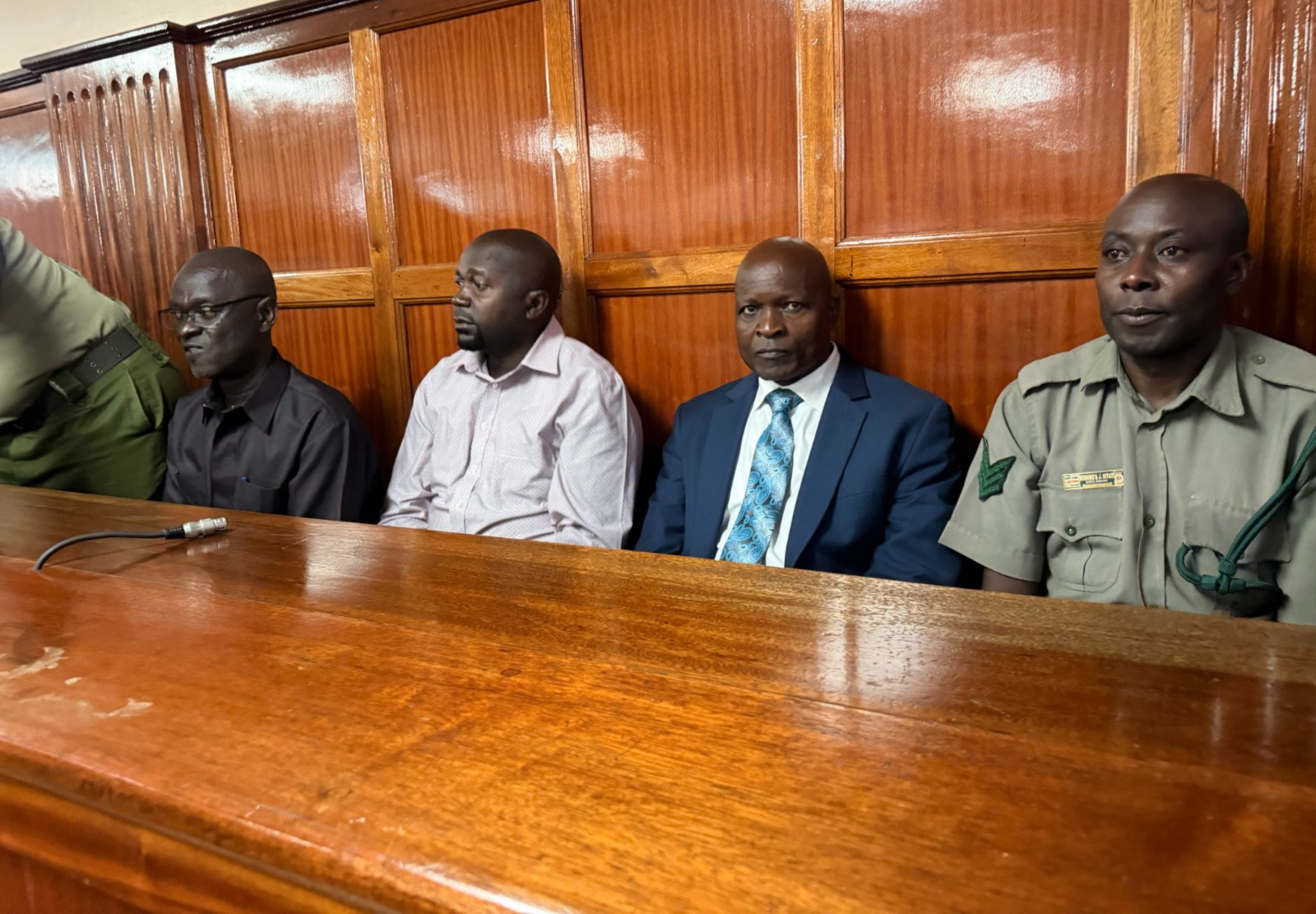
Mackenzie, 29 followers convicted in Shakahola manslaughter case

Key facts
- Mackenzie was convicted on 123 counts of manslaughter each.1
- Mackenzie’s wife, Rhoda Mumbua Maweu, was among those convicted, having been found guilty on one count.1
- The prosecution presented 95 witnesses and at least 375 exhibits.1
- The court will now receive sentencing submissions from the prosecution.1
The court has found that a deadly religious doctrine preached in Shakahola Forest led to the deaths of hundreds of followers, convicting Paul Nthenge Mackenzie and 29 others in a manslaughter case that saw dozens of accused persons walk free.1
High Court Judge Alex Ithuku delivered the verdict at the Mombasa Law Courts on Friday, November 27, 2026, convicting Mackenzie and 18 other accused persons on 123 counts of manslaughter each, while 10 others were found guilty on 104 counts each.1
Mackenzie, who founded Good News International Church, was accused of leading followers into a structured fasting programme in which members were encouraged to starve themselves to death.1
Fasting Programme And Convictions
The court found that the fasting arrangement was organised in stages, with children expected to die first, followed by women and men, while Mackenzie was expected to be the last person to die.1
Sixty accused persons were acquitted, while cases against three others were discontinued after they died during the trial.1
The prosecution team in the manslaughter case was led by Deputy Director of Public Prosecutions Jami Yamina, alongside Senior Assistant Director of Public Prosecutions J.V. Owiti, Assistant Directors Alex Gutuma and Betty Rubia, Principal Prosecution Counsels Alex Ndiema and Linda Ndambiri, and Prosecution Counsel Yasir Mohammed.1
Enos Amanya, who had pleaded guilty through a plea agreement and subsequently testified for the prosecution, retained his conviction and will be sentenced alongside the other convicts.1
Prosecution Evidence And Acquittals
Prosecutors told the court that the group closed down the church and moved followers into the secluded forest, where they enforced fasting that resulted in the deaths of members.1
To prove its case, the prosecution presented 95 witnesses and at least 375 exhibits, drawing evidence from survivors, detectives, digital forensic specialists and the Government Pathologist.1
Medical findings presented in court showed that 129 of the 238 victims died from starvation.1
The remains of another 86 victims were largely skeletal, leaving pathologists unable to establish the causes of death.1
The trial examined Mackenzie’s teachings, with witnesses describing how he allegedly discouraged followers from attending school, seeking medical care and wearing ornaments, which he portrayed as sinful.1
The preacher was also said to have renamed Shakahola Forest Jangwani and assigned biblical names to its villages.1
The accused argued that they had gone to the forest to purchase land and that fasting was undertaken voluntarily.1
The DPP said it remained committed to safeguarding vulnerable members of society and pursuing accountability through fair, independent and evidence-based prosecutions.1
The court will now receive sentencing submissions from the prosecution, lawyers representing victims' families under the Victim Protection Act and the defence.1
Pre-sentence reports will also be considered before sentences are determined.1
The manslaughter verdict follows two other rulings against Mackenzie this week.1
On Thursday, November 26, he was convicted in the Shakahola terrorism case at Shanzu Law Courts, while the Children’s Court in Tononoka on November 25 convicted him and 11 followers of offences against children.1
Mackenzie has now recorded four convictions.1
Sources
Every number in the story points here. Each links to the original reporting.
LocalRadio Generation Kenya
See a sentence its source doesn’t back up?
Tell us the source number and what’s wrong. We check every report. If we change the story, the fix goes on the corrections page with the old wording.