Russian drone strikes hit Ukraine’s energy, rail and civilian infrastructure

Key facts
Ukraine halted electricity exports on Nov. 22 after a Russian attack damaged its energy infrastructure, while electricity imports surged to their highest daily level since mid-June, according to data from Energy Map.1
The shift shows the impact of Russian attacks on Ukraine’s energy grid, as the country increasingly relies on imports to meet domestic needs while losing export revenue for Ukrainian producers.1
Since the evening of Thursday 26 November, Russian forces have attacked Ukraine with 155 strike UAVs of various types, as well as Parodiya-type decoy drones.2
Ukrainian air defences managed to shoot down 110 drones, but impacts were recorded at several locations.2
Prime Minister Koretsky on strikes in nine regions
Prime Minister Sergey Koretsky said during the night the Russian Armed Forces carried out strikes on civilian infrastructure in nine regions.2
Koretsky wrote on Telegram that the Russian Armed Forces carried out strikes on the railway, the energy sector, civilian enterprises and residential buildings in nine regions.2
By morning, part of consumers in Dnipropetrovsk, Zaporizhia, Kirovohrad, Sumy, Kharkiv and Kherson regions were left without electricity, according to Ukraine’s First Deputy Energy Minister Artem Nekrasov.2
In Dnipropetrovsk region, engineers have been forced to carry out emergency shutdowns because equipment has been damaged and voltage has fallen in the high-voltage grid.2
Strikes on energy facilities and chemical plant
In September the General Staff of the Ukrainian Armed Forces claimed the Yefremov plant is involved in producing components of solid rocket fuel, including for ballistic missiles of the Iskander operational-tactical complexes.2
The plant has been under Ukrainian sanctions since May 2023.2
On Friday night Ukrainian drones struck a combined heat and power plant that is part of the Rosatom state corporation, as well as a synthetic rubber plant involved in producing components of solid rocket fuel, in Yefremov in the Tula region.2
The chemical complex produces polymers for the rubber industry, electrical engineering, adhesives, sealants and lubricants, as part of the enterprise’s output is dual-use.2
Civilian casualties
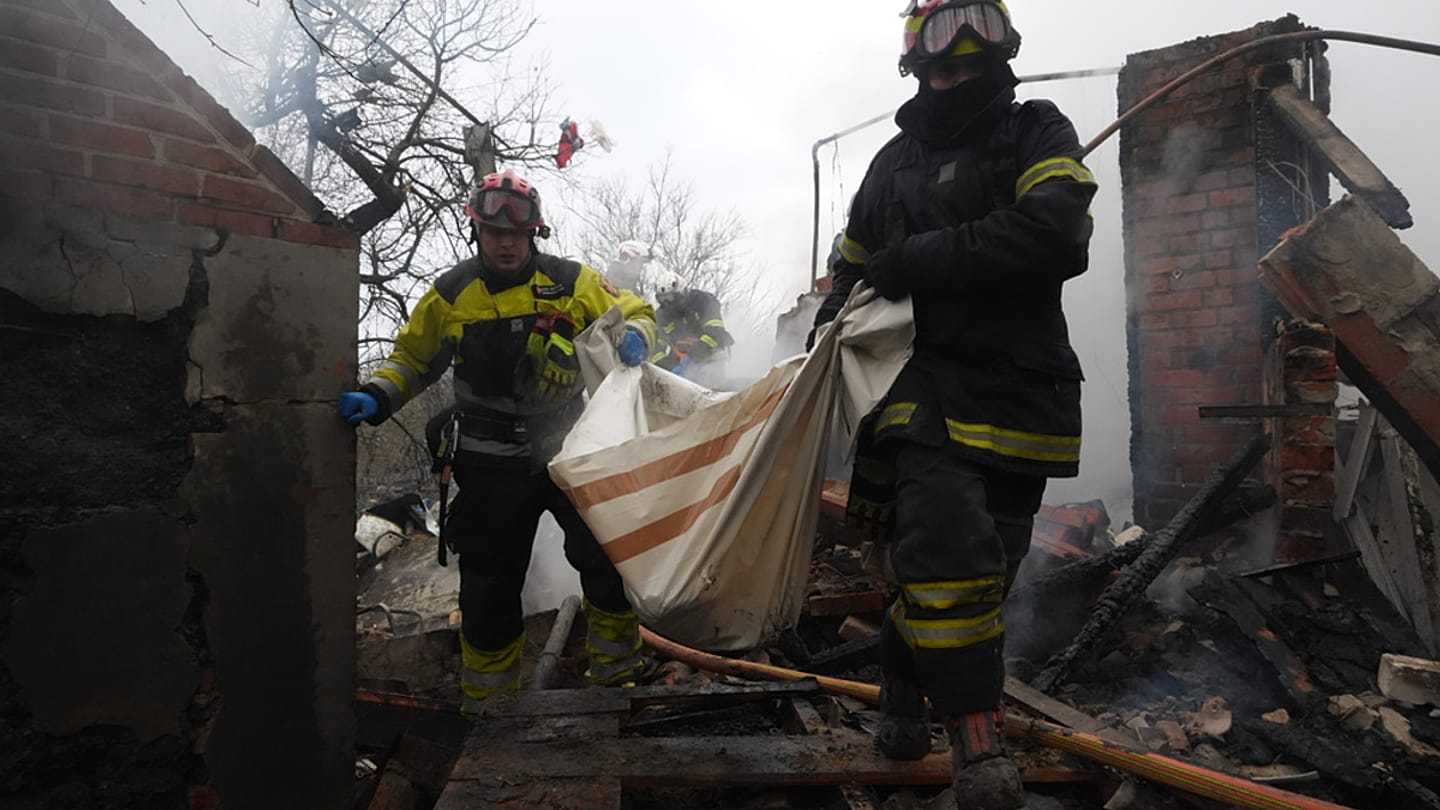
Two people were killed at an enterprise in Nizhyn in Chernihiv region; people may be trapped under the rubble.2
One woman, aged 86, was killed and another six people were injured after Russian Armed Forces attacks on Izium in the Kharkiv region.2
Blocks of flats and private houses, administrative buildings and vehicles were damaged, and fires broke out in various parts of the city.2
One person was killed in Kryvyi Rih and another two were wounded after more than 20 UAV strikes on five districts of the Dnipropetrovsk region.2
Three people were injured on the morning of 27 November as a result of strikes by Russian drones on the Shevchenkivskyi and Kyiv districts of Kharkiv.2
Strikes in Russia
Overnight there were reports of a massive drone attack on Saint Petersburg and Leningrad region.2
The authorities of the northern city said 45 drones had been shot down over the region.2
In Novorossiysk three people were injured in a drone attack, the operational headquarters of Krasnodar region reported.2
Another two people were killed in Bryansk region by a drone strike and an explosive device that was dropped.2
The Russian Defence Ministry reported 318 Ukrainian UAVs had been shot down in 10 regions, as well as over illegally annexed Crimea.2
Ukraine Energy Support Fund
In October, the Ukraine Energy Support Fund signed contracts worth 200 million euros ($218 million) to buy equipment.1
The fund received nearly 800 million euros from international donors this year but still needs around 450 million euros ($493 million), according to CES.1
The estimate was made before the recent wave of Russian attacks in late November.1
Sources
Every number in the story points here. Each links to the original reporting.
LocalKyiv Independent, Euronews
See a sentence its source doesn’t back up?
Tell us the source number and what’s wrong. We check every report. If we change the story, the fix goes on the corrections page with the old wording.