Key facts
- Gardner’s measurements are part of the Nevada Water Initiative, a partnership between the Desert Research Institute, the state’s Division of Water Resources, and the U.S. Geological Survey1
- More than half of Nevada’s 256 groundwater basins are already overallocated, and a 2025 study found nearly 40% of Nevada’s wells showed significant declines in groundwater levels1
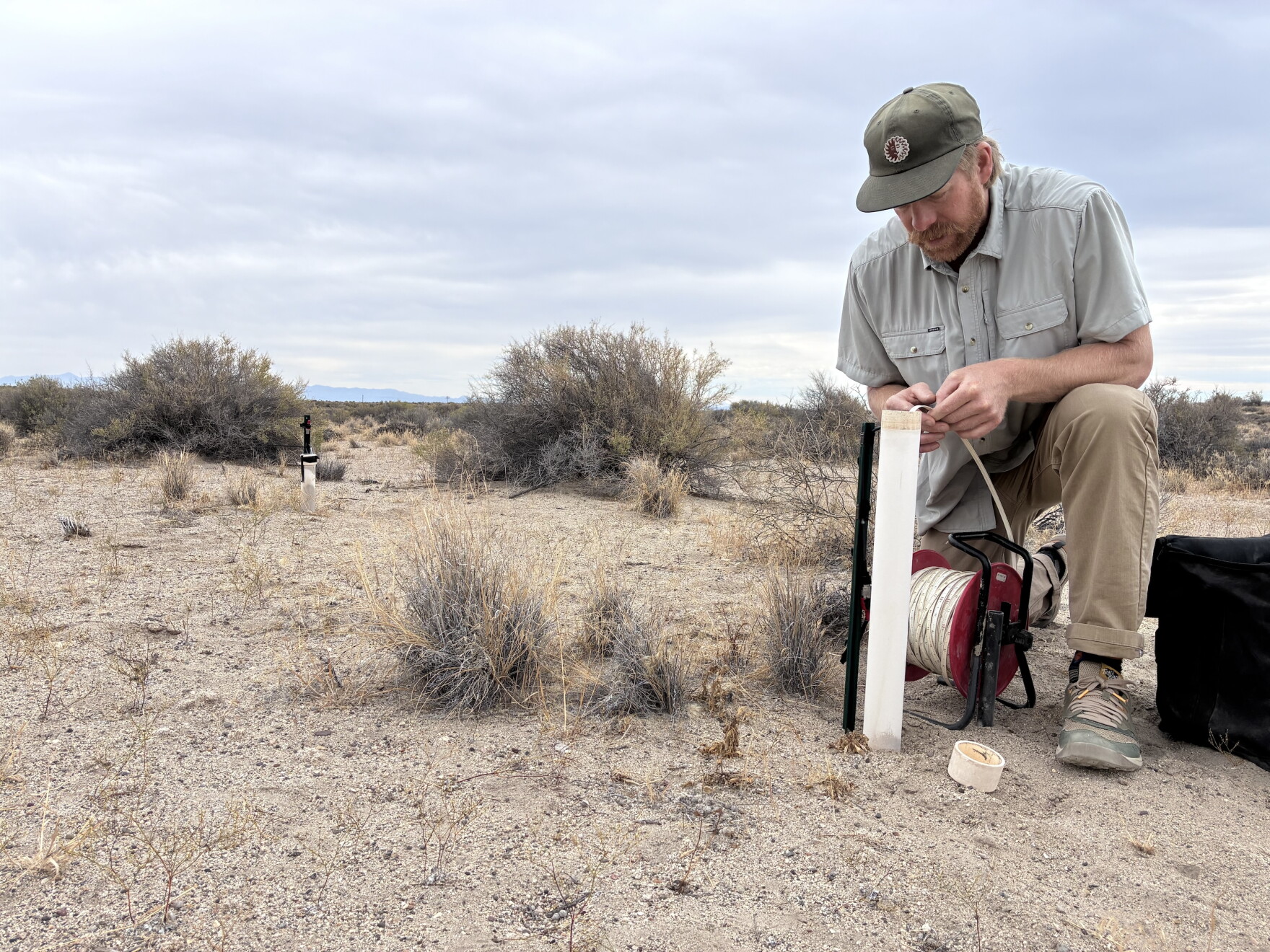
- Hydrologist Murphy Gardner works for the Desert Research Institute.1
Murphy Gardner works for the Desert Research Institute, a nonprofit that’s helping to answer that question..1
The initiative aims to update the science behind groundwater management decisions, because many of the state’s estimates still rely on science developed 50 to 70 years ago.1
Evapotranspiration and overallocated basins
Gardner’s work focuses on evapotranspiration, the process by which water evaporates from the land and is released into the atmosphere by plants.1
“As you can see just looking out, like each of these plants consuming that over thousands of acres out here in the desert, you end up getting like a pretty large volume of water consumption or discharge,” Gardner said.
More than half of Nevada’s 256 groundwater basins are already overallocated, meaning more water rights have been granted than those basins are estimated to sustainably support, according to DRI.1
According to DRI, a 2025 study found that nearly 40% of Nevada’s wells showed significant declines in groundwater levels.1
In Diamond Valley, groundwater levels have fallen more than 100 feet in some areas, forcing farmers to rethink how they irrigate their crops.1
Broader challenges across the West
Across the West, farms, mines, growing communities and data centers are competing for limited water supplies.1
Prolonged droughts and a warming climate are adding to that pressure, making groundwater an increasingly important resource.1
Better science could help them balance those competing demands without depleting their aquifers.1
Historically, scientists estimated water loss by applying broad assumptions about vegetation across large stretches of desert.1
Gardner says researchers can measure conditions at individual monitoring stations and use satellite data to estimate water consumption across the landscape in much greater detail.1
“We could end up overallocating groundwater rights for agriculture use, or for mining use, or for municipal use, or whatever, and end up, you know, ruining ecosystems that we depend on,” Gardner said.
Among the pressures on Nevada’s groundwater supplies are decades of pumping to irrigate crops, support mining operations and supply communities with drinking water.1
Prolonged droughts have also increased reliance on groundwater as rivers and streams have dwindled.1
Groundwater supplies have also declined in parts of Idaho, Wyoming, Utah, Colorado, Arizona and New Mexico.1