Scott Aaronson: AI Labs May Hold Unreleased Crypto Results

Key facts
- Scott Aaronson said he is “virtually certain, from multiple reliable sources” that leading AI labs have cryptography results they have.1
- Scott Aaronson is a computer science professor at the University of Texas at Austin, Crypto Briefing said.1
- Scott Aaronson named OpenAI and Anthropic specifically, Crypto Briefing said.1
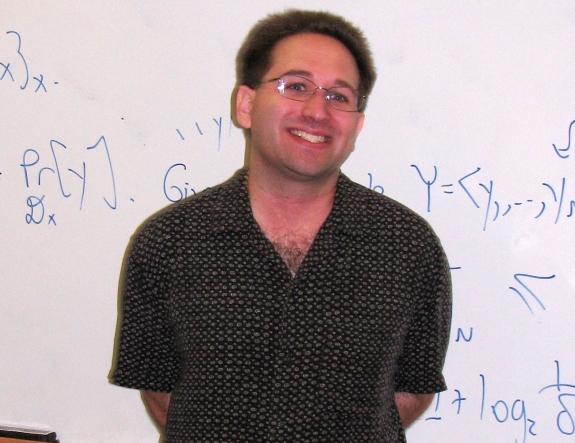
Computer scientist Scott Aaronson says he is “virtually certain” that leading AI labs are holding back results that would break some of today’s cryptography.2
Aaronson made the claim in a post on his blog, Shtetl-Optimized, on Wednesday.2
Aaronson is a computer science professor at the University of Texas at Austin and previously worked as a researcher at OpenAI.1
Aaronson names OpenAI and Anthropic
Aaronson named OpenAI and Anthropic specifically.1
He said the labs could hold results or algorithms capable of undermining current cryptographic standards.1
Nobody outside those labs has seen the work, and Aaronson did not claim to have seen it either.1
Rumor of a polynomial-time factoring algorithm
Since mid-November 2026, rumors have spread that an AI lab has produced a polynomial-time integer factoring algorithm.1
RSA’s security depends on the fact that splitting a very large number into its prime factors is hard for ordinary computers.1
A polynomial-time algorithm would make that task scale manageably as numbers grow.1
Aaronson said he has encountered no verified evidence supporting that rumor.1
As of November 27, 2026, neither OpenAI nor Anthropic had issued any public statement confirming a cryptography breakthrough.1
Google’s factoring paper
On October 7, 2026, Aaronson noted that AI companies were privately testing their models against cryptographic protocols.1
Around November 25, 2026, Google released a paper presenting a new factoring algorithm.1
The Google paper was regarded as theoretically interesting but not practical for breaking RSA.1
Follow-up analysis of Google’s factoring paper could change the assessment that it is impractical against RSA.1
Post-quantum cryptography and AI-assisted math
Post-quantum cryptography is the ongoing effort to build encryption that can withstand both classical computers and future quantum machines.1
AI-assisted mathematics could chip away at classical assumptions on its own schedule.1
For years, the big threat to RSA encryption had a familiar face: a sufficiently powerful quantum computer.1
Aaronson is now suggesting the first crack could come from somewhere else entirely.1
Unconfirmed status and disclosure questions
The security community is already preparing for a different threat.1
If AI labs are generating cryptography results and choosing not to publish them, that prompts questions about disclosure.1
Security research has traditionally depended on findings being shared so defenders can respond.1
The honest status is unconfirmed.1
First, whether OpenAI or Anthropic says anything publicly about cryptography research, in either direction.1
Second, whether any AI-assisted cryptography results appear in published work, where outside experts can check them.1
Sources
Every number in the story points here. Each links to the original reporting.
Localthenextweb.com
OfficialCrypto Briefing
See a sentence its source doesn’t back up?
Tell us the source number and what’s wrong. We check every report. If we change the story, the fix goes on the corrections page with the old wording.