Read the original on CelebYachts →
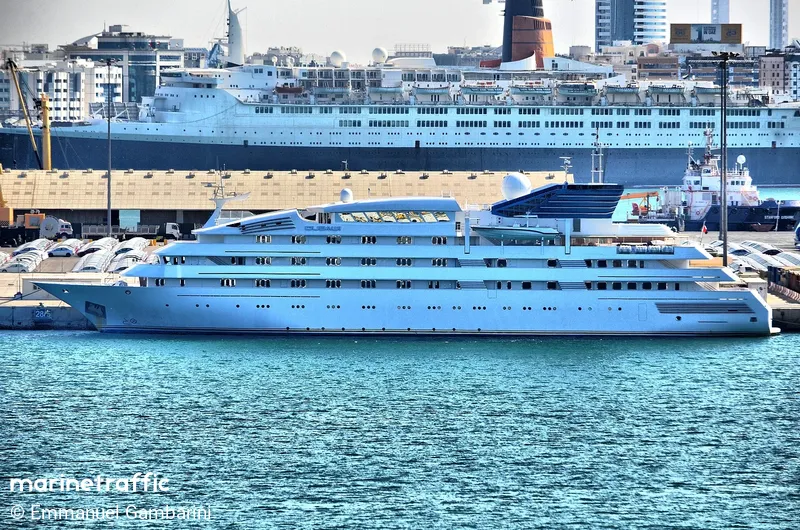
This report is from CelebYachts, which tracks the superyachts of public figures.1
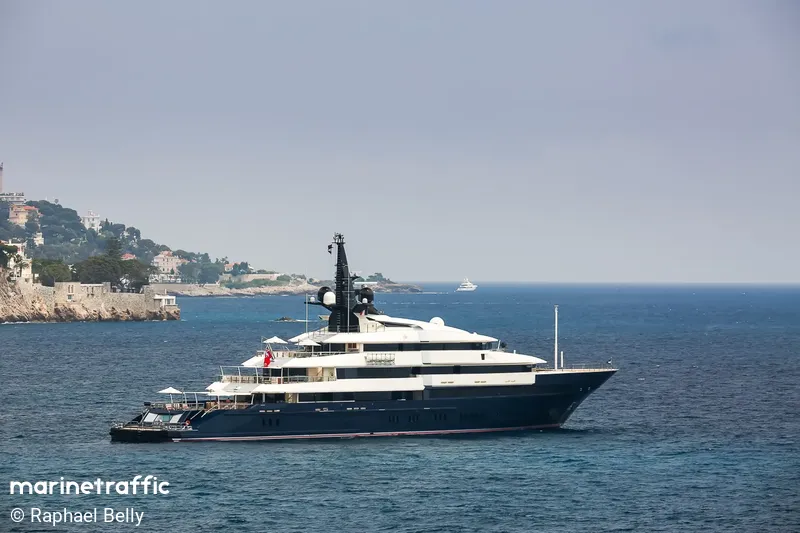
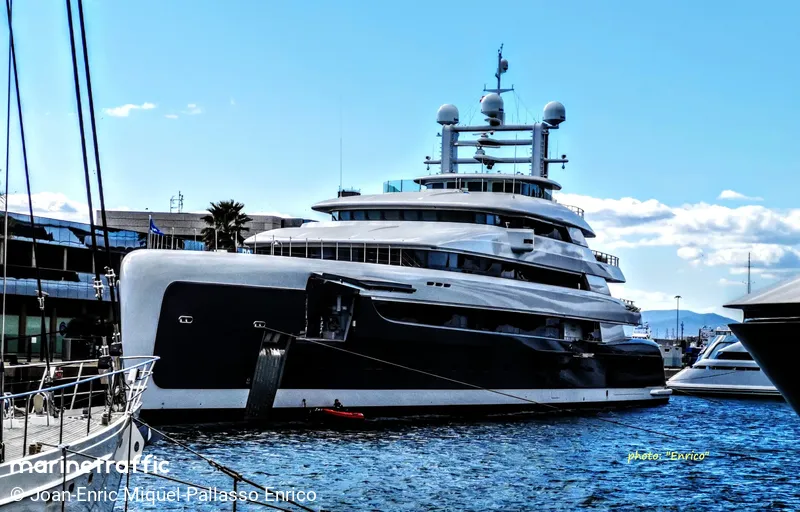
Sheikh Hamdan bin Mohammed Al Maktoum owns Dubawi. It measures 88.3 metres but holds 4,077 gross tons. This volume comes from its past as a 1989 passenger ferry. The conversion kept the original width and engines.1
Dubawi sits in Dubai waters. Its owner is Sheikh Hamdan bin Mohammed Al Maktoum. He is the Crown Prince of Dubai. The vessel carries 4,077 gross tons of internal volume. This number is high for its length.1
The large volume has a simple cause. Dubawi was not built as a yacht from scratch. It began life as a cruise ship in 1989. The original hull was much wider than a typical luxury boat. This width allowed for many passenger cabins.1
Platinum Yachts bought the old ferry hull later. They raised the superstructure to create a superyacht. They kept the original beam of 15.56 metres. This decision preserved the massive interior space. It also made the shape less efficient for speed.1
Why does Dubawi have such a wide beam?
Most yachts are narrow to cut through water easily. A narrow beam reduces drag at high speeds. Dubawi measures only 88.3 metres long. Yet its beam is 15.56 metres wide. This ratio is unusual for a modern yacht.1
The width comes from the original design. Cantieri Navali dell’Adriatico built the hull in 1989. It was designed as a passenger vessel. Ferry designers prioritise space over speed. They need room for seating and dining areas.1
Platinum Yachts used this existing structure. They did not build a new hull. They kept the original 15.56-metre width. This choice gave them a large floor plan. They could place spacious decks inside the shell.1
The result is a vessel with high gross tonnage. Gross tonnage measures the total internal volume. Dubawi holds 4,077 gross tons. This figure reflects the generous interior space. It confirms the value of the original ferry design.1
A narrower hull would have reduced this volume. Building a new 88-metre yacht usually means a slimmer shape. That shape limits the size of rooms. Dubawi offers more square metres per metre of length. This is a direct benefit of repurposing.1
The trade-off is in performance. A wide beam increases resistance in the water. It makes the yacht slower and less stable in waves. Speed was not the main goal here. Comfort and space were the priorities for the owner.1
The original machinery layout also remained. The engine room was sized for the ferry. It retained the capacity for the original power output. This saved time during the conversion process. The engineering constraints were already set by the 1989 design.1
Who built the original hull and when?
The hull was built by Cantiere Navale Ferrari. This yard opened in 1989 in Italy. It later became part of the Ferretti Group. The group now owns several luxury brands.1
In 1989, the yard focused on motorboats. They produced sport fisherman and flybridge types. The Dubawi hull was one of their early projects. It was designed for commercial passenger use.1
Ferretti Group expanded through many acquisitions. They bought Cantieri Navali dell’Adriatico in 1998. This company specialized in Pershing brand boats. The Dubawi hull predates this acquisition.1
The original builder is now a subsidiary. Weichai Group acquired Ferretti in 2012. This Chinese company owns the current assets. The history of the hull remains separate from these corporate moves.1
The IMO number 8708646 identifies the hull. This number has stayed constant since 1989. It links the current yacht to its first launch. AIS data shows the vessel under this identifier today.1
The conversion happened decades after the launch. The hull sat idle or served another purpose. Platinum Yachts identified its potential for luxury use. They saw the value in the wide beam.1
This approach is rare in yacht building. Most owners commission new builds. New builds allow for custom shapes. Repurposing relies on existing structures. It requires creative engineering to fit new needs.1
How did Platinum Yachts convert the ferry?
Platinum Yachts took the old hull in 2006. They began a major conversion project. The work involved raising the superstructure. They added new decks above the original line.1
The conversion created a superyacht profile. The original ferry had a low freeboard. The new design added height and elegance. This change altered the visual appearance completely.1
Interior layouts were redesigned for privacy. Ferries have open public spaces. Yachts require private suites and lounges. The wide beam allowed for larger cabins. Each deck could hold more exclusive areas.1
The machinery was updated or retained. The original engines provided base power. Modern systems were integrated into the hull. This ensured compliance with safety rules.1
The project took several years to complete. Work continued until around 2008. The vessel emerged as a unique hybrid. It combined old steel with new luxury.1
The final form was delivered in 2008. It entered service as a private yacht. The conversion cost was significant. The value reflects the complexity of the task.1
Estimates place the value at $28 million. This figure covers the conversion effort. It includes the materials and labour. It does not include the original hull cost.1
What is known about the owner and funding?
The owner is Sheikh Hamdan bin Mohammed. His role involves significant political duties. He oversees various government initiatives.1
His wealth comes from the ruling family. The Al Maktoum family controls Dubai. Their assets are tied to the emirate. Specific personal finances are not public.1
The yacht is registered in the UAE. The flag is United Arab Emirates. This matches his home port in Dubai. The registration confirms his control.1
No details exist on the purchase price. The conversion cost is estimated. The original hull value is unknown. The total investment is reported as $470 million in some circles.1
This high figure may include operational costs. It might cover years of maintenance. It could reflect the market value at peak. Exact accounting is not available.1
The ownership structure is direct. He holds the vessel personally. There are no complex shell companies listed. This simplifies tracking and regulation.1
His duties keep him in Dubai. This influences the yacht’s operations. The vessel stays close to home. Long voyages are less common.1
Where is Dubawi tracked today?
The status shows she is stationary. She has not moved recently. This is typical for a home-port yacht. Owners often keep vessels docked.1
The last position was recorded in 2025. The timestamp confirms recent activity. The vessel is active and maintained. It is ready for deployment if needed.1
Tracking shows consistency with her role. She serves as a local asset. Her range is limited by preference.1
This pattern suits the Crown Prince. He has official responsibilities in Dubai. He does not need a global cruiser. A local yacht meets his needs.1
The wide beam aids stability in port. It provides a steady platform. This is useful for docking activities. It also allows for tender storage.1
The interior volume supports hosting. Large gatherings can take place. The space accommodates guests comfortably. This aligns with diplomatic functions.1
Future movements will depend on schedule. Changes in AIS data will signal travel. For now, she remains in Dubai. The map shows her current standstill.1
Read this on celebyachts.com, where the figures are checked against the live register.1