Read the original on CelebYachts →

This report is from CelebYachts, which tracks the superyachts of public figures.1
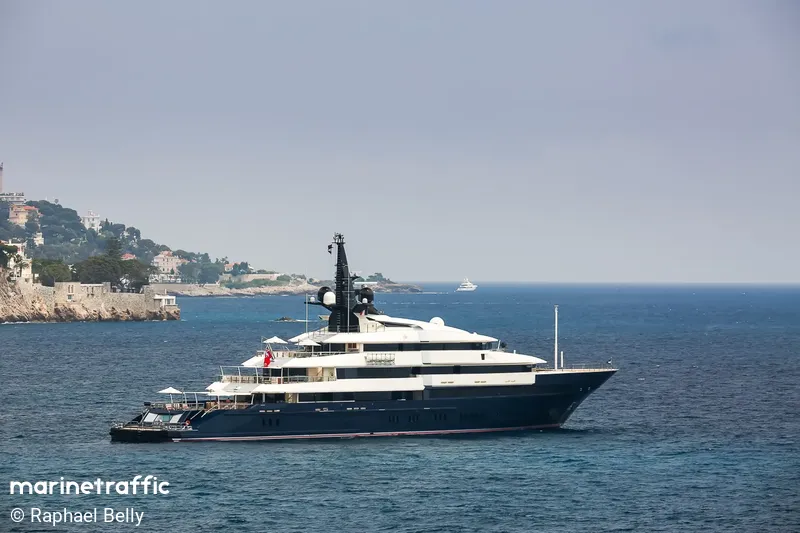
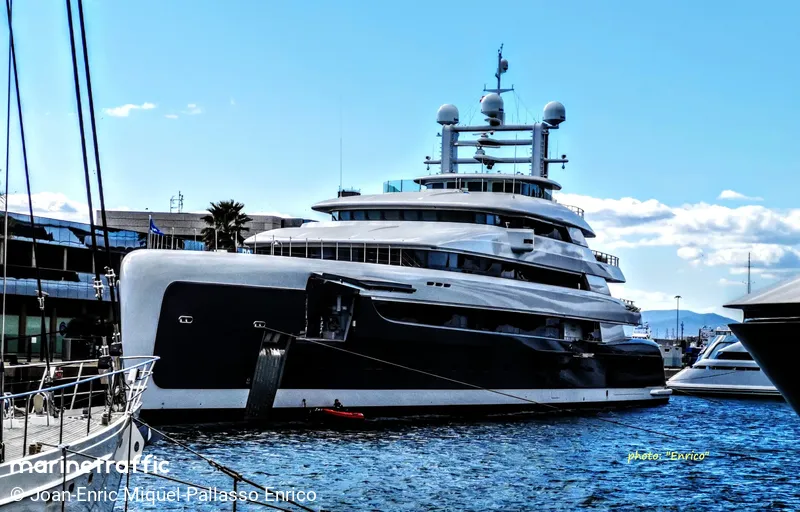
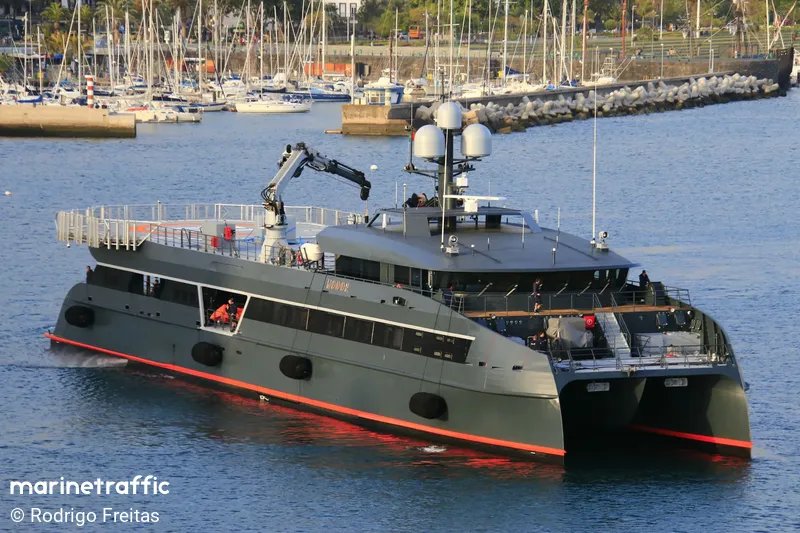
Lorenzo Fertitta owns Hodor, a 66-metre support vessel built in Spain. Her dimensions show she was designed to carry supplies for his larger flagship, Lonian.1
Hodor measures 66.2 metres in length. She carries 1,582 gross tons of volume. These numbers define her role. Length alone does not explain her purpose. Two yachts can be the same size but serve different needs.1
Her beam is 14.0 metres wide. This ratio creates vast interior space. A narrow hull would be faster but hold less. Hodor trades speed for room. This choice fits her duty as a support vessel.1
The owner is Lorenzo Fertitta. He is an American entrepreneur. He also owns the 87-metre yacht Lonian. Hodor serves that larger ship. The design choices reflect this specific duty.1
How does Hodor’s volume compare to other yachts?
Gross tonnage measures inside volume. It is not weight or displacement. Think of it as the total space under the decks. Hodor has 1,582 gross tons. This is a large amount for a 66-metre hull.1
We can compare this to her length. The ratio is about 23.9 gross tons per metre. Most yachts of this size have lower ratios. They are drawn for sleekness. Hodor is drawn for utility.1
Her beam is 14.0 metres. This is wide for her length. The beam-to-length ratio is about 0.21. A typical luxury yacht might sit near 0.18. The extra width adds floor space. It also adds drag.1
This shape suits a support vessel. She needs room for tenders and toys. She needs space for crew and guests. Speed is secondary to capacity. The numbers confirm this priority. High volume means slow acceleration.1
The register lists her estimated value at $30 million. This is modest for her size. The cost reflects her utilitarian nature. Luxury finishes add cost. Hodor focuses on function. The arithmetic supports this view.1
Who built Hodor and what does that mean?
Astilleros Armon built Hodor in 2019. The yard is in Navia, Spain. They build steel vessels. Steel allows for wider beams. Aluminum hulls are lighter but harder to make wide.1
The yard has experience with large projects. They built the world’s first hydrogen-powered tugboat. This shows they handle complex engineering. Hodor is simpler but still robust.1
Her IMO number is 9841392. This ID tracks her globally. She flies the Cayman Islands flag. George Town is her home port. These details place her in the global fleet.1
The builder chose a motor hull type. This is standard for powerboats. The design is stable and spacious. It matches the brief from the owner. Volume was the key requirement.1
Fertitta Capital oversees his assets. He is chairman of the company. Red Rock Resorts is another venture. His wealth comes from casinos and media. This capital bought the hull.1
Where is Hodor and what does she do there?
AIS data shows her current position. She is at 43.17° N, 5.61° E. This is in the West Mediterranean. The area is popular for summer cruising. She is likely near Lonian.1
Her MMSI number is 319147200. This identifies her transponder. The signal is active now. She has moved recently. The track shows short hops.1
Recent voyages were short. One trip was 46 nautical miles. It started and ended in Antigua. Another covered 623 miles from Aruba to Panama. These are coastal movements.1
Her average speed is low. She travels at about 13 knots. This confirms the volume design. Fast hulls go 18 knots or more. Hodor cruises slowly. She stays close to the main ship.1
Lonian is the flagship. Hodor supports it. She carries fuel and supplies. She transports guests and toys. The wide beam holds more gear. The low speed saves money. This is efficient operation.1
What does the beam-to-length ratio tell us?
The ratio is 0.21 for Hodor. Most yachts are below 0.20. A higher ratio means more width. Width creates more deck space. It also creates more interior volume.1
Hydrodynamics penalise wide hulls. Water resistance increases with beam. A narrow hull cuts through waves better. Hodor does not cut. She pushes water aside.1
This trade-off is intentional. The owner values space. Speed is not the goal. The numbers prove the design intent. Every dimension points to capacity.1
Other support yachts follow this model. They are boxy and deep. They lack sleek lines. They are workhorses. Hodor fits this category perfectly.1
The estimate of $30 million is low for a luxury yacht. It is fair for a support vessel. Maintenance costs are 10-15% of purchase price annually. This is a running cost.1
How does Hodor differ from a luxury yacht?
Luxury yachts prioritise aesthetics. They have long, thin hulls. They look fast even when stopped. Hodor looks solid. She looks ready for work.1
Interior layout differs too. Luxury yachts have salons and cabins. Hodor has storage and workshops. She has tender bays. She has crew quarters.1
The gross tonnage reflects this. 1,582 tons includes functional space. It covers machinery and fuel tanks. It also covers cargo holds. It is not just guest rooms.1
Fertitta owns both ships. Lonian is the pleasure craft. Hodor is the tool. The tools must be reliable. They must carry heavy loads. They must stay close.1
The AIS data confirms the pattern. She follows Lonian closely. She moves when Lonian moves. She stops when Lonian stops. This is a unit.1
The arithmetic of the hull explains everything. The length is 66.2 metres. The beam is 14.0 metres. The tonnage is 1,582. These three numbers define the boat. They show her true nature.1
Read this on celebyachts.com, where the figures are checked against the live register.1