Read the original on CelebYachts →


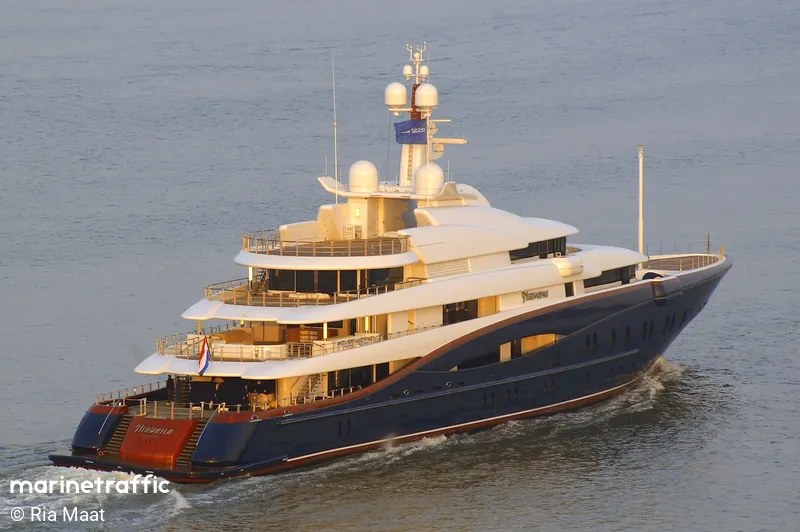
This report is from CelebYachts, which tracks the superyachts of public figures.1
The owner of Oceanco’s 88.39-metre Nirvana acquired his fortune through the 'loans for shares' programme of 1995–1997. This piece examines how the transaction worked, why it enriched Potanin, and what the resulting asset structure looks like today.1
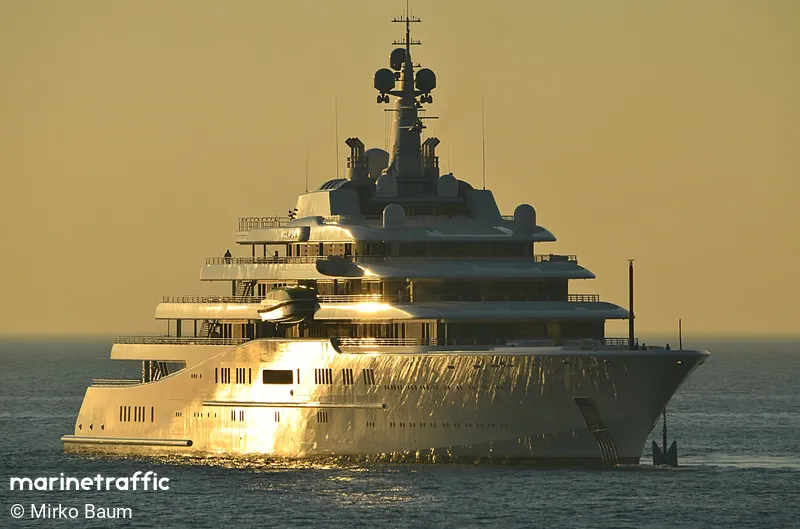
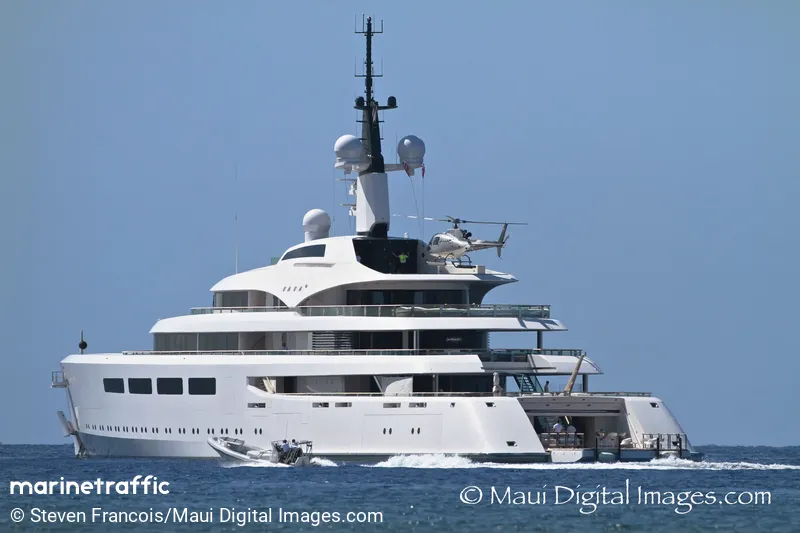
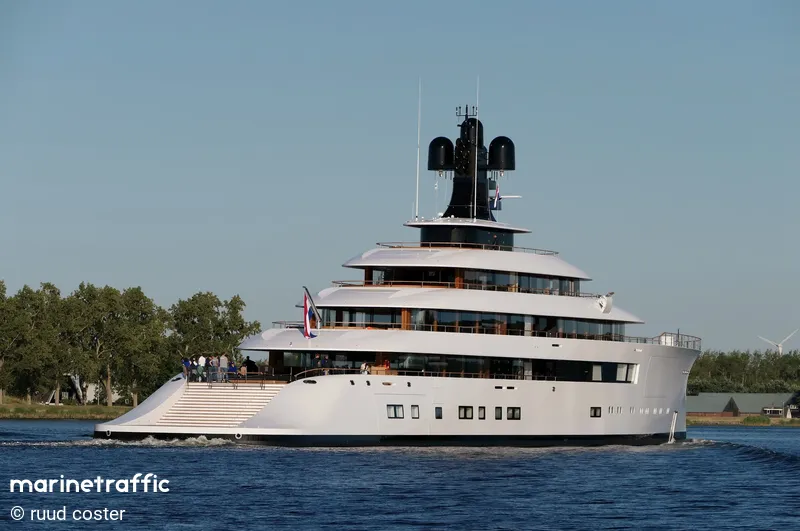
Vladimir Potanin owns the yacht Nirvana. She is an 88.39-metre vessel built by Oceanco in 2012. Her value sits at roughly US$120 million. The money for her did not come from management skill or innovation. It came from a specific state scheme in Russia.1
That scheme was the loans-for-shares auction. It ran from 1995 to 1997. It allowed insiders to buy state assets at below-market prices. Potanin helped design the system. He then used it to acquire the controlling stake in Norilsk Nickel.1
Norilsk Nickel is the world’s largest producer of palladium and high-grade nickel. Potanin holds about 34% of that firm. His total net worth is estimated at US$18.1 billion as of 2019. Sanctions from the US, UK, Canada, Australia, New Zealand, and Ukraine now restrict him.1
How did the loans-for-shares auctions work?
Russia needed cash after the Soviet Union collapsed. The state had many large factories but no liquid funds. The state created a scheme to raise money quickly. They offered shares in major firms as collateral for loans.1
Banks lent money to the state. If the state could not repay, the banks kept the shares. A small group of insiders controlled the process. They set the rules and the prices.1
Potanin helped create this system. He served as First Deputy Prime Minister from August 1996 to March 1997. In that role, he chaired key finance commissions. He oversaw payment systems and international cooperation.1
The New York Times called the plan an act of colossal criminality in 1999. Critics argued it transferred national wealth to a few men. Professor Daniel Treisman later noted that firms sold to oligarchs performed better than those sold to managers. He said the program helped Russia’s economic recovery after 1999.1
Which company gave Potanin his first fortune?
Potanin won the bid for Norilsk Nickel. He did so with his partner Mikhail Prokhorov. Together they owned 54% of the firm initially. Potanin’s personal stake settled at 34% by 2018. This single acquisition formed the core of his wealth.1
He streamlined operations at the mining giant. He turned a large factory into a modern corporation. Norilsk Nickel remains the key asset of his investment group, Interros. Interros holds stakes in other sectors too.1
Interros also owns Rosa Khutor. This ski resort in Sochi hosted events for the 2014 Winter Olympics. Potanin invested more than US$2 billion there. He started the project after skiing with President Putin in Austria in 2003.1
The resort faced criticism for environmental damage. Forests were cut down despite promises of zero logging. Potanin complained about cost overruns to the government. He sought compensation for extra expenses required by the International Olympic Committee.1
Potanin also controls Rosbank. French banker Societe Generale had amassed nearly all its shares between 2006 and 2014. In April 2022, sanctions forced Societe Generale out of Russia. Interros bought the distressed assets for an estimated US$4.3 billion.1
Societe Generale wrote off US$3.3 billion on its balance sheet. Potanin later announced he would transfer half of Rosbank’s shares to his charitable foundation. Another 7.5% went to a subsidiary called Rusfinance.1
What does Potanin’s current wealth look like?
Forbes ranked him as the richest person in Russia twice. That happened in 2015 and 2020. Across the 2021 to 2026 interval, he stayed in the top five Russian billionaires. His global rank fluctuated between 55th and 97th.1
In the 2026 Forbes ranking, he was second in Russia. Globally, he sat at rank 79. His valuation reached US$29.7 billion. That was an increase of US$5.5 billion from the previous year. Forbes attributed this to Norilsk Nickel and T-Bank.1
The Bloomberg Billionaires Index told a different story. On 31 March 2026, it valued him at US$24.9 billion. He was fourth among Russian billionaires there. The index recorded a year-to-date contraction of US$1.55 billion.1
His wealth depends heavily on equity stakes. He holds 37% in Norilsk Nickel. He owns 45% of Rosbank. He has a 35% stake in TCS Group Holding. TCS is the parent of Tinkoff Bank.1
In May 2022, Oleg Tinkov sold his shares in TCS Group. Potanin’s Interros bought them for US$325 million. Tinkov claimed the price was only 3% of real value. He said officials threatened to nationalize the bank if he refused.1
Interros increased its stake in TCS Group to 41.4% by August 2024. This made Interros the largest non-controlling shareholder. Potanin also acquired a stake in Yandex in May 2025. A joint venture with T-Technology bought a 9.95% share.1
Why are sanctions important to his story?
Sanctions have changed how Potanin operates. In January 2018, the US Treasury added him to its Putin list. He was one of 210 individuals sanctioned. The UK joined in 2022. The US, Canada, Australia, and New Zealand followed.1
These restrictions target his assets and access. They limit his ability to move money freely. They also affect the companies he controls. Norilsk Nickel faces pressure to comply with Western standards.1
In spring 2024, Norilsk Nickel announced plans to move copper production to China. Potanin’s representatives cited sanctions and environmental costs. They said modernizing Russian plants was unprofitable. China has less stringent environmental rules.1
Potanin has tried to mitigate some risks. He signed The Giving Pledge in 2010. He promised to donate half his wealth to charity. He is the only Russian to sign it. He established the Potanin Foundation in 1999.1
His foundation supports education and culture. He donated Kazimir Malevich’s Black Square to the Hermitage Museum. He paid US$1 million for it. He also funded Bill Viola’s Ocean Without a Shore.1
Despite these efforts, his wealth remains tied to Russian assets. His fortune grew when metal prices rose. It shrank when sanctions hit. The link between the 1995 auctions and his current holdings remains direct.1
Read this on celebyachts.com, where the figures are checked against the live register.1