Read the original on CelebYachts →

This report is from CelebYachts, which tracks the superyachts of public figures.1
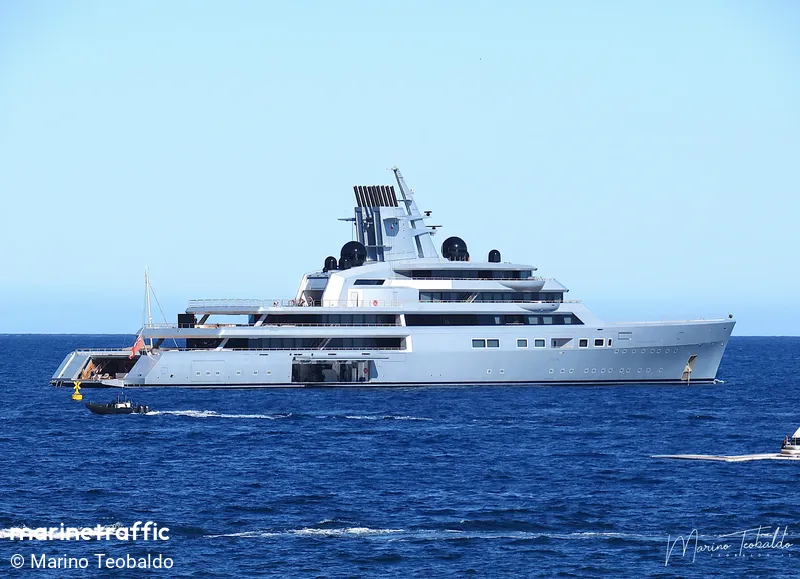
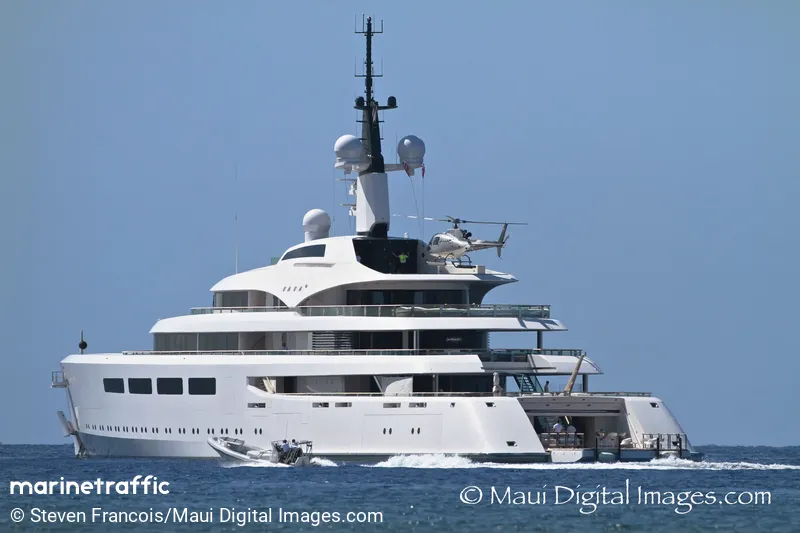
The sale of Serono provided the liquidity for Project-55, but the resulting 97-metre motor yacht was shaped by the infrastructure constraints of Babcock Marine’s sister yards. Its hybrid propulsion and sequential assembly mark the end of an era for Devonport Yachts.1
Vava II exists because of a single corporate transaction and a specific gap in British shipyard capacity. In January 2007, Ernesto Bertarelli and his family sold their controlling stake in Serono to Merck KGaA of Germany for US$13.3 billion, forming the new company Merck-Serono. The family split an estimated $9 billion stake at that time, which added to previous share sales when the company floated on the New York Stock Exchange in 2000. That liquidity funded the commissioning of Project-55 later that year. Bertarelli had previously sailed a 47-metre motor yacht named Vava, built by Royal Van Lent and Feadship in 1996. The new vessel was intended to replace it, but the scale required a different industrial approach. The project began under the working name Project-55, reflecting the internal numbering system of the yard rather than any public branding. The brief called for a 97-metre motor yacht, a size that pushed the limits of what domestic British yards could deliver at the time. When constructed, she was claimed to be the largest British-built superyacht.1
The capital and the brief
Serono was founded in 1906, and Pietro Bertarelli joined the company before becoming managing director in 1935. His son Fabio succeeded him in 1965. Ernesto Bertarelli became chief executive in 1996 and, along with his sister Dona, inherited ownership in 1998 on the death of his father. Changing the company’s focus from pharmaceuticals to biotechnology, revenues increased from $809 million in 1996 to $2.8 billion in 2006. The company gained fame from its discovery of a natural hormone used in the treatment of female infertility, and its treatments for multiple sclerosis and growth hormone deficiency. The decision to build in Britain aligned with Bertarelli’s sailing interests and the availability of specialised marine engineering firms in the south west of England.1
The split build
The construction of Vava II illustrates how mid-tier British yards consolidated to handle large-tonnage projects. Both the primary builder and the hull contractor were subsidiaries of Babcock Marine. Devonport Yachts managed the overall project and the accommodation section, while Appledore Shipbuilders, a sister yard, fabricated the bare hull. This division of labour was dictated by physical infrastructure. Appledore launched the hull on 2 December 2009. Because the superstructure exceeded the dimensions of Appledore’s fitting-out quay, the completed hull was transported to Devonport’s facilities in Plymouth. There, the accommodation section was lifted onto the ship. This operation defined the timeline. The hull sat at Appledore until late 2009, moved to Devonport for integration, and remained there through the outfitting phase. The yacht was fully completed in February 2012. Vava II marked the end of an era for one of the contractors; it was the last yacht built by Devonport Yachts following its acquisition by Pendennis Shipyard. The christening took place on 10 September 2011, nearly five years after the initial commission. The delay between launch and completion reflects the sequential nature of the two-yard workflow rather than mechanical fault or regulatory blockade.1
Propulsion and performance
The engineering solution for Vava II relies on a mixed-engine configuration designed to balance power output with operational flexibility. The yacht is powered by four MTU diesel engines. Two are twelve-cylinder units, type 12V4000M71, each producing 2610 brake horsepower. The other two are sixteen-cylinder units, type 16V4000M71, rated at 3351 brake horsepower each. The total installed power reaches 11922 brake horsepower. These engines are geared to twin propellers. The arrangement allows the yacht to achieve a service speed of 18.5 knots. The draught measures 4.79 metres. The beam is 17.21 metres. The gross tonnage sits at 3933. The propulsion layout reflects a design compromise common in vessels of this length: maximising range and efficiency at cruising speeds while retaining sufficient reserve power for high-speed passages. The choice of MTU engines aligns with the standard specification for British-built yachts of the period, prioritising reliability and parts availability in UK ports. The mixing of twelve and sixteen cylinder engines suggests a deliberate tuning of the machinery space, allowing the shorter twelve-cylinder units to occupy different compartments than the longer sixteen-cylinder models, optimising weight distribution along the keel line.1
Design and current status
The exterior lines were drawn by the Hampshire-based firm Redman Whitely Dixon. The interior was designed by the French designer Remi Tessier. The aesthetic choices were secondary to the structural requirements of the split build. The deck plan had to accommodate the machinery spaces for four large engines while maintaining the volume necessary for guest accommodation above. The bridge wing and flybridge arrangements would have been constrained by the superstructure lift point, but the exact layout remains unpublished. What is known is that the vessel carries the Cayman Islands flag, with George Town as her home port. Her registered owner is Lighthouse Marine Ltd of St Helier, Jersey. The registration structure separates the beneficial owner from the legal entity holding the title, a standard practice for European owners operating in international waters. The use of a Jersey holding company for a Swiss national reflects the tax and liability considerations common among wealthy yacht owners. The interior specifications remain undisclosed, but the involvement of Tessier indicates a focus on traditional luxury finishes suited to extended Mediterranean cruising.1
AIS data places Vava II in the Balearic Sea. Her last recorded position was at 41.38° N, 2.18° E. The yacht has maintained a consistent presence in Mediterranean waters during the winter months. The estimated value of the vessel stands at US$150 million. The original construction cost is not published. The sale of Serono provided the capital, but the final bill for the build, including the marine insurance premiums during the three-year fitting-out phase, has never been disclosed. The vessel continues to operate under the management of Lighthouse Marine Ltd. Her tracking shows regular movements between the Balearics and the Ligurian coast, typical for a vessel of her class seeking sheltered anchorage and proximity to European service yards. The absence of long-range ocean passages suggests she operates primarily within established superyacht circuits. The Cayman Islands flag provides a neutral jurisdiction for charter operations, though no commercial charters have been publicly confirmed.1
Read this on celebyachts.com, where the figures are checked against the live register.1