Russian AI model fills void in Nikolai Gogol’s unfinished novel 'Dead Souls'

Key facts
Nikolai Gogol wrote the novel “Dead Souls.”2
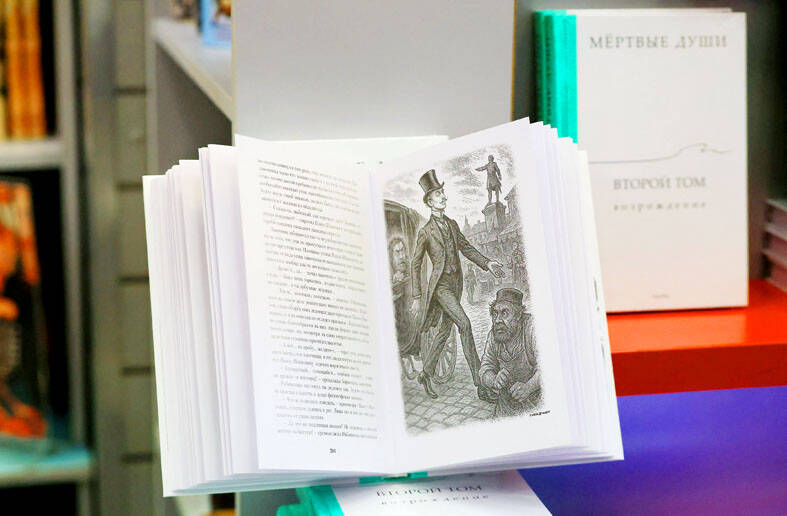
Now a Russian artificial intelligence (AI) model has created its own version of the second volume that Gogol burnt, in a bold experiment to test whether AI can capture the spirit and style of a great author.1
The new book, Dead Souls: Revival, has caught the imagination of some readers while leaving critics cold.1
How the AI model was built
Linguists, engineers and historians were all involved in the project by GigaChat, an AI model developed by banking and tech conglomerate Sber.1
Vladislav Otroshenko is the person in charge of the GigaChat project.1
Otroshenko said it took about four months for the machine to develop a plausible literary style.1
What the book is about
Born in what is now Ukraine, then part of the Russian empire, Gogol wrote his major works in Russian.2
Gogol is claimed by both countries as a huge literary figure, known especially for his satire and dark comedy.1
In the first, surviving, part of Dead Souls, he created a rogue’s gallery of characters led by the swindler Chichikov, who concocts a financial scam based on “acquiring” dead serf peasants still registered as belonging to their landlords.1
Gogol was unable to complete the second and third parts of the book in which he had intended to portray the moral regeneration of the protagonist.1
Reactions to the new book
Igor, a Muscovite who attended the GigaChat book launch, said it really felt true to the spirit of the original.1
Gogol expert Artyom Nikitin said that by the same logic, AI could write sequels to any number of works.1
Cyberattacks on US institutions
The US Department of Agriculture and the FBI were breached by hackers in cyberattacks, US media reported on Friday, as concerns deepened over the recent spate of tech outages at key US institutions.1
The incidents were first reported by NBC News and CNN respectively, and it remained unclear whether they were related and who was responsible.1
Major outages over the past few weeks have disrupted travel, communications and e-commerce for countless users across the US, even affecting a top-secret network at the US National Security Agency.1
US President Donald Trump has sought to calm the public and urged people to be patient.1
Scientists have discovered the most distant quasar yet, the core of a galaxy with a slow-chomping black hole at its center dating back to nearly the dawn of the universe.1
The quasar formed within 630 million years of the universe-forming Big Bang, a German-led team reported yesterday.1
The quasar’s formation is considered a very early development in the 13.8 billion-year history of the cosmos.1
Sources
Every number in the story points here. Each links to the original reporting.
LocalTaipei Times, WINC-FM
See a sentence its source doesn’t back up?
Tell us the source number and what’s wrong. We check every report. If we change the story, the fix goes on the corrections page with the old wording.