Smolensk crash: Experts identify landing errors, rule out explosion

Key facts
- Polish prosecutors ruled out an explosion as the cause of the crash, saying the hypothesis had been tested using various methods.1
- Former Polish Defence Minister Antoni Macierewicz challenged the experts' findings.1
- An international team of experts identified four factors it believes led to the 2010 Smolensk plane crash.1
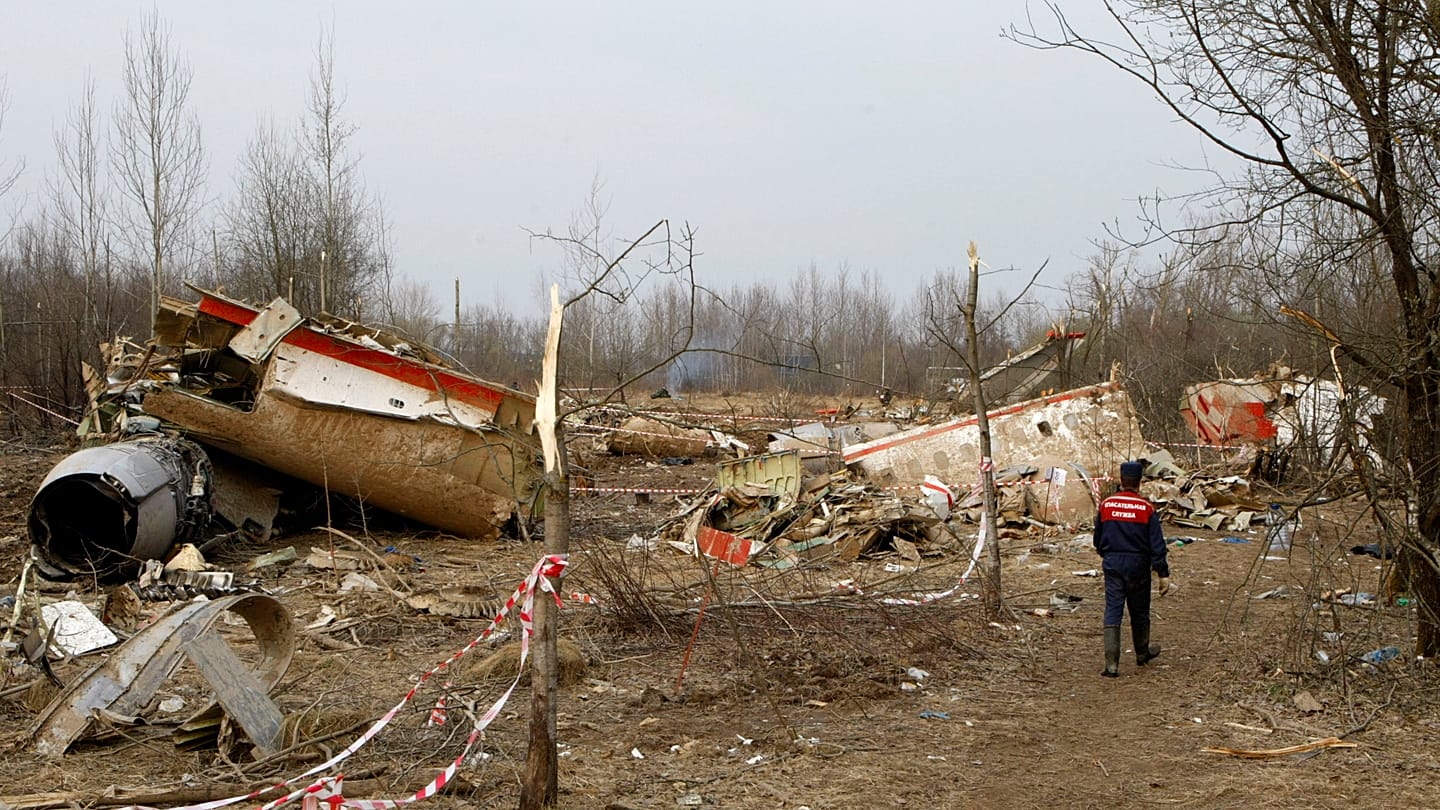
More than 16 years after the Smolensk disaster, prosecutors released the findings of international experts who ruled out an explosion as the cause of the crash.1
An international team of experts has identified four factors it believes led to the 2010 Smolensk plane crash, which killed 96 people, including Polish President Lech Kaczyński and his wife.1
The experts identified an unstable approach to landing, an incorrect assessment of the aircraft’s actual altitude, a continued descent below the minimum altitude and a delayed decision to abort the landing.1
Prosecutors Present Findings
Poland’s National Prosecutor’s Office spokesperson Przemysław Nowak presented the findings of the comprehensive report on Friday, stressing that they reflected the experts' conclusions rather than an independent assessment by prosecutors.1
The spokesperson for the National Prosecutor’s Office said the experts had ruled out an explosion as the cause of the crash, explaining that the hypothesis had been tested using various methods.1
A Team Of 22 Experts
A total of 22 experts from the United States, the United Kingdom, Ireland and Hungary contributed to the report.1
Among the experts were specialists who had previously analysed other major aviation and aerospace disasters, including the Lockerbie bombing, the Airbus emergency landing on the Hudson River and the Space Shuttle Columbia disaster.1
The experts drew on all the evidence gathered and on earlier expert assessments.1
The disciplines covered in the analysis included aviation, medicine, chemistry, engineering, computational mathematics and photogrammetry.1
The first report was issued in August 2024..1 The document ran to several hundred pages including annexes.1
After it was translated into Polish, the prosecutors carried out a detailed analysis, concluding that the material was incomplete and unclear, so they submitted 66 questions to the experts.1
A supplementary report was issued in May 2026..1 Once it had been translated, the investigators considered the overall report “complete and clear.”1
The experts examined damage to the aircraft’s structure, computer simulations, the victims' injuries, the distribution of wreckage and bodies, and the results of physico-chemical analyses.1
Former Defence Minister Challenges Findings
Former Polish Defence Minister Antoni Macierewicz has rejected the experts' conclusions, questioning their authority and pointing out that none of them had visited Smolensk in person.1
Macierewicz also reiterated his claims regarding explosive materials, arguing that the experts had failed to properly consider evidence concerning the aircraft wreckage and earlier tests.1
Polish Prime Minister Donald Tusk, speaking at a press conference in Brussels, said the causes of the crash had already been established by a commission in 2011 and that its findings had subsequently been challenged “for purely political reasons.”1
Sources
Every number in the story points here. Each links to the original reporting.
LocalEuronews
See a sentence its source doesn’t back up?
Tell us the source number and what’s wrong. We check every report. If we change the story, the fix goes on the corrections page with the old wording.