Read the original on CelebYachts →
This report is from CelebYachts, which tracks the superyachts of public figures.1
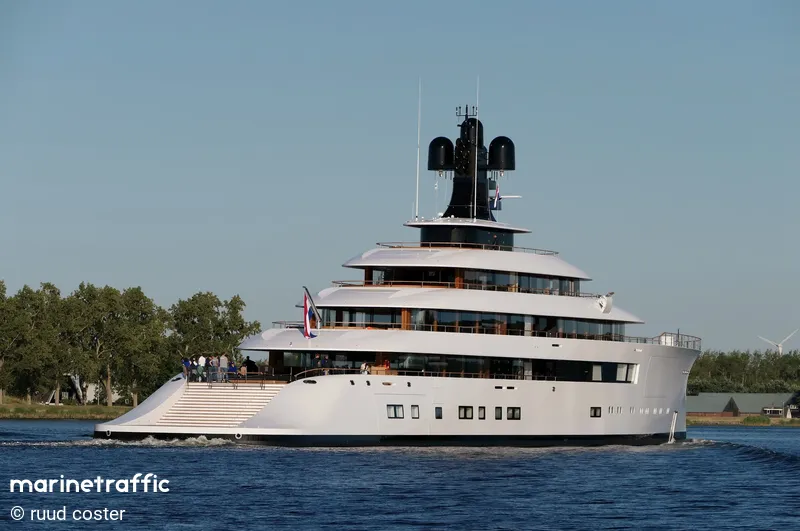
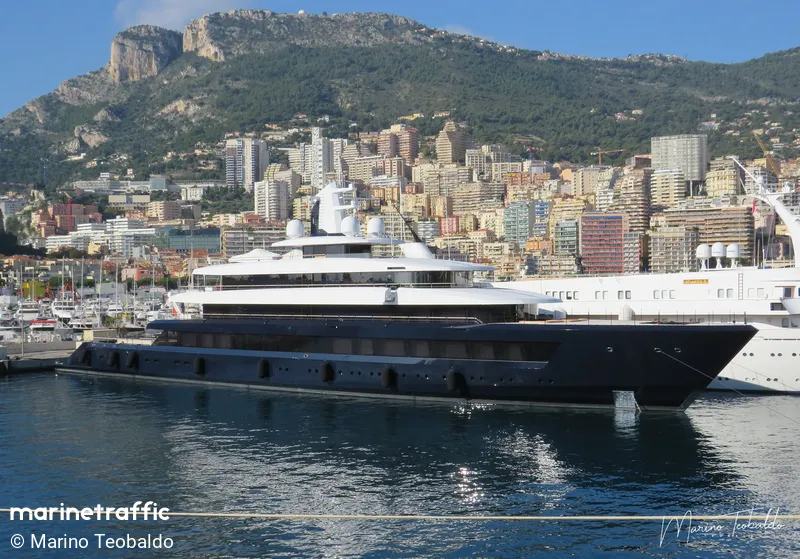
Drizzle carries nearly three thousand gross tons inside ninety metres, a density that dictates the interior layout more than any published brief. The owner’s reputation for discretion leaves the designer’s name absent; the steel tells a different story about space allocation.1
The interior layout of Drizzle has not been published. No floor plans, material specifications, or commissioned artworks have entered the public record. This opacity is consistent with the habits of an owner who treats his vessels as secure residences rather than marketing assets. The reporting therefore rests on the verifiable metrics of the hull itself: gross tonnage, beam, and the mechanical envelope required to move the displacement. The figures reveal a vessel engineered for maximum internal volume within a strict length limit, a configuration that dictates the spatial hierarchy more effectively than any hypothetical brief.1
The volume constraint
Drizzle measures ninety point five metres overall with a beam of fourteen metres. She carries a gross tonnage of two thousand nine hundred sixty-five, a density that places her near the upper limit for a vessel of this length. The extra volume relative to shorter peers translates directly into usable interior space. It allows for broader main deck saloons, taller accommodation cabins, and wider circulation paths without increasing the waterline. De Voogt Naval Architects, the shared design centre for the Feadship cooperative, calculated the hull form to carry this mass efficiently. The resulting proportions favour horizontal spread over vertical stacking, a practical choice for a yacht intended for extended cruising rather than short-hop transit. The high tonnage-to-length ratio also implies a multi-deck superstructure that maximises light and space for the owner’s family, rather than dedicating volume to external decks or large sunpads.1
The cooperative build process
The builder is recorded as Feadship yard 1012, a reference to the cooperative’s dual-yard construction model. Feadship operates through Royal Van Lent Shipyard and Koninklijke De Vries Scheepsbouw, both contributing to the build while sharing identical design and engineering protocols. The cooperative traces its roots to 1849 and formalised its export association structure in 1949 to target American markets before expanding globally. Drizzle was constructed under Bureau Veritas classification and features hybrid propulsion. The hybrid machinery package occupies a fixed share of the lower decks, requiring dedicated spaces for engines, battery arrays, and exhaust systems. These compartments dictate the placement of the guest quarters above them. The BV class requirements further shape the arrangement, mandating watertight subdivision, fixed escape routes, and life-saving appliance storage that consume a predictable portion of the available tonnage. The remaining volume is allocated entirely to accommodation and service areas.1
The Amsterdam facility at Westpoort opened in early 2019 and can accommodate superyachts up to one hundred sixty metres, providing ample room for the fit-out phase of a ninety-metre project. The Kaag yard handles vessels up to one hundred metres and maintains two dry docks and two slipways. Both yards share the engineering centre in Hoofddorp, ensuring that the interior design integrates seamlessly with the naval architecture. The cooperative model allows the build to shift between facilities depending on capacity and scheduling, a logistical advantage that keeps custom projects on timeline. The hybrid propulsion system enables low-noise operation in ecologically sensitive waters, while the fourteen-metre beam provides the stability necessary for daily tender launches.1
Koninklijke De Vries Scheepsbouw operates from Aalsmeer and Makkum, with the latter facility featuring a one hundred seventy-metre construction shed and a massive dry dock capable of handling vessels over one hundred twenty metres. Royal Van Lent maintains headquarters in Kaag and a newer dock in Amsterdam. The shared design and engineering centre, De Voogt Naval Architects, coordinates the technical specifications across all sites. This infrastructure ensures that a ninety-metre hull like Drizzle receives consistent quality control during the steel cutting, block assembly, and final outfitting stages. The dry dock capacity at the Amsterdam site specifically accommodates the full length of the vessel, allowing for uninterrupted painting and machinery installation without spatial constraints.1
The operational footprint
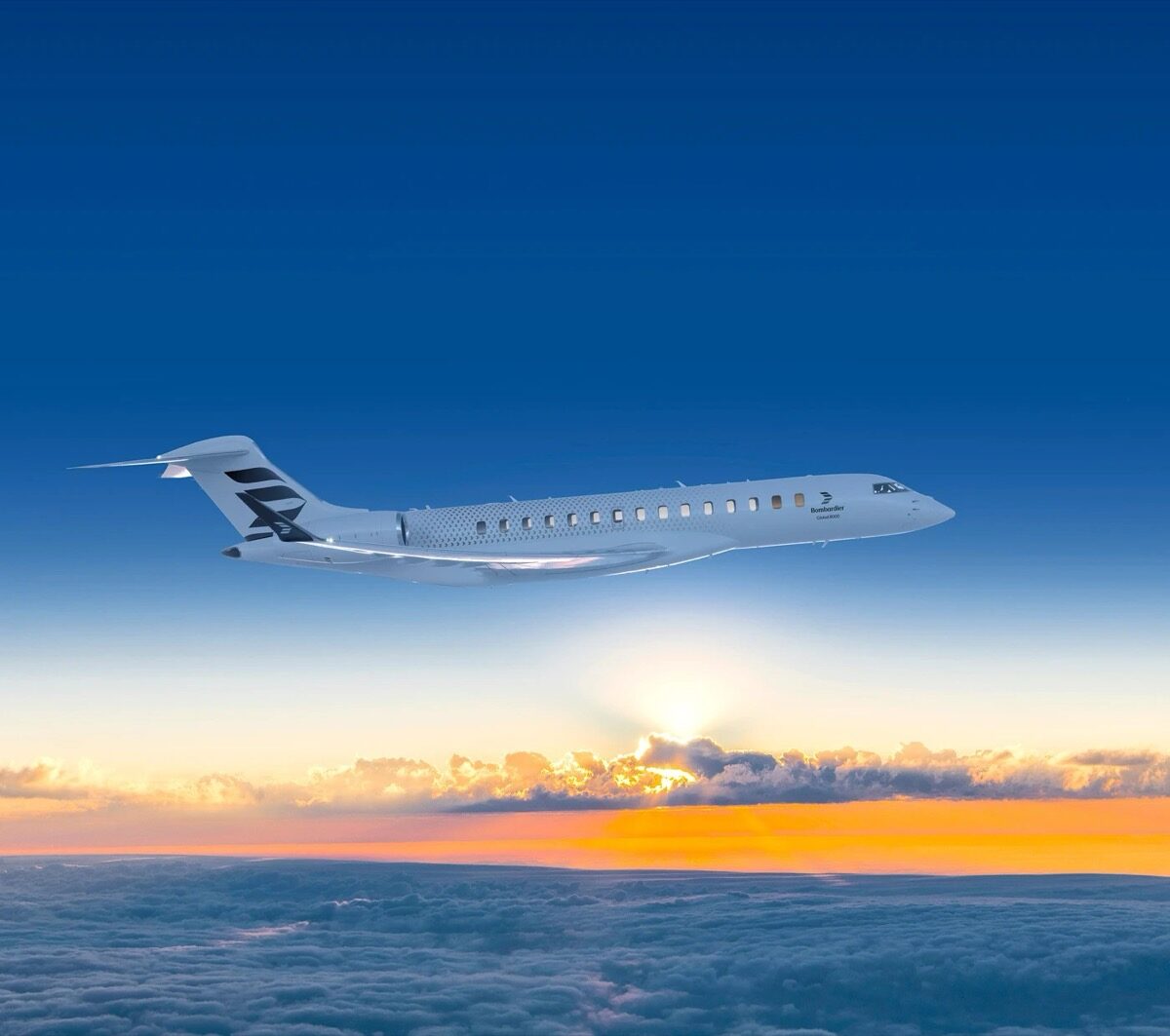
Ortega purchased Drizzle in 2024, adding her to a personal fleet that includes the yacht Valoria B and a Gulfstream G650 aircraft. His acquisition strategy focuses on functional mobility rather than expanding a collection. The vessel flies the Maltese flag and lists Valletta as her home port. AIS broadcasts place her in the Ionian Sea at thirty-nine point six degrees north, nineteen point nine degrees east, a location that aligns with her role as a private cruiser. The interior designer remains undisclosed, but the structural priorities are evident in the steel: a high volume-to-length ratio, robust engineering for autonomous travel, and a layout that separates crew operations from guest spaces without compromising either.1
Ortega’s wealth originates from the 2001 initial public offering of Inditex, the parent company of the Zara chain. He retained majority control through Pontegadea, an investment vehicle that manages his real estate and financial holdings across Madrid, Barcelona, and major European capitals. The capital generated from the retail empire funds the acquisition and upkeep of multiple luxury assets, including the yacht and the business jet. His preference for simplicity and privacy extends to his maritime lifestyle, favouring unobtrusive engineering and reliable performance over ostentatious displays. The vessel’s registration and tracking data confirm her active status, while the absence of interior disclosures keeps the focus on the engineering choices that define her daily operation. Pontegadea’s portfolio includes commercial properties in Manhattan, Chicago, and Washington, demonstrating a diversification strategy that parallels the modular approach used in the yacht’s construction. The capital deployment follows a disciplined schedule, matching long-term asset retention with short-term operational needs.1
Read this on celebyachts.com, where the figures are checked against the live register.1