Read the original on CelebYachts →

This report is from CelebYachts, which tracks the superyachts of public figures.1
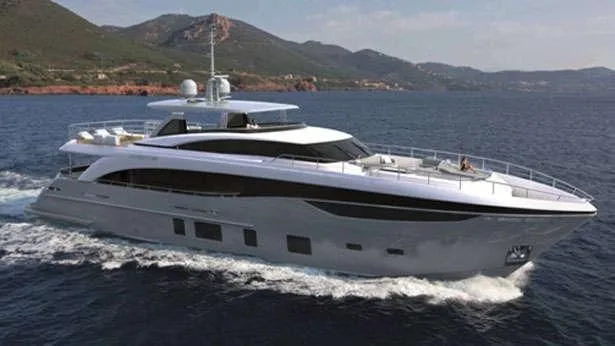
Divina Barbara sits in a legal limbo that mirrors her transmitter silence. Tracked off the us east coast in 2018 and now listed as seized, her ownership chain reveals how a 18,000,000 dollar hull becomes an administrative ghost long before it hits a yard or a port authority.1
The AIS broadcast for Divina Barbara ceased on 17 august 2018. The final coordinates place her at 30.28° N, 35.89° W, sitting in open water off the US East Coast. She has not moved since. A vessel of this class does not simply stop transmitting because of a battery failure or a routine maintenance cycle. When a tracked asset goes dark while simultaneously appearing on a Sanctioned list, the silence is operational. The transmitter was switched off deliberately, or the equipment was removed by authorities enforcing a seizure order. In either scenario, the boat has left the commercial shipping lanes and entered a bureaucratic holding pattern.1
The transmitter silence
The absence of a live track is the first layer of opacity. Open-source maritime intelligence relies entirely on automatic identification system broadcasts. A hull can exist in a dry dock, anchored in a private cove, or tied to a state harbour wall, and the public record will show nothing until the next transmission. For Divina Barbara, the last known location is more than four years old. The register categorises her under 'Sanctioned & seized yachts (2nd tier)', which explains the blackout. Regulatory bodies do not publish real-time positions for assets they are actively securing or liquidating. The data stops because the law requires it to stop.1
The second-tier classification indicates a specific stage in the enforcement pipeline. First-tier listings typically denote active sanctions or immediate travel bans. Second-tier designations usually apply to assets that have already been physically secured or are undergoing judicial review. The distinction matters for the AIS data. A first-tier owner might disable their transmitter to avoid detection by rival operators or media drones. A second-tier asset has usually already lost operational control. The blacked-out signal confirms that the regulatory step has progressed from paper to physical custody.1
The builder constraint
The register attributes the build to Princess Yachts, though it flags the attribution as unverified and based on a single source. The hull measures 32.0 metres (105 ft) in length with an 8.0 metre (26 ft) beam. These dimensions place her squarely within the production envelope of the Plymouth-based yard. Princess Yachts operates across five separate sites in Devon, covering 1.1 million square feet of combined space. The South Yard site, released by the Royal Navy in 2012, is explicitly designated for building boats up to 40 metres. A 32-metre hull would fit without modification into the existing infrastructure at New Port Street or Lee Mill, both of which have handled new builds for decades.1
The discrepancy between the stated length and the unverified builder note points to a paperwork delay rather than a construction error. Princess Yachts produces vessels in standardised classes. The X Class covers super flybridge yachts ranging from 24.4 to 29.0 metres (80 to 95 feet). The Y Class runs from 21.9 to 29.0 metres (72 to 95 feet). Divina Barbara falls just outside those specific class ranges, suggesting she may have been built as a custom variant or ordered under a different designation that the current database has not yet reconciled. The physical steel matches the yard’s capability. The South Yard site sits adjacent to No3 Slip, which launched the last warship built at Devonport in 1968 and now launches Princess yachts. The adjacent No2 Dock, constructed in 1720, is used for testing. A 32-metre hull would require neither the massive cranes of the older Royal Navy slips nor the expanded Langage facility built in 1989. The engineering constraints of the build align perfectly with the available infrastructure at New Port Street or Lee Mill, where naval architect Bernard Olesinski collaborated with Marine Projects in the late 1970s. The administrative record has not caught up.1
The corporate architecture
Ownership at this scale rarely involves an individual holding the title directly. The register names Eduard Khudainatov as the associated party, but provides no further biographical data. There is no recorded birth date, citizenship, or occupation attached to his name in our files. The link between him and the hull is classified as a reported connection, not a certified legal transfer. The asset is almost certainly held by a limited liability company registered in a jurisdiction selected for its disclosure thresholds. Khudainatov would appear as a beneficial owner or a shareholder in the corporate filings, a structural arrangement designed to separate the operator from the legal entity that holds the debt.1
The estimated value sits at 18,000,000 dollars. That figure represents a market appraisal, not a transaction price. No purchase contract has been published, and the original build cost remains undisclosed. When a yacht enters the Sanctioned category, the financial trail shifts from commercial sales to asset forfeiture proceedings. The initial construction invoice is irrelevant to the current valuation; the relevant numbers are the outstanding mortgages, the daily charter rates during active service, and the eventual auction reserve set by the seizing authority. None of those figures are public.1
The gap in sourcing is absolute. The register contains no information about the holding company, the jurisdiction of incorporation, or the date of the seizure order. Stating that these details are missing is sufficient. The remaining facts describe a vessel trapped between a builder’s production schedule and a regulator’s enforcement timeline. The hull exists in a ledger, flagged under the United Kingdom, carrying an MMSI identifier of 235096361. The IMO number is absent, which typically indicates a gross tonnage below the threshold requiring international registration, or a delay in issuing the permanent identifier. The flag state provides the legal framework, but the sanctions regime dictates the physical reality.1
The combination of a UK flag and a Sanctioned owner creates a specific administrative conflict. United Kingdom maritime law requires all registered vessels to maintain valid certification and safety compliance. A seized asset cannot legally sail, and therefore cannot maintain the continuous survey cycles required to keep the flag active. The vessel sits in a state of suspended animation. The transmitter is dark. The papers are frozen. The hull remains physically intact, likely moored in a jurisdiction willing to hold confiscated property indefinitely, waiting for a court order that may never arrive or an auction that will reset the ownership chain entirely.1
Read this on celebyachts.com, where the figures are checked against the live register.1