Read the original on CelebYachts →
This report is from CelebYachts, which tracks the superyachts of public figures.1
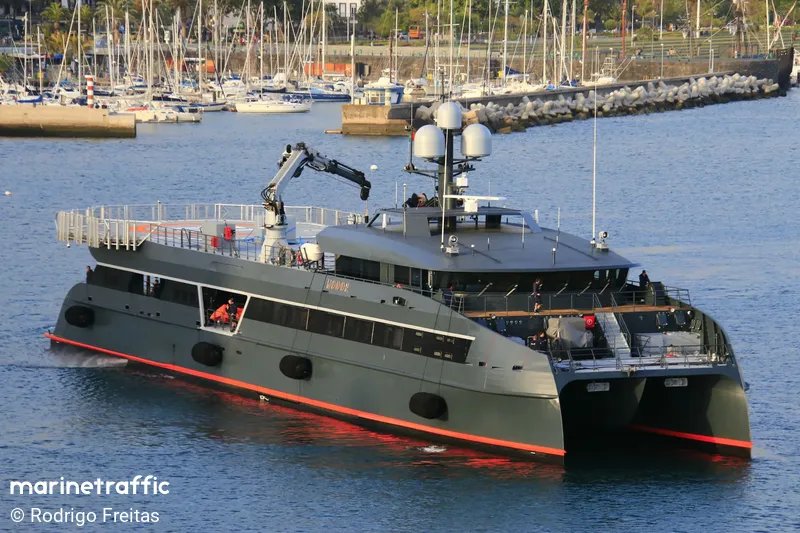
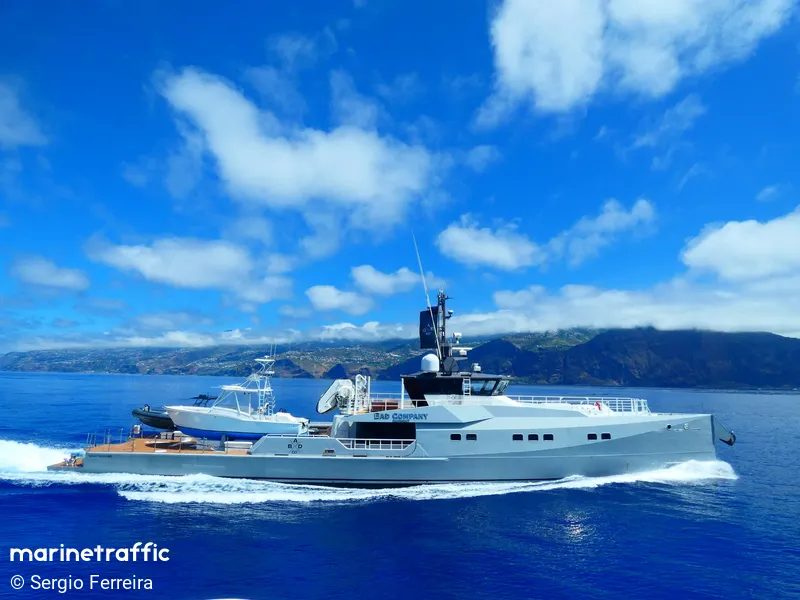
Built in 2019 as the first of its class for Damen, the 45.6-metre Bad Company Support carries the functional DNA of a commercial Support vessel into private hands. Her August 2026 movements reveal a craft designed for low-speed endurance and local operations, not high-speed deployment.1
Bad Company Support is a 45.6-metre motor vessel built by Damen in 2019. The builder lists her as the first of the YS 4508 series. This hull type was designed for utility. It prioritises function over luxury.1
Her owner is Anthony Hsieh. He is an American Entrepreneur known for founding loanDepot. He also owns the Bad Company fishing fleet. His background explains the design choices in this steel hull.1
The AIS data confirms her role. She operates in the Aegean Sea. Her movements are short, slow, and local. She does not deploy on long transits. She stays close to home ports.1
What makes Bad Company Support different from other yachts?
Her length is 45.6 metres. Her beam is 8.0 metres. This width favours stability over speed. A wider hull sits flatter in rough water. It also provides more deck space for fishing gear.1
Her gross tonnage is 309. This measures her inside volume. It is low for a vessel of her length. Most superyachts of this size have much higher tonnage. They pack in more cabins and lounges.1
Bad Company Support has less interior volume. The space is used for equipment storage. It holds fishing tackle and catch handling gear. It does not hold a grand salon or a cinema.1
The builder categorises her as a Support vessel. These vessels extend the range of larger yachts. They act as floating helipads or tender garages. Bad Company Support uses this category for practical reasons.1
She flies the flag of the Cayman Islands. Her home port is Bikini. This registration is common for commercial vessels. It offers tax efficiency and legal clarity for business owners.1
How fast can Bad Company Support really go?
The AIS data shows her top speed is 14 knots. This is slow for a modern yacht. Many super yachts cruise at 16 knots or more. They reach speeds of 20 knots when needed.1
Her average speed is lower still. In August 2026, she averaged 10.7 knots. In September, she averaged 12.4 knots. These numbers show a vessel that prioritises fuel economy.1
She does not sprint across oceans. She works in coastal waters. Her engines are tuned for endurance, not peak power. This matches the needs of a fishing fleet.1
The hull form supports this speed profile. The YS 4508 design is a displacement hull. It pushes through water rather than planing on top. Planing hulls are faster but use more fuel.1
A displacement hull is efficient at low speeds. It allows the vessel to stay at sea longer. This is critical for Sportfishing expeditions. Fishermen need time, not speed.1
Her IMO number is 9762314. Her MMSI is 319364800. These identifiers track her movements globally. They confirm she stays within specific zones. She rarely leaves the Mediterranean basin.1
Where does Bad Company Support spend her time?
Her live position is at 37.44° N, 24.94° E. This is in the Aegean Sea. She is anchored near the Cyclades islands. This area is popular for Sportfishing.1
In August 2026, she made eight passages. All were under 31 nautical miles. The longest trip was 30.7 nm from Mykonos to Naxos. The shortest was 7.6 nm around Folegandros.1
She spent days in the same harbour. She moved between Mykonos, Naxos, and Amorgos. These are small islands with limited facilities. A large yacht would struggle here.1
Bad Company Support fits these ports. Her draft is shallow enough for local bays. She can anchor close to shore. This gives fishermen quick access to deep water.1
Her movements are repetitive. She leaves port, fishes, returns. She does not explore new regions. This pattern suggests a dedicated operational base.1
What do the voyages tell us about her purpose?
Passage 2292 covers the run from Korissia to Serifos. It is 12.2 nautical miles long. She completed it at 9.2 knots average speed. This is a typical fishing transit.1
Most passages in August were under 15 nm. She stayed within sight of land. This minimises risk in Bad weather. It also keeps crew and guests safe.1
In September, she went further. She sailed from Pozzallo, Sicily, to Palma de Mallorca. This trip was 579.8 nm. It took two days. Her average speed was 12.4 knots.1
This long transit was an exception. It moved her between fishing grounds. She did not stop at intermediate ports. She ran straight to her destination. This shows efficiency.1
The September data includes a trip from Milos to Ermoupoli. It was 474.3 nm. She averaged 13.2 knots. This is faster than her August pace. She pushed the engines slightly.1
These trips connect major hubs. They link Italy, Greece, and Spain. This network supports a global fishing season. Hsieh can move his fleet to follow fish stocks.1
Why does Anthony Hsieh own this specific hull?
Hsieh founded loanDepot, a Mortgage company. He sold it for hundreds of millions. He invested heavily in Sportfishing. He owns one of the largest fleets in the world.1
He needs reliable Support vessels. Commercial boats break down less often. They are easier to repair. They have simpler systems than luxury yachts.1
The Damen YS 4508 is a proven design. It is built for hard work. It has a steel hull. Steel is tough and durable. It withstands impact and stress.1
Hsieh values function over form. He does not need a glass atrium. He needs a stable deck. He needs space for winches and nets. He needs room for crew rest.1
His citizenship is United States. He lives in America. But he operates globally. The Cayman Islands flag helps him manage international assets. It simplifies legal compliance.1
Bad Company Support is a working boat. It serves a business purpose. It extends the reach of his fishing operations. It is a key asset for his business model.1
The AIS data proves this model. It tracks real-world usage. It shows how the vessel behaves. It confirms the design intent. Utility wins over vanity every time.1
Read this on celebyachts.com, where the figures are checked against the live register.1