Read the original on CelebYachts →

This report is from CelebYachts, which tracks the superyachts of public figures.1
Andrey Melnichenko bypassed the chaotic privatisations of the 1990s to build EuroChem and SUEK from distressed industrial plants. The resulting capital financed two vessels designed by Philippe Starck, whose hybrid propulsion systems reflect the same engineering priorities as the ammonia complexes he commissioned in Kingisepp.1
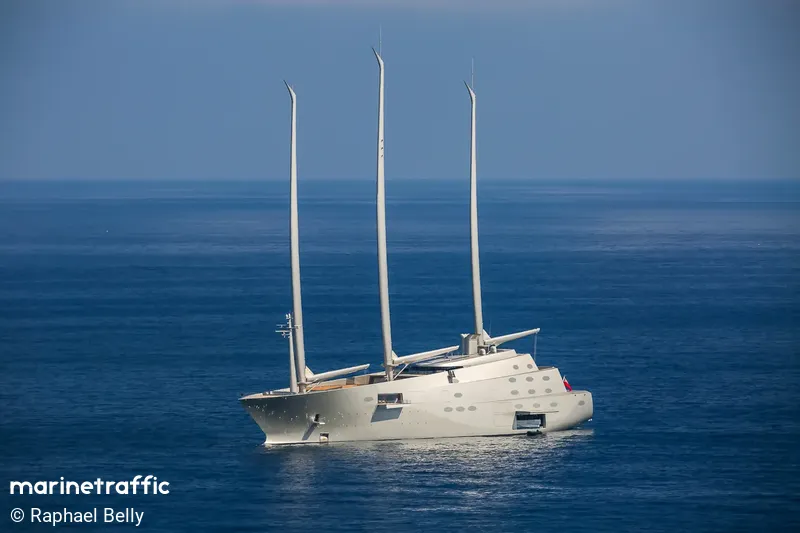
Andrey Melnichenko built a twenty-billion-dollar fortune by buying broken factories and fixing them, not by capturing state assets during Russia’s chaotic 1990s privatisations. His wealth originated in the systematic acquisition of derelict mining and chemical plants, followed by decades of capital expenditure to integrate supply chains and import German engineering. This industrial logic dictated his choice of vessels: Sailing Yacht A, which he acquired in 2017, carries the same emphasis on propulsion efficiency and hybrid systems as the ammonia plants he commissioned in Kingisepp. The vessel now sits seized in Trieste, its annual maintenance funded by the Italian treasury, illustrating how geopolitical exposure can freeze assets that were engineered for endurance.1
The bank and the pivot
Melnichenko began with a currency exchange booth at Moscow State University in the late 1980s, generating an initial $50,000 alongside two student partners. That capital secured a banking licence from the Bank of Russia, leading to the co-founding of MDM Bank in 1993. The institution survived the 1998 Russian financial crisis unscathed because it avoided government bonds and illiquid assets while competitors collapsed. By 1997, Melnichenko had bought out his partners and became sole shareholder. He then pivoted away from pure finance. In 2000, working with former metals trader Sergei Popov, he established the MDM Group to acquire more than fifty independent businesses across pipeline manufacturing, coal production, and fertilisers. These sectors were derelict and risky, deliberately chosen because they fell outside the political influence that dominated other industries. The process occurred five years after the main wave of post-Soviet privatisations closed, meaning fewer than five percent of the purchased assets came directly from the state. The group consolidated these acquisitions into three separate companies: TMK, EuroChem, and SUEK. He exited TMK through a London Stock Exchange IPO in 2006. Between 2004 and 2007, he sold his MDM Bank shares to Popov. The International Finance Corporation subsequently purchased a five percent stake in the bank for $185 million, valuing it at $3.7 billion, before the consolidating vehicle dissolved entirely.1
The chemistry of integration
EuroChem represents the core of the fortune. Melnichenko became chairman in 2004 and majority shareholder in 2007. The initial portfolio consisted of nitrogen plants and a phosphate mine fitted with obsolete Soviet-era machinery. Rather than relying on state subsidies, he pursued vertical integration and imported advanced processing technologies. New manufacturing facilities were constructed in Novomoskovsk, Nevinnomyssk, and Kovdor. The company acquired potash licenses in Volgograd in 2005 and Perm in 2008. A pivotal transaction occurred on 31 March 2012, when EuroChem purchased a BASF SE plant in Antwerp for €830 million ($930 million), bringing in proprietary slow-release fertilizer technologies. That same year, it completed the acquisition of K+S Nitrogen. In 2015, the headquarters moved to Switzerland to access international capital markets. The industrial strategy culminated in 2019 with the launch of a $1 billion ammonia plant in Kingisepp, Russia. The facility produces one million tonnes of ammonia annually and operates a closed water recycling system to prevent discharge into the Baltic Sea. Melnichenko announced further investments of $4.4 billion for adjacent high-tech ammonia and urea plants in 2021. He remained the effective beneficiary of one hundred percent of EuroChem until he resigned as non-executive director on 9 March 2022.1
Coal and carbon
SUEK followed a parallel trajectory of distressed asset recovery. Melnichenko joined the board in February 2005 and became chairman in June 2011. By 2013, he held ninety-two point two percent of the shares after purchasing the stakes of his former partners. The underlying assets were severely depreciated, with average equipment wear reaching ninety percent and productivity lagging behind global standards. Over the following decade, the company repaid debts, upgraded seaports, and deployed big-data automation across twenty-six mines in Kemerovo and Siberia. The operation now extracts more than one hundred million tonnes of high-calorific, low-sulphur coal annually, distributing the product to forty-eight countries. The enterprise also generates twenty-five percent of Siberia’s electricity through its subsidiary, the Siberian Generating Company. Melnichenko served as non-executive director until his resignation on 9 March 2022.1
The holding structure and the seizure
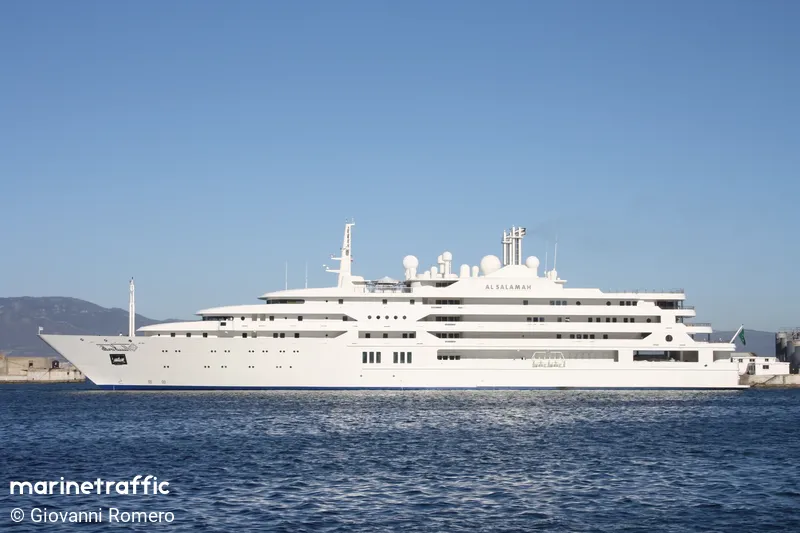
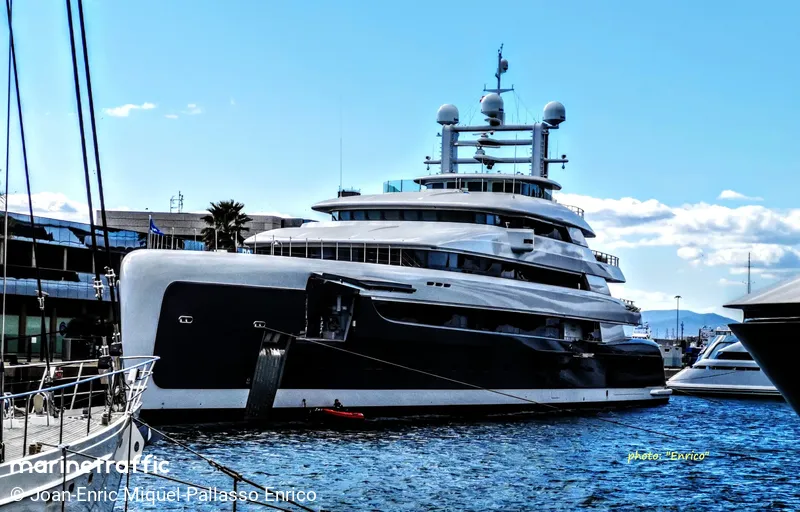
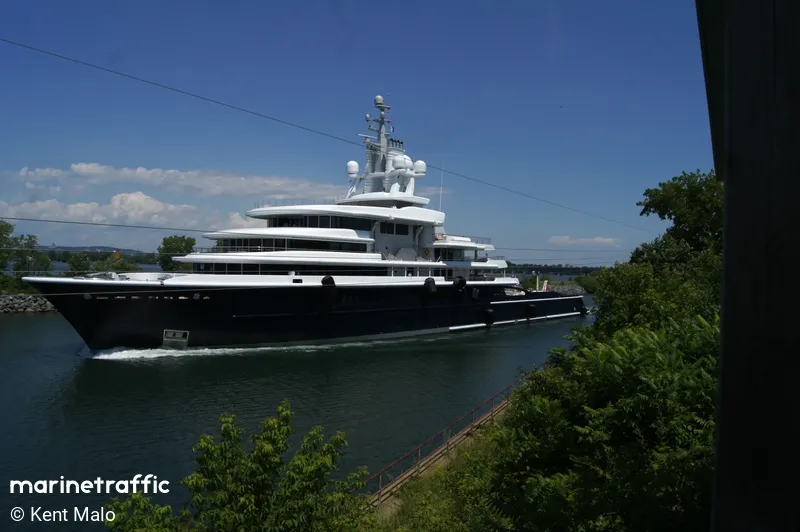
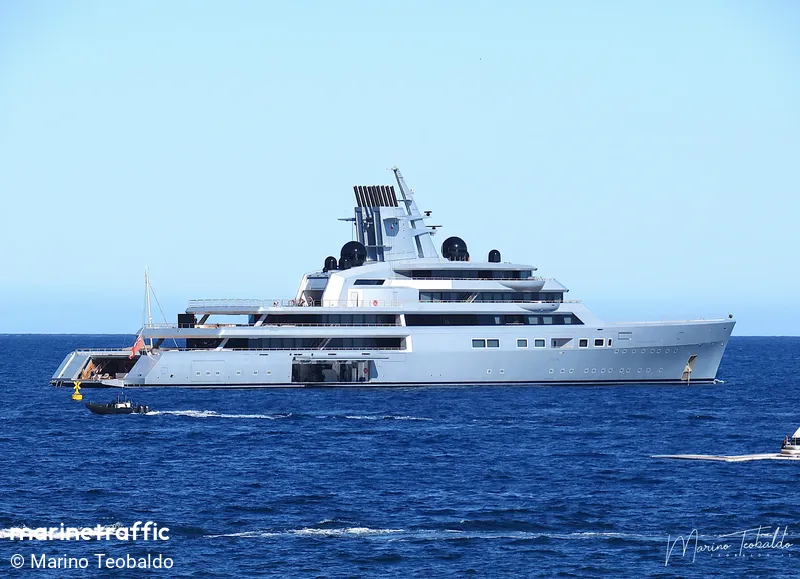
The capital generated by these industrial holdings financed two large vessels designed by Philippe Starck. Motor Yacht A, measuring 118 metres, was built by Blohm+Voss and delivered in 2008. Sailing Yacht A, measuring 142.81 metres, was constructed by Nobiskrug and handed over in May 2017. Both vessels are owned through Valla Yachts Ltd of Bermuda. Sailing Yacht A displaces 12,558 gross tonnes and carries a deadweight of 1,458 tonnes. Its propulsion consists of a variable-speed hybrid powerplant with two MTU lineshaft diesel engines creating 3,600 kilowatts each, coupled with a superimposable diesel-electric transmission. A three-masted fore-and-aft sailing rig provides power assistance, featuring freestanding carbon-fibre rotating masts manufactured by Magma Structures and fully automated sails produced by Doyle Sailmakers USA. The total sail area reaches 3,747 square metres. Electricity for hotel loads is generated by four 2,800 kilowatt generators treated by Emigreen diesel particulate filters. The vessel includes an underwater observation pod in the keel with thirty-centimetre-thick glass. Following the imposition of European Union sanctions on 9 March 2022, Italian authorities seized Sailing Yacht A in Trieste. The vessel was re-flagged to Sierra Leone in June 2022. As of June 2026, it remains anchored in the Gulf of Trieste. The Italian treasury continues to cover annual maintenance costs of approximately ten million euros while Melnichenko disputes the listing. The European Court of Justice upheld the sanctions on 17 December, ruling that the concepts of belonging and control encompass trust beneficiaries even when they cannot dispose of the assets.1
Read this on celebyachts.com, where the figures are checked against the live register.1