Read the original on CelebYachts →
This report is from CelebYachts, which tracks the superyachts of public figures.1
Built under the project name Mipos, the 139-metre yacht passed from Howaldtswerke-Deutsche Werft in Kiel to Lürssen in Bremen before entering service. Its physical form and financial trail reflect industrial constraints and sovereign accounting rather than private luxury.1
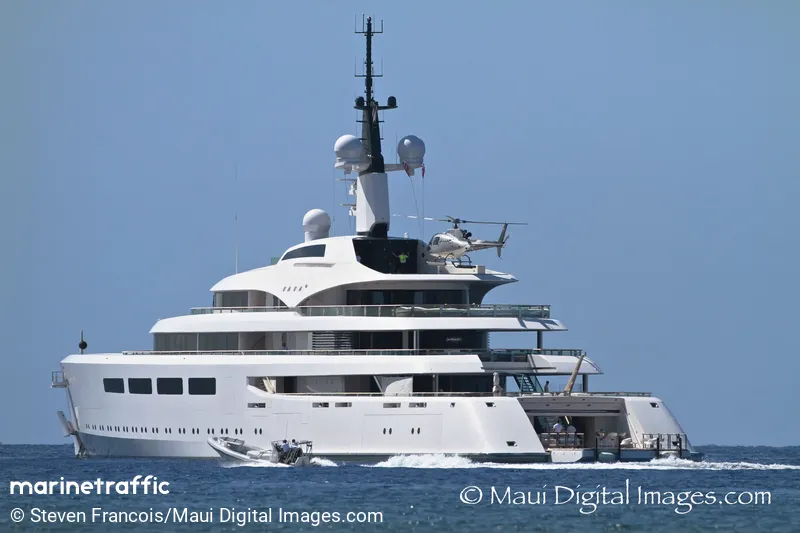
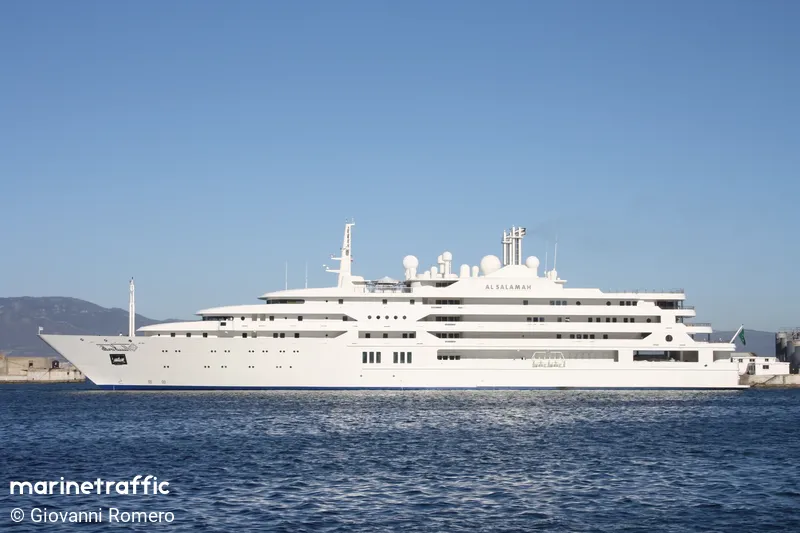
Al Salamah is a 139-metre motor yacht commissioned in 1998. It serves as the official vessel for the King of Saudi Arabia. The craft carries a steel hull with an aluminium superstructure. It sits at gross tonnage 12,234. This volume places it as the tenth largest yacht globally by that measure.1
The construction story begins in Kiel, Germany. Howaldtswerke-Deutsche Werft (HDW) started the work there. HDW is a major German shipbuilder. They held the contract for the initial build phase. The project carried the internal name Mipos. This stands for Mission Possible.1
The hull moved later to Bremen. Lürssen completed the fitting out process there. Lürssen is another leading German yard. This transfer between cities is unusual for yachts of this size. It reflects specific industrial capacities available at the time. The design came from Terence Disdale. He shaped the exterior lines.1
Why did the hull start in Kiel?
HDW began the physical construction in Kiel. This yard had the slipway capacity needed. A vessel of 139 metres requires significant space. HDW provided the initial structural framework. They welded the steel plates together. This stage creates the basic shape of the boat. The keel laying happened here first.1
The commission date marks the start. The Saudi Crown Prince Sultan bin Abdulaziz ordered the yacht. He wanted a large vessel for state duties. The order placed in 1998 set the schedule. HDW worked on the hull structure. This phase takes considerable time and labour. The yard managed the heavy lifting operations.1
Kiel is a port city in northern Germany. It hosts several large shipbuilding facilities. HDW operated one of these key sites. The yard possessed the cranes and docks required. They handled the early stages of assembly. The hull grew in length and width here. Beam measures 24 metres across the widest point.1
The draft depth is five metres. This allows navigation in many ports. The steel hull provides strength and durability. It also adds significant weight to the vessel. HDW calculated the displacement carefully. They ensured the structure met safety standards. The foundation was laid solidly in Kiel.1
What caused the move to Bremen?
The unfinished hull traveled to Bremen. Lürssen took over the completion work. This yard specializes in high-end fit-outs. They have experience with complex interiors. The transfer allowed Lürssen to apply their expertise. HDW focused on the structural build. Lürssen handled the detailed finishing.1
Bremen is located further inland than Kiel. The hull likely moved by water or land transport. Such moves are rare for large yachts. They require careful planning and logistics. The decision reflected capacity constraints at HDW. Lürssen had the space for final assembly. They could install the engines and systems.1
Lürssen completed the aluminium superstructure. This material is lighter than steel. It helps balance the heavy hull below. The teak decks were also installed here. These provide a traditional walking surface. The interior spaces were fitted out fully. Every cabin and salon received attention.1
The launch occurred in 1999. This date marks the transition from builder to owner. The vessel entered the water for testing. It was ready for sea trials soon after. The two-yard approach finished successfully. The project stayed on schedule despite the move. Delivery followed shortly thereafter.1
How do the engines drive the yacht?
Two MTU diesel engines power Al Salamah. The model is the 20V 1163 TB73. These are robust marine propulsion units. They provide reliable thrust for the hull. The maximum speed reaches 21.5 knots. This allows efficient travel between destinations. Cruising speed sits at 17 knots.1
The engine room houses both units. They are mounted securely to the hull. Vibration dampening systems reduce noise. This ensures comfort for passengers above. The fuel tanks store enough for long ranges. Maintenance access is designed into the layout. The machinery supports the heavy displacement.1
Propellers convert engine power into motion. They push water to drive the yacht forward. Steering controls direct the flow. Navigation systems guide the course. The crew operates these controls daily. The technical team monitors performance constantly. Reliability is critical for state vessels.1
Who owns the sovereign asset?
The owner is listed as the Saudi state. It is not owned by a private individual. The registration uses the entity Saudi Arabia Govt Finance. This clarifies the legal status of the yacht. It belongs to the government directly. The King uses it for official duties.1
Crown Prince Sultan bin Abdulaziz commissioned it. He used the yacht until his death. He passed away in 2011. After his death, ownership discussions arose. Some reports speculated about changes. The state retained control regardless. The vessel remained in service.1
In 2013, the yacht was listed for sale. The asking price was USD 280 million. This figure appeared in market reports. No confirmed buyer emerged from those listings. The state kept the vessel. It continues to serve its original purpose today.1
Where is Al Salamah now?
AIS data tracks the yacht’s movements. It sails under the Saudi flag. The home port is Jeddah. This city is on the Red Sea coast. Recent positions show it near 27.48° N, 34.09° E. This area is within the Red Sea region.1
The IMO number is 1007043. This ID identifies the vessel globally. The MMSI is 403003000. These codes help maritime authorities track it. The yacht remains active in service. It does not sit idle in dry dock. Operations continue as scheduled.1
The vessel maintains a low profile. It avoids unnecessary public exposure. Security is a priority for state assets. The crew manages all movements discreetly. Reports of sales or transfers remain unconfirmed. The yacht stays with the Saudi state. Its role as a royal vessel endures.1
Read this on celebyachts.com, where the figures are checked against the live register.1