The volume behind the new Kismet

This report is from CelebYachts, which tracks the superyachts of public figures.1
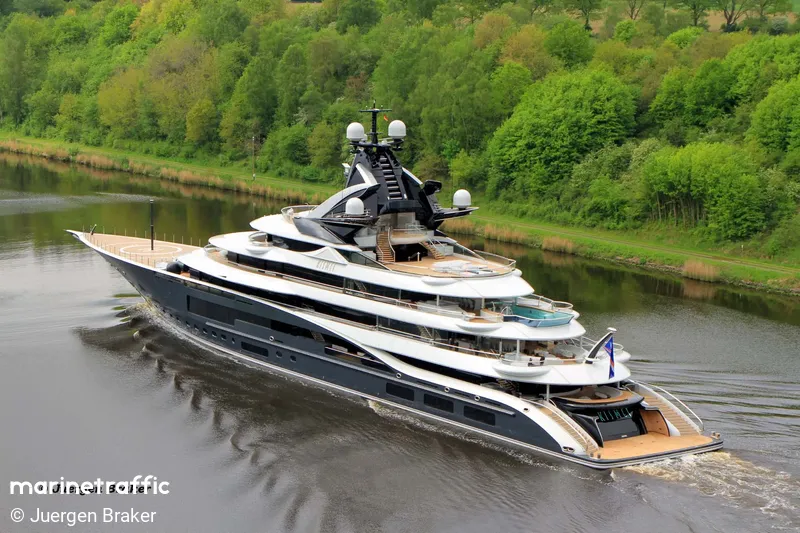
The interior designer and the owner’s brief for the 122-metre Kismet have never been published. That silence pushes the focus onto the metrics that cannot be hidden: a 4,918 gross tonnage against a 122-metre length, a ratio that dictates how Lürssen arranged the steel, the machinery, and the public spaces above the waterline.1
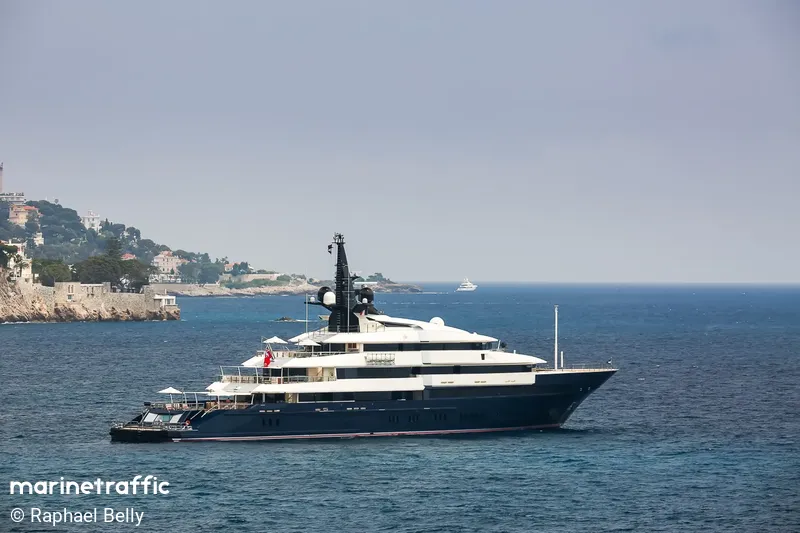
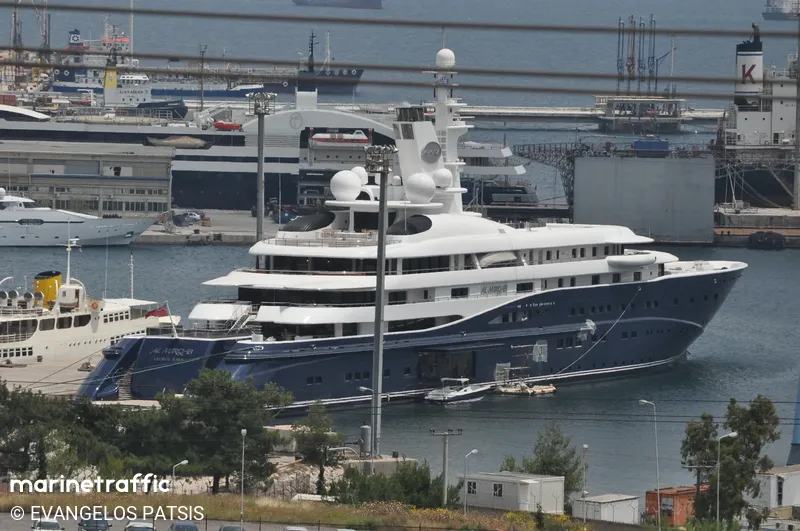
Khan sold the original Kismet to Eric Schmidt in September 2023. The 95.2-metre hull was renamed Whisper. Khan immediately ordered a replacement. The new Kismet entered service in 2024. She measures 122 metres long with a beam of 17.8 metres. The gross tonnage sits at 4,918. The interior design and the specific brief Khan gave the studio remain unpublished. One sentence covers that gap: the floor plans, material specifications, and room layouts have not been released to the trade or the public. Everything else follows from the registered dimensions.1
Compare the two hulls. The 2014 boat carried 2,928 gross tons. The 2024 boat carries 4,918. The increase of roughly 2,000 tons over a length gain of just under thirty metres means the newer hull is significantly fuller. A beam of 17.8 metres across a 122-metre run creates a low-length-to-beam ratio that prioritises interior volume over hydrodynamic efficiency. The naval architect’s task shifts from shaping a fast displacement hull to accommodating a high volume of deck space within a fixed maximum beam.1
The architecture of the envelope
Lürssen delivered both vessels. The yard’s capacity at Lemwerder and Schacht-Audorf allows it to handle projects of this scale without outsourcing the main hull construction. The 4,918 gross tonnage figure is a volumetric measurement of all enclosed spaces. It does not measure displacement. It measures the cubic capacity available for crew quarters, guest cabins, machinery, fuel tanks, and tender garages. A hull of this tonnage requires a multi-deck arrangement. The beam supports a wide main deck and likely a full upper deck, with the machinery placed centrally to balance the weight of the accommodation blocks forward and aft.1
The exterior windows described on the previous hull suggest a similar philosophy for the new build: maximising natural light in the public areas. The wider beam makes this straightforward. A 17.8-metre width allows for a central corridor with salons extending to the rail on both sides. The structural challenge is maintaining longitudinal strength across that span. Lürssen uses longitudinal framing systems in their large motor yachts to reduce weight while carrying the load. The steel plating thickness varies by zone, with heavier gauge used in the keel and bilge areas to absorb grounding loads and support the engine mounts.1
The capital behind the contract
Shahid Khan’s ability to order a new 122-metre superyacht less than a year after selling his previous one rests on a single industrial asset: Flex-N-Gate. The American supplier of motor vehicle components generated the cash flow that funded both hulls. Khan acquired control of the company in the early 2000s and expanded it through acquisition. The business supplies bumpers, fascias, and cargo management systems to major North American automakers. His net worth is reported at 14 billion dollars. He also owns the Jacksonville Jaguars and Fulham Football Club, but those liabilities operate separately from the private capital deployed for leisure vessels.1
The ordering pattern reveals a specific operational preference. Khan did not wait for the 2014 Kismet to reach twenty years of age before replacing it. He moved directly into a larger vessel while the market for second-hand luxury yachts remained active. This approach minimises depreciation losses on the older hull and ensures uninterrupted access to a custom-built platform. Lürssen accommodates such timelines by sequencing projects across its German facilities. The yard maintains a steady pipeline of steel cutting and outfitting bays, allowing owners to dictate delivery windows that align with personal schedules rather than shipyard availability.1
Movement and operational profile
AIS data places the new Kismet in the Ligurian Sea off the coast of Catalonia. Her last recorded position was at 43.34° N, 6.81° E. The track shows a series of passages including a 3,644-nautical-mile run between October 24 and November 5, 2026, and shorter hops between Gibraltar, Barcelona, and the French Riviera. She departed Ramsgate for London, covered 66 nautical miles at an average speed of 10.1 knots, and later moved between Sète and Barcelona. The maximum speed recorded during these voyages is 16 knots. The average speeds hover between 10 and 14 knots. These figures indicate a cruising profile optimised for comfort rather than transatlantic transit. The propulsion system is sized to deliver efficient passage rates at moderate RPMs, leaving reserve power for manoeuvring in confined harbours and operating stabilisers underway.1
In 2023, the previous Kismet received a 474 kWh Orca ESS battery from Corvus Energy, installed at the Lürssen-Krüger Werft shipyard. This retrofit reduced auxiliary fuel consumption and lowered emissions during harbour stays. The new 2024 Kismet inherits this operational mindset. The AIS speeds confirm a deliberate pacing. She rarely exceeds 15 knots, favouring steady passages over rapid transits. The propulsion layout prioritises fuel economy and vibration dampening, characteristics essential for a vessel intended for extended coastal cruising rather than open-ocean racing. Lürssen integrates similar hybrid-capable architectures into its newer designs, allowing owners to switch between diesel-electric and battery-only modes when entering sensitive coastal zones. This flexibility shapes the machinery space, requiring additional volume for battery racks and power conversion units, which further compresses the available interior footprint below the waterline.1
Registry and valuation
The home port is listed as Bikini. The flag is the Marshall Islands. Both choices reflect standard registry practices for vessels of this size. The Marshall Islands flag offers a streamlined commercial registry framework, while Bikini serves as a symbolic anchor point often selected for aesthetic reasons rather than logistical convenience. The vessel carries an estimated value of 360 million dollars. Maintenance costs for a hull of this tonnage run into the millions annually, covering dry-docking, crew salaries, insurance, and fuel consumption. The AIS track confirms she is actively operated rather than stored. The consistent movement through the Mediterranean suggests a scheduled summer season.1
Read this on celebyachts.com, where the figures are checked against the live register.1
Sources
Every number in the story points here. Each links to the original reporting.
Not ratedCelebYachts
See a sentence its source doesn’t back up?
Tell us the source number and what’s wrong. We check every report. If we change the story, the fix goes on the corrections page with the old wording.