Read the original on CelebYachts →

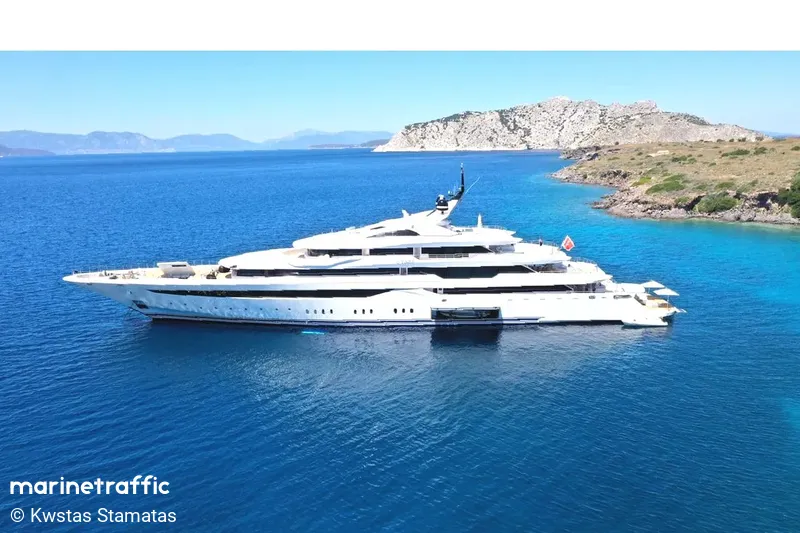
This report is from CelebYachts, which tracks the superyachts of public figures.1
The 95-metre motor yacht O’Pari holds a Maltese flag and a Valletta home port. Yet every tracked passage since July 2026 places her within a hundred nautical miles of the Turkish Riviera. The gap between the registry and the AIS archive measures how modern Superyacht logistics separate legal domicile from physical presence.1
O’Pari is a 95-metre motor yacht built by Golden Yachts in 2020. Her hull flies the Maltese flag. Her home port is listed as Valletta in Malta. This is her legal address on paper.1
AIS broadcasts tell a different story. The last position recorded for O’Pari was at 37.13° N, 27.39° E. This point sits in the Aegean Sea. It is close to the Turkish coast. It is far from Malta.1
Every tracked movement since July 2026 confirms this pattern. She stays in the eastern Aegean. The distance between her registration and her location is large.1
Where does O’Pari actually sail?
The AIS archive tracks her movements with precision. We can see where she goes and where she stays. The data covers voyages from September to October 2026. These records show a clear operational zone.1
She moves between Greek islands and Turkish ports. Rhodes is a frequent starting point. Bodrum is a common destination. Kos and Didim also appear often. Piraeus serves as a hub. Amorgos is another stop.1
Voyage 4518 ran from Kos to Piraeus. It covered 216.5 nautical miles. The average speed was 12.4 knots. Voyage 3960 went from Rhodes to Piraeus. That trip was 258.1 nautical miles long. She averaged 13.6 knots there.1
Shorter hops are also common. Voyage 4345 linked Kos to Bodrum. It was just 19.5 nautical miles. Voyage 4328 stayed within Kos. It covered 42.0 nautical miles in a circle. These short runs define her routine.1
The longest tracked passage in the August 2026 dataset was voyage 245. It ran from Rhodes to Antalya. This leg covered 163 nautical miles. The average speed was 13.4 knots. It remains the furthest single trip recorded in that month.1
These voyages stay within a specific box. The box stretches from Datça in Turkey to Amorgos in Greece. It includes the Dodecanese islands. It touches the Turkish Riviera. All these places are close to each other.1
Malta is hundreds of nautical miles away. Valletta is on the opposite side of the central Mediterranean. O’Pari has never been seen sailing that route in our data. The gap is real and measurable.1
Her legal address is Valletta. Her actual home is the Aegean Sea.1
Why register in Malta if she stays in Greece?
A port of registry is a legal formality. It tells us where the boat is registered. It does not tell us where the boat lives. Many yachts use flags that do not match their cruising grounds.1
Malta offers a well-known flag state. It has established laws for commercial vessels. Owners often choose it for tax or regulatory reasons. The process is standard and efficient. It provides a clean legal identity.1
The Dragnis family owns O’Pari. They are a Greek shipping dynasty. Their business involves ship management and building. They understand maritime law well. Choosing Malta fits their corporate strategy.1
Greece is their home base. They operate many vessels here. Keeping O’Pari under a Maltese flag separates the asset from local operations. It creates a layer of corporate structure. This is common practice among wealthy owners.1
The registry gives her a flag. It does not force her to sail there. The flag is a document. The AIS signal is a location. The two facts can be very far apart. This separation is normal in the industry.1
For O’Pari, the choice was Malta. The habit is the Aegean. There is no contradiction. There is only a difference in purpose. One serves the law. The other serves the lifestyle.1
How does her size affect her routes?
O’Pari is large. She measures 95.0 metres in length. Her beam is 13.8 metres. Her gross tonnage is 2,743. This volume requires space. It limits where she can dock.1
Marinas have strict size limits. Many cannot take a vessel of this beam. O’Pari needs deep water. She needs wide turning areas. She relies on anchorages more than slips.1
The Turkish Riviera offers many such spots. Bodrum and Datça have good bays. Rhodes has protected harbours. These locations suit her dimensions. They allow her to stay without docking.1
Greek islands also provide suitable waters. Kos has ample space. Didim is open and calm. These places handle her size well. They avoid the congestion of smaller ports.1
This constraint shapes her itinerary. She avoids tight channels. She prefers open anchorages. She stays where the water is deep. The geography dictates the route.1
Her builder, Golden Yachts, designed her for this role. The hull form supports stable anchoring. The layout maximises interior volume. The engineering matches the environment. She is built for the Aegean.1
What does the AIS data reveal about her speed?
AIS broadcasts include speed information. We can calculate her average pace. The numbers show her typical operating range. She does not rush. She cruises steadily.1
Most voyages show speeds between 10 and 14 knots. Voyage 4518 averaged 12.4 knots. Voyage 3960 averaged 13.6 knots. Voyage 245 averaged 13.4 knots. These are consistent figures.1
Shorter trips vary more. Voyage 4345 averaged 8.4 knots. This reflects maneuvering in confined spaces. Voyage 4328 averaged 12.1 knots. It was a longer loop around Kos. Speed depends on the task.1
Maximum speeds are higher. Voyage 4328 hit 16 knots. Voyage 3902 also reached 16 knots. These peaks happen during transit. They are brief moments of effort.1
The data shows a disciplined operator. She maintains steady paces. She avoids unnecessary stress on the engines. The numbers reflect careful seamanship. They confirm regular use.1
There are no gaps in coverage for most trips. Coverage percentages are high. Voyage 4352 had 100% coverage. Voyage 4328 had 100%. This reliability allows precise tracking. We know exactly where she was.1
Who owns O’Pari and what is their background?
The owner is the Dragnis family. They are Greek citizens. Their wealth comes from shipping. They are deeply involved in the maritime industry.1
Their occupations list Shipowner and ship manager. They also build superyachts. Golden Yachts is one of their ventures. This connection explains the build quality.1
They understand the technical demands of large vessels. They chose a Greek yard for construction. They selected Malta for registration. Both choices serve their business model.1
The family keeps a low profile. Public details are scarce. Net worth figures are not published. Their reputation rests on their fleet. O’Pari is part of that collection.1
Their history in shipbuilding influences O’Pari’s design. The hull reflects their standards. The systems meet their expectations. The result is a vessel built for function and comfort.1
The Dragnis family knows the Aegean well. They operate there regularly. O’Pari fits their existing network. She complements their other assets. She is a tool for their leisure and business.1
Why is the gap between registry and location significant?
The gap highlights a modern trend. Legal domicile is decoupled from physical presence. Owners separate paperwork from practice. This allows flexibility and privacy.1
It also simplifies compliance. A Maltese flag brings known rules. Local operations follow local norms. The split manages both worlds. It reduces friction.1
For observers, the gap is confusing. Why register far away? Why sail nearby? The answer lies in corporate strategy. It is about efficiency.1
O’Pari exemplifies this approach. She is registered in Valletta. She sails in the Aegean. The two facts coexist. They describe different aspects of ownership.1
The AIS data proves the reality. Paper says Malta. Satellites say Greece. The truth is in the middle. It is a hybrid existence. It is common for large yachts today.1
Understanding this helps interpret the data. Do not assume the flag indicates the cruise area. Look at the AIS tracks instead. They show the actual life of the vessel.1
Read this on celebyachts.com, where the figures are checked against the live register.1