Read the original on CelebYachts →

This report is from CelebYachts, which tracks the superyachts of public figures.1
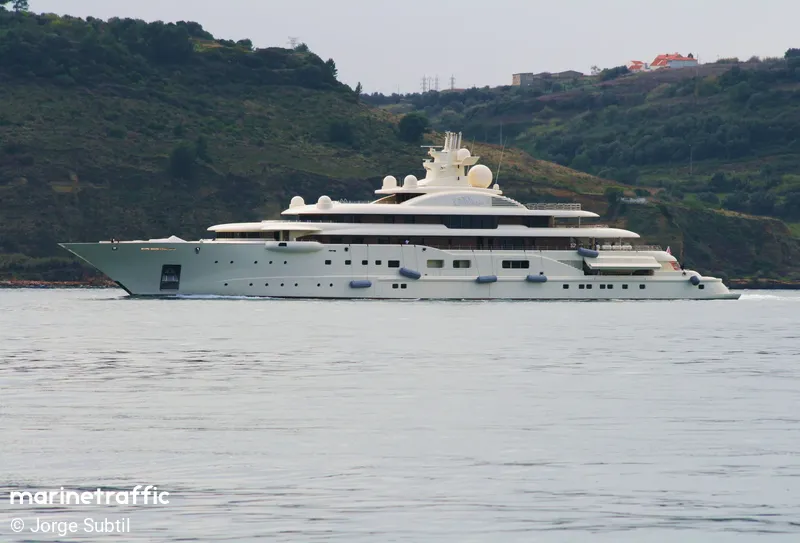
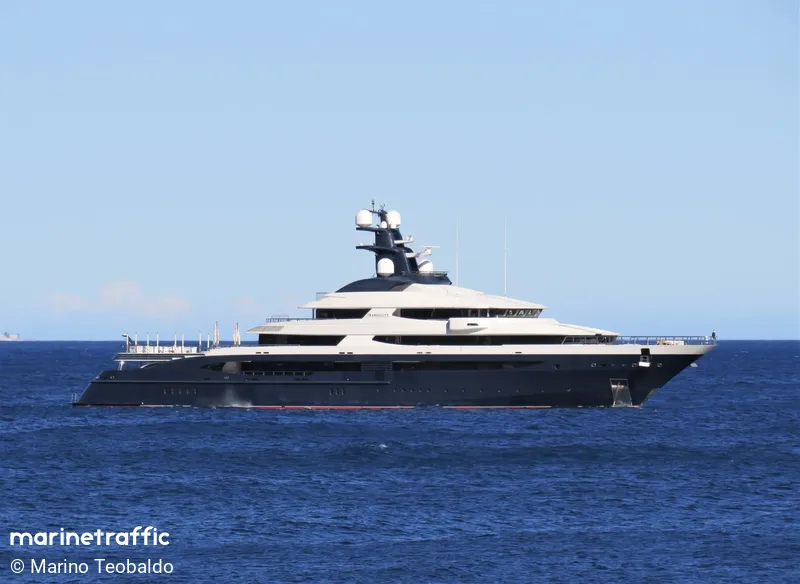
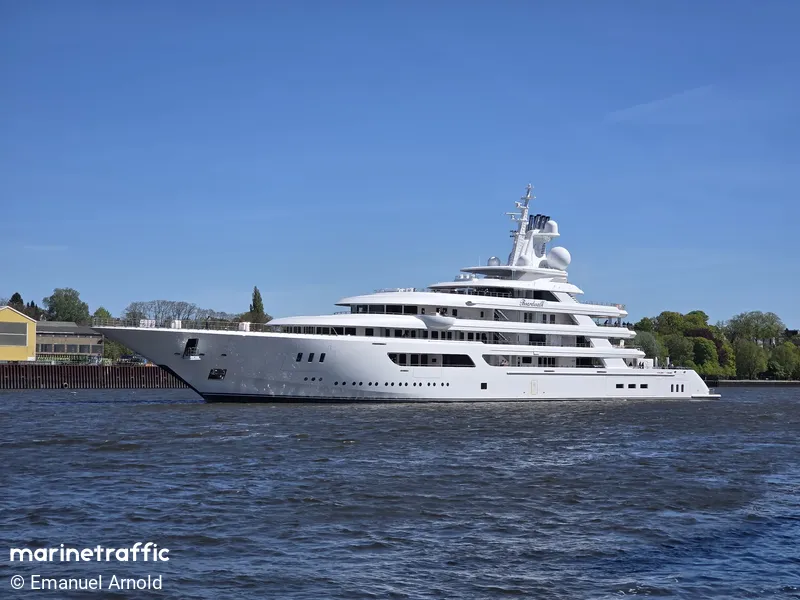
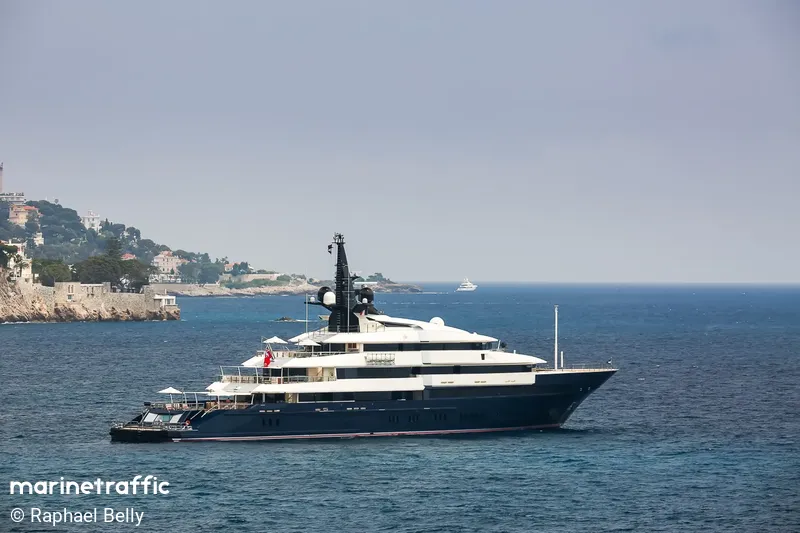
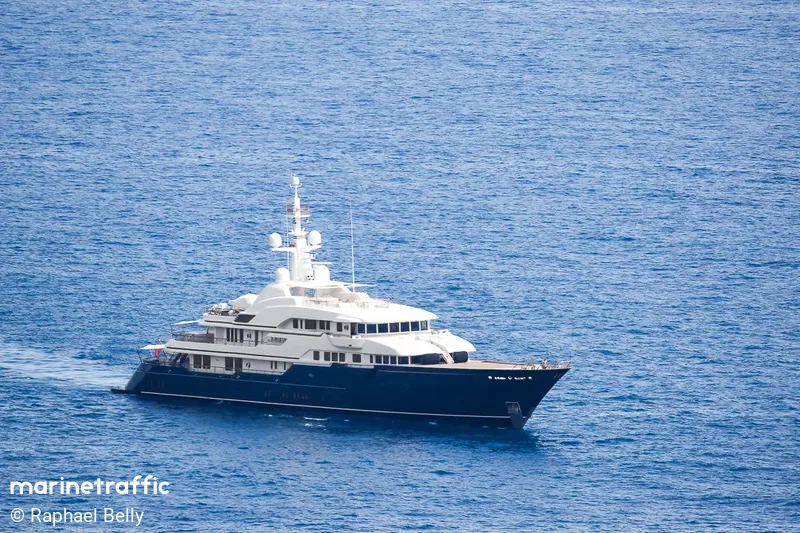
Sir Jim Ratcliffe owns Hampshire II, a 78.5-metre yacht built by Feadship in 2012. Her volume is large for her length. This shape limits her speed but gives her more room inside. The trade-off matches her owner’s industrial mindset.1
Hampshire II measures 78.5 metres from bow to stern. She displaces 1887 tons of enclosed volume. This number describes her size better than her length. Two boats of the same length can hold very different amounts of space.1
The ratio between her volume and her length is high. A wide beam and deep hull create this shape. It maximises interior capacity. It also creates drag. The result is a slower boat with more room.1
Sir Jim Ratcliffe bought the yacht in 2012. He is a chemical engineer. He founded INEOS in 1998. His background values function over form. The yacht’s design reflects this priority.1
How does Feadship build such a wide hull?
Feadship is a cooperative venture. It joins two Dutch shipyards: Royal Van Lent and Koninklijke De Vries Scheepsbouw. They share one design centre called De Voogt Naval Architects. This structure allows them to pool resources.1
Royal Van Lent built Hampshire II at their Kaag yard. This facility has slipways for yachts up to 100 metres long. The yard opened a new dock in Amsterdam in 2019. That dock handles larger vessels.1
The cooperative model shapes the final product. Both yards follow the same engineering standards. They share the naval architecture team. This ensures consistency across different builds. It also allows for complex designs.1
Hampshire II shows this approach clearly. Her beam is 12.5 metres. This width supports the high volume. The hull form is stable and spacious. It suits long-range cruising.1
Ratcliffe is a British billionaire and engineer. He was born in 1952. He graduated in chemical engineering in 1974. He worked for BP and Esso before starting INEOS. His career focuses on industrial scale.1
INEOS is a chemicals group he founded in 1998. It is now worth billions. He changed his tax residence to Monaco in 2020. He still splits time between Hampshire and Monaco. His wealth comes from industry.1
His first Feadship yacht was named Barbara Jean. He sold it later. He then ordered Hampshire II in 2012. This second yacht is much larger. It reflects his growing success and changing needs.1
As an engineer, Ratcliffe understands systems. He valued the practical benefits of volume. More space means more comfort for guests. It also means more stability at sea. These are functional advantages.1
He owns an estate in Switzerland too. He owns hotels in Courchevel and Hampshire. His lifestyle requires flexibility. A yacht with high volume offers that. It can host many people comfortably.1
Where is Hampshire II now and what does AIS show?
Recent voyages show short trips. One trip covered 6 nautical miles in 43 minutes. Another covered 11.7 nautical miles in 1 hour 43 minutes. These are local movements. She stays close to harbour.1
One longer trip ran from Palau to Antibes. It covered 198.1 nautical miles. The average speed was 12.8 knots. The maximum speed reached 13.6 knots. This confirms her speed limits.1
She rarely exceeds 14 knots. Her hull shape resists faster speeds. The drag from her wide beam increases with velocity. This is a physical constraint. Engine power cannot overcome it easily.1
Her estimated value is 100 million USD. This figure reflects her age and condition. She remains a significant asset. Her operational pattern suits her design. She serves as a floating home.1
How does her volume compare to other yachts?
Gross tonnage measures internal volume. It is a measure of space. A higher number means more decks and rooms. It indicates luxury and comfort.1
Hampshire II’s ratio is 24 tons per metre of length. This is high for a 78-metre yacht. Most yachts of this size have lower ratios. They are narrower and deeper. They prioritise speed.1
A low ratio means a slender hull. Slender hulls cut through water easier. They go faster with less power. They offer less interior space. Owners who value speed choose this shape.1
Hampshire II chose the opposite path. She accepts slower speeds for more space. This is a deliberate trade-off. It aligns with Feadship’s blue-water mandate. It suits the owner’s preferences.1
The design is not unique to her. Other Feadships show similar traits. They often have generous beams. They prioritise stability and volume. This is part of the brand identity.1
What does this mean for her future?
Hampshire II will likely stay in the Mediterranean. Her recent tracks confirm this. She visits Nice, Monaco, and Corsica. These are standard ports for summer season. She avoids open ocean crossings.1
Her slow speed makes long transits tedious. Crossing the Atlantic takes time. She prefers short hops. This fits the European summer schedule. It also reduces fuel costs.1
Ratcliffe’s interests extend beyond yachting. He owns shares in Manchester United. He runs a global chemicals business. His time is scarce. A yacht that moves slowly demands patience.1
The vessel serves its purpose well. It provides space and comfort. It reflects its owner’s character. It is a tool for leisure. Speed is not the goal.1
Her registration remains active. She flies the Cayman Islands flag. This is common for large yachts. It offers legal and tax benefits. It keeps her operations flexible.1
The data tells a clear story. Volume over speed. Space over slenderness. This is the arithmetic of the hull. It defines the experience onboard. It explains why she looks and moves as she does.1
Read this on celebyachts.com, where the figures are checked against the live register.1