Read the original on CelebYachts →

This report is from CelebYachts, which tracks the superyachts of public figures.1
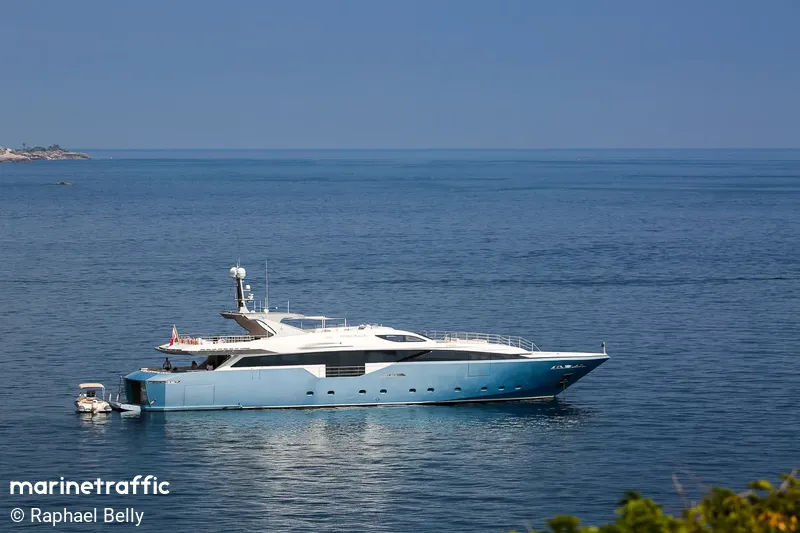
Zig Zag Ocean has logged short coastal passages since August 2026 despite her owner appearing on a second-tier sanctions list. The vessel’s continued operation reveals how restricted assets are kept afloat when commercial support networks withdraw.1
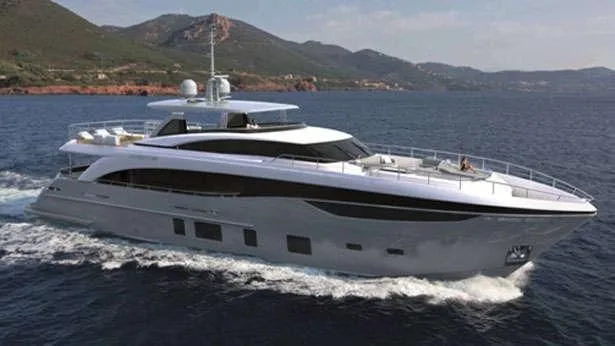
Zig Zag Ocean does not hide. Her AIS transmitter broadcasts a Marshall Islands flag and a forty-four-point-six-metre length while her owner sits on a second-tier sanctions list. The vessel’s recent movements along the French coast demonstrate that restricted assets do not simply disappear when capital controls tighten. They are maintained on reduced budgets, operated through non-commercial channels, and kept afloat by owners who absorb the full cost of dry docking and provisioning.1
The listing and the void
The record places Saleh Assi in the 'Sanctioned & seized yachts (2nd tier)' category. The primary listing that triggered this status has not been made public. Neither the issuing authority, the exact date of inclusion, the legal instrument cited, nor the stated grounds for the restriction appear in the open sources consulted. The omission is standard for certain jurisdictions that publish only aggregated registers rather than individual executive orders. That silence forces the reporting onto the steel itself.1
A four-hundred-and-thirty-nine-gross-tonne motor yacht requires continuous expenditure regardless of ownership disputes. The hull was completed in 2014 and carries an eight-point-six-metre beam. Those dimensions dictate the minimum width of any berth capable of taking her. She cannot slip into the small marinas that dot the Calanques or shelter behind the breakwaters near Cap Ferrat. Commercial yards in the Mediterranean charge premium rates for handling vessels above four hundred tonnes, and those same yards generally refuse work when the registered owner appears on a sanctions database. The yard that holds her now is either operating off the books or belongs to a network that accepts direct payment in hard currency.1
Maintenance follows the same logic. Classification societies require annual surveys to keep a vessel seaworthy. A two-thousand-and-fourteen-built hull of this size will have passed her mid-term survey by now, meaning machinery, hull plating, and safety equipment have been inspected within the last eighteen months. The cost of that inspection runs into six figures. When commercial insurers withdraw, the owner must pay for protection and indemnity cover through private markets or accept the risk of operating without it. Most Sanctioned operators choose the latter, accepting that a breakdown far from a friendly port would be catastrophic. The vessel’s current condition therefore reflects a deliberate calculation: spend heavily on dry dock and light repairs, cut everything else.1
The flag and the floatation
Registry matters more than reputation for a Sanctioned hull. Zig Zag Ocean is documented in the Marshall Islands, with Majuro listed as her home port. The Marshall Islands Maritime Administrator processes registrations rapidly and does not automatically freeze assets upon notification of foreign sanctions lists. This administrative independence allows the yacht to retain her papers even when European ports would otherwise deny entry. The flag state provides a veneer of legitimacy that simplifies provisioning and crew contracts. Port authorities in the European Union check the ship’s documents against their own databases, but they rarely enforce asset freezes on vessels flying third-country flags unless a domestic court order specifically targets the hull.1
The operational reality of a Marshall Islands registry becomes clear when comparing her to vessels flagged in jurisdictions that actively cooperate with EU asset-freeze regimes. Owners seeking to shield assets typically transfer registration to states with transparent corporate structures and strict banking compliance. Those vessels face immediate detention or forced sale. Zig Zag Ocean avoids that fate by remaining in a registry that treats maritime administration as a revenue stream rather than a geopolitical lever. The trade-off is visibility. Third-country flags attract scrutiny from port state control inspectors who look for discrepancies between declared condition and actual seaworthiness.1
Insurance compounds the problem. Standard marine policies exclude coverage for vessels linked to Sanctioned individuals. Without a valid policy, the owner cannot legally enter most Mediterranean harbours under international convention rules. Yet the yacht continues to move. This indicates a shift to self-insurance, where the owner retains all liability for pollution, collision, and personal injury claims. The financial exposure is massive, but the alternative—leaving a forty-four-metre hull idle—is worse. Depreciation accelerates when engines sit cold, seals dry out, and anti-fouling paint degrades. Keeping her moving preserves residual value.1
The AIS track and the cost of keeping alive
The AIS data confirms that the yacht remains operational. On 4 August 2026 she departed Cannes and arrived in Monaco after covering twenty-eight nautical miles at an average speed of sixteen point four knots. Two hours earlier she had left Nice for Saint-Tropez, logging forty-one nautical miles at sixteen point seven knots. Both passages show one hundred per cent broadcast coverage. The transmitter was not turned off to evade detection, nor did it suffer a power failure. The vessel moved deliberately between well-monitored harbours during daylight hours.1
These short hops serve a specific purpose. Long transits increase fuel consumption and mechanical wear, both of which drain cash reserves. Coastal hopping minimises engine hours while still allowing the owner to relocate the yacht quickly if political pressure mounts. The speeds recorded match the efficient cruising range of modern marine diesel engines, suggesting the propulsion system is healthy and properly tuned. There is no evidence of emergency repairs or limping home. The yacht operates on a schedule.1
Crewing follows the same restraint. A forty-four-metre motor yacht typically requires a deck department, an engine room team, and interior staff. Sanctions restrict salary transfers through international banking systems. Wages are likely paid in cash or routed through third-party companies in jurisdictions with looser capital controls. The crew knows the risks of working for a flagged owner and accepts them in exchange for guaranteed payment, however delayed. Turnover remains low because replacement sailors are equally constrained.1
The IMO identifier 9752216 and MMSI 538072165 anchor her identity in global tracking networks. Every port call leaves a paper trail in harbour masters' logs, pilotage records, and customs declarations. Those records exist independently of the AIS feed. The fact that she continues to sail suggests the paperwork is being processed through intermediaries who specialise in high-risk maritime logistics. The hull survives not by vanishing, but by navigating the narrow corridor between enforcement and evasion.1
Read this on celebyachts.com, where the figures are checked against the live register.1